

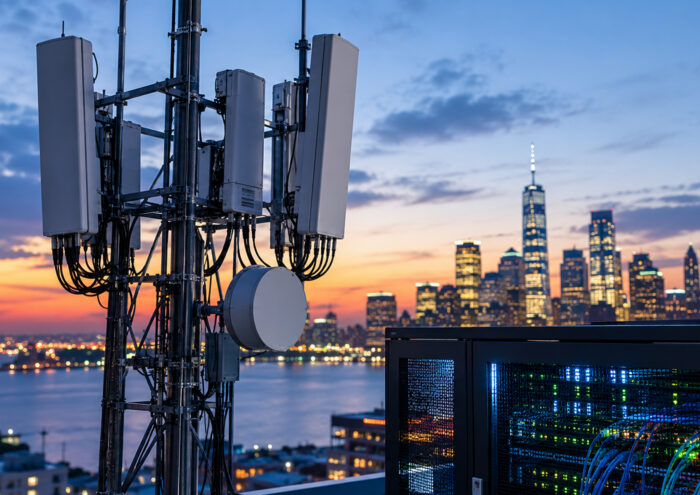
New Jersey businesses depend on fast, secure, and reliable technology to keep daily operations moving. From enterprise offices in Newark and Jersey City to healthcare facilities in Princeton, logistics hubs near Port Newark, schools in New Brunswick, and commercial properties across Morristown, Hoboken, and Trenton, organizations need IT systems that support constant connectivity.
That is why Radio Frequency is so important.
Radio Frequency, often called RF, enables wireless communication between devices, systems, and networks. It supports Wi-Fi, RFID, mobile scanners, wireless security devices, smart sensors, point-to-point links, and many other business-critical Technologies. When RF is properly designed and integrated with Structured Cabling, IP Security, Managed Services, Data Centers, Electricity/Utility Construction, Audio Visual Services and Solutions, and modern IT Infrastructure, businesses can improve performance, mobility, security, and scalability.
Why Radio Frequency Matters for New Jersey Businesses
Modern IT systems are no longer limited to desktop computers and wired phones. Today, employees rely on laptops, tablets, smartphones, cloud platforms, video meetings, shared applications, and wireless collaboration tools throughout the workday.
At the same time, facilities depend on connected systems such as surveillance cameras, access control, inventory platforms, smart sensors, digital displays, and building automation. Because of this, reliable wireless communication has become essential for productivity and business continuity.
However, New Jersey environments can create unique RF challenges. Dense office buildings, multi-tenant properties, industrial equipment, high device usage, and neighboring wireless networks can all affect signal quality. As a result, businesses need professional RF planning to avoid dead zones, interference, and unreliable connections.
How Radio Frequency Supports Stronger IT Infrastructure
Strong IT Infrastructure depends on both wired and wireless systems working together. While cabling provides the physical backbone, Radio Frequency extends connectivity to mobile users, devices, and areas where wired connections may not be practical.
For example, a logistics facility near Elizabeth may rely on RF-enabled scanners, tablets, and inventory systems. Meanwhile, a healthcare office in Princeton may need dependable wireless access for staff devices and secure applications. Similarly, a corporate office in Jersey City may require reliable Wi-Fi for conference rooms, cloud platforms, and hybrid work.
When RF is designed correctly, businesses can improve:
- Wireless coverage
- Device mobility
- Network flexibility
- Employee productivity
- Security system connectivity
- Guest and staff access
- Support for future technologies
- Operational reliability
Consequently, New Jersey organizations can create IT systems that are more responsive, scalable, and dependable.
Structured Cabling Creates the RF Backbone
Although Radio Frequency is wireless, it still depends on professional Structured Cabling. Wireless access points, network switches, antennas, servers, security devices, and AV systems all need stable wired connections to perform properly.
Without strong cabling, RF systems may suffer from slow speeds, dropped connections, poor access point performance, and limited expansion options. Therefore, Structured Cabling should always be planned alongside Radio Frequency design.
Benefits of Structured Cabling for RF Systems
A well-designed cabling system helps businesses improve:
- Access point reliability
- Network speed and bandwidth
- Equipment room organization
- Troubleshooting efficiency
- Support for IP Security
- Connectivity for Data Centers
- Long-term infrastructure scalability
In addition, professional cabling makes future upgrades easier. As businesses add users, devices, conference rooms, security cameras, or warehouse systems, a structured foundation helps reduce costly rework and downtime.
Radio Frequency Strengthens IP Security
Modern IP Security systems depend on reliable connectivity. Surveillance cameras, access control systems, intercoms, alarms, sensors, and monitoring platforms all need stable communication to protect facilities effectively.
In many environments, Radio Frequency can help extend security coverage where cabling may be difficult or expensive. Parking lots, loading docks, remote gates, storage yards, temporary sites, and multi-building campuses may all benefit from wireless or hybrid security connectivity.
For instance, a warehouse near Port Newark may need wireless cameras across exterior loading areas. Likewise, a commercial property in Hoboken may require secure connectivity for cameras, access control, and visitor management across multiple floors. With professional RF planning, these systems can operate with stronger range and fewer blind spots.
RF Improves Mobility and Daily Productivity
Reliable wireless connectivity allows employees to work where business happens. In warehouses, teams can use mobile scanners and tablets without losing connection. In healthcare settings, staff can access systems while moving between rooms. In office environments, employees can collaborate from conference rooms, shared spaces, and hybrid work areas.
However, mobility only works when RF systems are designed for the real environment. Building materials, user density, device types, equipment interference, and floor layouts all affect wireless performance.
For that reason, RF assessments are valuable. They help identify weak coverage areas, signal interference, and the best placement for access points or antennas. As a result, businesses can prevent connectivity problems before they slow operations.
Data Centers Benefit from RF-Connected Operations
Data Centers and server rooms usually depend on wired infrastructure, but Radio Frequency can still support important operational needs. RF technologies may assist with asset tracking, environmental monitoring, mobile technician access, wireless alerts, and facility communications.
Because Data Centers support applications, storage, backups, security platforms, and business continuity, every layer of connectivity matters. If RF-enabled tools are used for monitoring or maintenance, they must be secure, reliable, and integrated with broader IT Infrastructure.
Instrata helps businesses align RF planning with Data Centers, Structured Cabling, IP Security, and Managed Services so technology environments remain organized and easier to manage.
Managed Services Keep RF Systems Performing
Installing Radio Frequency systems is only the beginning. Over time, wireless environments change as businesses add employees, devices, applications, walls, equipment, and security systems. Without ongoing support, RF performance can decline.
That is where Managed Services provide long-term value.
Managed Services can help with:
- Wireless performance monitoring
- Access point health checks
- Device connectivity reviews
- Network troubleshooting
- Security system support
- Documentation updates
- Upgrade planning
- Preventive maintenance
Additionally, Managed Services help internal IT teams stay focused on strategic priorities instead of constant troubleshooting. By identifying issues early, businesses can reduce downtime and make smarter upgrade decisions.
Electricity/Utility Construction Supports RF Deployment
Radio Frequency systems require the right physical support. Access points, antennas, cameras, network cabinets, and connected devices may need proper power, grounding, mounting, conduit, pathways, and utility coordination.
That is why Electricity/Utility Construction should be included in RF planning, especially during new construction, office renovations, warehouse expansions, data center upgrades, and commercial buildouts.
When utility planning is coordinated with IT Infrastructure, businesses can avoid poor device placement, overloaded circuits, exposed cabling, and expensive rework. Moreover, early planning helps create cleaner installations and stronger long-term performance.
Audio Visual Services and Solutions Depend on RF
Modern Audio Visual Services and Solutions often rely on strong wireless performance. Video conferencing platforms, wireless presentation tools, microphones, room controls, displays, and collaboration systems all need dependable connectivity.
If RF performance is weak, meetings may suffer from lag, dropped audio, disconnected devices, or unreliable screen sharing. However, when RF is properly designed, conference rooms, training spaces, classrooms, and executive meeting areas become easier to use and more dependable.
For New Jersey offices, schools, healthcare facilities, and enterprise environments, strong RF planning supports clearer communication and smoother collaboration.
Why New Jersey Organizations Choose Instrata
Instrata provides professional technology services for commercial, enterprise, industrial, and residential clients throughout New Jersey, as well as Arizona, North Carolina, South Carolina, New York, Pennsylvania, Maryland, and Virginia.
Organizations choose Instrata for:
- Radio Frequency planning and deployment
- Structured Cabling
- IP Security
- IT Infrastructure upgrades
- Electricity/Utility Construction
- Managed Services
- Data Centers support
- Audio Visual Services and Solutions
- Scalable Technologies for growing businesses
Whether supporting a wireless upgrade in Newark, an IP Security deployment in Jersey City, a Structured Cabling project in Princeton, or a data center improvement near Port Newark, Instrata delivers fast, professional, and reliable technology solutions.
Build Stronger IT Systems with Instrata
Radio Frequency is important for IT systems in New Jersey because it supports mobility, security, wireless performance, operational efficiency, and future growth. When combined with Structured Cabling, IP Security, Managed Services, Data Centers, Electricity/Utility Construction, Audio Visual Services and Solutions, and strong IT Infrastructure, RF becomes a vital part of a scalable technology strategy.
Contact us today to learn how structured cabling can transform your business operations