

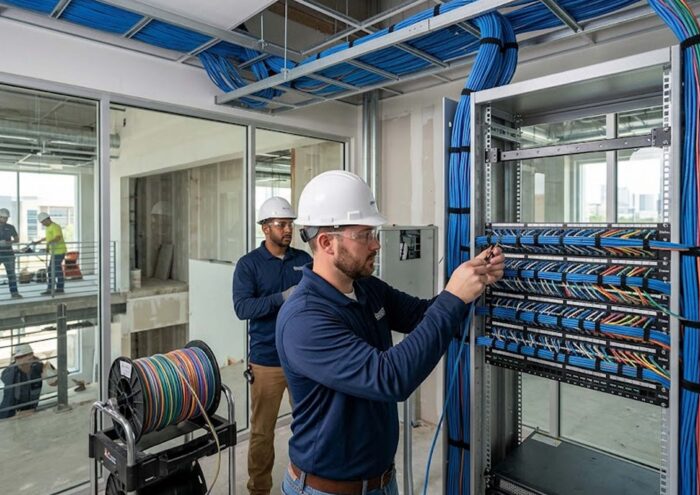
For businesses across Texas, investing in Structured Cabling is one of the most important decisions when building or upgrading technology infrastructure. Whether you’re managing a corporate office in Dallas, a healthcare facility in Houston, a manufacturing plant in Austin, or a distribution center in San Antonio, your cabling system directly impacts performance, reliability, and long-term scalability.
Yet many organizations approach structured cabling as a simple installation task rather than a strategic investment. The reality is that the right cabling system can support business growth for years, while poor planning can lead to costly downtime, inefficiencies, and repeated upgrades.
Here’s what Texas businesses need to know before making that investment.
Understanding Structured Cabling as a Long-Term Asset
Structured cabling is not just about connecting devices. It is the foundation of your entire IT Infrastructure, supporting everything from data and voice communications to IP Security, cloud applications, and Audio Visual Services and Solutions.
A properly designed system creates a standardized, organized framework that supports:
- Network connectivity across all departments
- Wireless access points and IoT devices
- Security systems and surveillance
- Data transfer between servers and endpoints
- Integration with modern business Technologies
Unlike point-to-point wiring, structured cabling is designed for flexibility, making it easier to adapt as your business evolves.
Why Planning Matters More Than Installation
One of the biggest mistakes businesses make is focusing only on installation rather than design. In Texas, where companies are expanding rapidly across industries like energy, healthcare, logistics, and technology, proper planning is essential.
Before installation begins, businesses should evaluate:
Current and Future Needs
Your cabling system should support not just your current operations, but also where your business is heading. Consider:
- Expected employee growth
- Expansion of office or facility space
- Increased device connectivity
- Adoption of cloud-based systems
- Integration of security and automation technologies
Planning for growth helps avoid expensive retrofits later.
Facility Layout and Environment
Every building has unique requirements. A corporate office in Austin will have very different cabling needs compared to a warehouse in Fort Worth or an industrial facility in Houston.
Key considerations include:
- Distance between network rooms and endpoints
- Pathways for cable routing
- Environmental factors like heat or dust
- Equipment room design and accessibility
- Coordination with Electricity/Utility Construction
A well-planned layout ensures performance and longevity.
Choosing the Right Cabling Standards
Not all cabling is created equal. Selecting the right type of cabling is critical for ensuring performance and future readiness.
Businesses in Texas should consider:
- Cable category (Cat6, Cat6a, fiber, etc.)
- Bandwidth requirements
- Speed capabilities
- Distance limitations
- Compatibility with existing infrastructure
Choosing the lowest-cost option may limit your network’s ability to handle future demands, especially as businesses rely more heavily on cloud computing, video conferencing, and data-intensive applications.
Integration with Other Business Systems
Structured cabling supports more than just computers and phones. It plays a key role in connecting multiple systems that drive daily operations.
IP Security Systems
Modern IP Security solutions depend on strong cabling to support cameras, access control systems, and monitoring platforms. Poor cabling can result in dropped feeds, weak connections, and unreliable security coverage.
Audio Visual and Collaboration Tools
Conference rooms and collaborative workspaces rely on Audio Visual Services and Solutions. Structured cabling ensures seamless integration of displays, video conferencing systems, and presentation tools, creating better communication experiences.
Radio Frequency and Wireless Coverage
For large facilities, warehouses, and campuses, Radio Frequency systems and wireless networks require strategic cabling placement to ensure consistent coverage and connectivity.
When these systems are planned together, businesses avoid gaps, redundancies, and costly rework.
The Role of Data Centers and Network Rooms
For businesses operating server rooms or full Data Centers, structured cabling becomes even more critical. Organization, labeling, and airflow management all depend on proper cabling design.
Best practices include:
- Clearly labeled cables and patch panels
- Organized rack layouts
- Proper cable management systems
- Separation of power and data pathways
- Scalable infrastructure for future expansion
A well-designed data environment reduces downtime and simplifies maintenance.
Why Managed Services Depend on Good Cabling
Many Texas businesses rely on Managed Services to monitor and maintain their IT systems. However, even the best service provider cannot compensate for poorly installed cabling.
Reliable structured cabling allows managed service providers to:
- Monitor systems accurately
- Identify and resolve issues quickly
- Perform preventive maintenance
- Optimize network performance
This leads to better uptime, improved efficiency, and reduced operational stress for internal teams.
Avoiding Common Investment Mistakes
Before investing in structured cabling, businesses should be aware of common pitfalls:
Underestimating Future Growth
Installing only what you need today can limit your ability to expand tomorrow. Always plan for scalability.
Prioritizing Cost Over Quality
Low-cost installations often lead to higher long-term expenses due to repairs, downtime, and upgrades.
Ignoring Documentation and Labeling
Without proper labeling, even simple changes can become complex and time-consuming.
Failing to Work with Experienced Professionals
Structured cabling requires expertise in design, standards, and integration. Working with experienced professionals ensures better results.
Why Texas Businesses Trust Instrata
Businesses across Texas need technology solutions that are reliable, scalable, and aligned with their operational goals. Instrata delivers comprehensive expertise across:
- Structured Cabling
- IP Security
- Radio Frequency
- IT Infrastructure
- Electricity/Utility Construction
- Managed Services
- Data Centers
- Audio Visual Services and Solutions
Instrata supports commercial, enterprise, and industrial clients with tailored solutions that improve connectivity, strengthen security, and support long-term growth. Whether it’s a new construction project, a facility upgrade, or a network modernization effort, Instrata ensures every system is designed for performance and reliability.
Build a Future-Ready Infrastructure
Structured cabling is one of the most important investments a business can make in its technology environment. It supports everything from daily communication to advanced systems that drive efficiency and innovation.
For Texas businesses, taking the time to plan, design, and implement the right cabling system can lead to stronger performance, lower costs, and greater flexibility in the years ahead.
Contact us today to learn how structured cabling can transform your business operations