

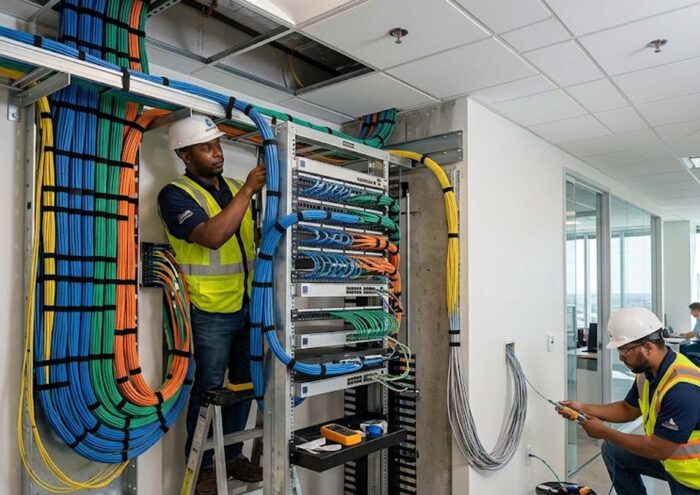
As businesses across Texas continue to expand—from corporate offices in Dallas and Austin to industrial operations in Houston and logistics hubs in San Antonio—the demand for reliable, scalable low voltage wiring is growing rapidly. These systems power everything from Structured Cabling and IP Security to Audio Visual Services and Solutions and modern IT Infrastructure.
But investing in low voltage wiring isn’t just about installation—it’s about making smart decisions that impact performance, scalability, and long-term costs.
Before you move forward, here’s what every Texas business should know.
What Is Low Voltage Wiring?
Low voltage wiring refers to systems that operate below standard electrical voltage levels and support communication, security, and data transmission.
Common Applications Include:
- Network and Structured Cabling systems
- IP Security (cameras, access control)
- Voice and data communication
- Audio Visual Services and Solutions
- Radio Frequency systems in large facilities
These systems form the backbone of your business operations, making proper planning essential.
Why Low Voltage Wiring Matters for Texas Businesses
Texas is one of the fastest-growing business environments in the U.S. With rapid expansion comes increased demand for:
- Faster data transmission
- Reliable connectivity
- Scalable infrastructure
- Integrated technology systems
Poorly planned wiring can lead to performance issues, downtime, and costly upgrades—while a well-designed system supports long-term growth.
Key Factors to Consider Before Investing
1. Scalability and Future Growth
One of the biggest mistakes businesses make is designing systems only for current needs.
What to Consider:
- Will your business expand in the next 3–5 years?
- Will you add more devices, users, or locations?
- Do you need higher bandwidth for future applications?
Best Practice:
Design your Structured Cabling and low voltage systems with extra capacity and flexibility to accommodate growth.
2. Type of Cabling and Technology
Not all cabling is created equal. The type you choose will directly impact performance.
Options Include:
- Cat6/Cat6a for high-speed data
- Fiber optics for long-distance and high-bandwidth needs
Why It Matters:
- Supports modern Technologies
- Reduces the need for future upgrades
- Improves network speed and reliability
Choosing the right cabling upfront saves money in the long run.
3. Integration with IT Infrastructure
Low voltage wiring should not be treated as a standalone system. It must integrate with your overall IT Infrastructure.
Systems to Consider:
- IP Security and surveillance
- Data Centers and server rooms
- Cloud platforms and applications
- Audio Visual Services and Solutions
Best Practice:
Work with a provider that ensures seamless integration across all systems.
4. Building Type and Environment
Texas businesses operate in a variety of environments—from high-rise offices to warehouses and industrial facilities.
Environmental Considerations:
- Heat and humidity
- Large facility layouts
- Outdoor or exposed installations
Solutions:
- Use temperature-rated and durable materials
- Plan cable pathways carefully
- Protect wiring from environmental damage
This is especially important in cities like Houston and San Antonio, where climate conditions can be extreme.
5. Compliance and Industry Standards
Low voltage installations must meet industry standards to ensure safety and performance.
Key Standards:
- TIA/EIA cabling standards
- Local building codes and regulations
Why It Matters:
- Ensures system reliability
- Reduces risk of failures
- Supports long-term compliance
Always choose certified professionals who follow these standards.
6. Cable Management and Organization
Disorganized cabling can lead to major operational issues.
Common Problems:
- Difficult troubleshooting
- Increased downtime
- Poor airflow in Data Centers
Best Practice:
- Use structured cable management systems
- Label all cables clearly
- Maintain clean, organized layouts
Good organization improves efficiency and reduces maintenance costs.
7. Coordination with Electrical Systems
Low voltage wiring must be properly coordinated with power systems.
Risks:
- Electrical interference
- Signal degradation
- Safety concerns
Solution:
Work closely with Electricity/Utility Construction teams to ensure proper separation and alignment between power and data systems.
8. Installation Quality and Expertise
The quality of installation is just as important as the materials used.
Risks of Poor Installation:
- Connectivity issues
- Frequent downtime
- Higher maintenance costs
Best Practice:
Choose experienced professionals who specialize in:
- Structured Cabling
- IT Infrastructure integration
- Testing and certification
This ensures your system performs reliably from day one.
9. Testing, Certification, and Documentation
Skipping testing is a costly mistake.
What to Expect:
- Full performance testing of all connections
- Certification to industry standards
- Detailed documentation of the system
This makes future maintenance and upgrades much easier.
10. Ongoing Maintenance and Managed Services
Low voltage wiring is not a one-time investment—it requires ongoing support.
Benefits of Managed Services:
- Continuous monitoring of system performance
- Early detection of potential issues
- Regular maintenance and updates
- Reduced downtime
Instrata’s Managed Services help Texas businesses maintain reliable, high-performance systems.
Common Mistakes to Avoid
Before investing, be aware of these common pitfalls:
- Choosing the lowest-cost provider over quality
- Failing to plan for future growth
- Using outdated or low-performance cabling
- Ignoring integration with other systems
- Skipping proper documentation and testing
Avoiding these mistakes can save significant time and money.
Real-World Applications in Texas
Low voltage wiring supports a wide range of industries across Texas:
- Corporate offices in Dallas and Austin: Supporting high-speed connectivity and collaboration tools
- Manufacturing facilities in Houston: Enabling Radio Frequency systems and automation
- Logistics hubs in San Antonio: Supporting real-time tracking and communication
- Healthcare facilities statewide: Ensuring secure and reliable data access
In each case, proper wiring is essential for performance and scalability.
Why Texas Businesses Choose Instrata
Instrata helps businesses across Texas design and implement low voltage wiring systems that are reliable, scalable, and future-ready.
What Sets Instrata Apart:
- Expertise in Structured Cabling and IT Infrastructure
- Seamless integration with IP Security, Data Centers, and AV systems
- High-quality, standards-based installations
- Scalable solutions designed for growth
- Ongoing support through Managed Services
From Dallas to Houston, Austin to San Antonio, Instrata delivers fast, professional, and dependable solutions tailored to Texas businesses.
Make a Smart Investment in Your Infrastructure
Low voltage wiring is the foundation of your technology environment. Investing in the right system ensures better performance, improved security, and long-term scalability.
By planning carefully, choosing quality materials, and working with experienced professionals, Texas businesses can build infrastructure that supports growth and operational success.
Instrata provides comprehensive solutions across Structured Cabling, IP Security, Radio Frequency, IT Infrastructure, Electricity/Utility Construction, Managed Services, Data Centers, and Audio Visual Services and Solutions.
Contact us today to learn how structured cabling can transform your business operations