

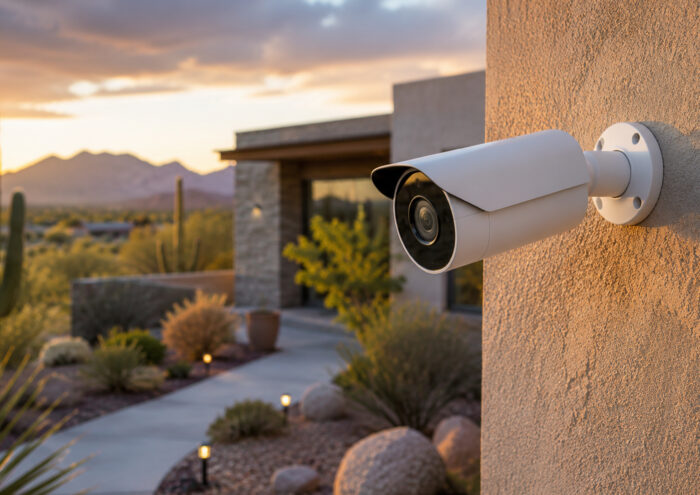
Arizona businesses face a wide range of security challenges, from protecting commercial offices and healthcare facilities to monitoring warehouses, industrial sites, retail locations, and enterprise campuses. Whether your organization operates in Phoenix, Tucson, Scottsdale, Mesa, Tempe, Chandler, or Flagstaff, reliable monitoring and access control are essential for protecting people, property, data, and daily operations.
Modern IP Security systems give businesses more control, flexibility, and visibility than traditional analog security setups. However, choosing the right system requires careful planning. Cameras, access control, network infrastructure, storage, cabling, power, and ongoing support all need to work together.
For businesses across Arizona, Instrata helps design, install, and support scalable IP Security solutions backed by Structured Cabling, IT Infrastructure, Managed Services, Data Centers, Radio Frequency, Electricity/Utility Construction, and integrated Audio Visual Services and Solutions.
Why IP Security Matters for Arizona Businesses
IP Security systems use network-connected devices to monitor, record, manage, and secure business environments. These systems may include surveillance cameras, access control panels, intercoms, alarms, video management platforms, and remote monitoring tools.
Unlike older systems, IP-based security can provide clearer video, easier system expansion, remote access, and stronger integration with other business Technologies. As a result, Arizona businesses can improve security while also supporting operational efficiency.
For example, a warehouse in Mesa may need cameras near loading docks and restricted storage areas. Meanwhile, a corporate office in Scottsdale may need access control for employees, visitors, and sensitive workspaces. In both cases, IP Security helps teams monitor activity and respond faster.
Consider Your Business Security Goals First
Before choosing equipment, businesses should define what they need the system to accomplish. A small office may need basic entry monitoring, while an industrial facility may require wide-area surveillance, perimeter protection, and controlled access to high-risk zones.
Important questions include:
- What areas need monitoring?
- Who needs access to the system?
- Should footage be available remotely?
- How long should video be stored?
- Are there multiple locations to manage?
- Does the system need to integrate with existing IT Infrastructure?
- Will future expansion be required?
By answering these questions early, businesses can avoid underpowered systems, unnecessary equipment, and costly redesigns later.
Camera Placement and Coverage
Camera placement is one of the most important parts of IP Security planning. Even high-quality cameras will not help if they are installed in the wrong locations or fail to capture key activity zones.
Arizona businesses should consider coverage for entrances, exits, parking areas, reception desks, server rooms, warehouses, loading docks, hallways, outdoor equipment yards, and restricted spaces. Additionally, lighting conditions, weather exposure, building layout, and viewing angles should all be reviewed before installation.
For outdoor environments in Arizona, heat, sunlight, dust, and weather conditions may also affect equipment selection. Therefore, businesses need cameras and mounting solutions designed for their specific environment.
The Role of IT Infrastructure
IP Security systems depend on reliable IT Infrastructure. Cameras, access control devices, servers, switches, storage systems, and monitoring platforms all communicate across the network.
If the network is slow, unstable, or poorly designed, security performance may suffer. Video feeds may lag, footage may fail to record properly, and remote access may become unreliable.
Instrata helps Arizona businesses plan IP Security systems alongside broader IT Infrastructure needs. This may include bandwidth planning, network segmentation, secure access, device management, storage capacity, and system documentation. Consequently, the entire environment becomes more reliable and easier to support.
Why Structured Cabling Is Essential
Behind every dependable IP Security system is professional Structured Cabling. Cabling connects cameras, access control panels, monitoring stations, network closets, and storage equipment.
Poor cabling can lead to signal issues, difficult troubleshooting, downtime, and expensive repairs. On the other hand, organized cabling improves reliability and makes future upgrades easier.
Professional Structured Cabling supports:
- Cleaner network rooms
- Reliable camera connections
- Faster troubleshooting
- Better documentation
- Safer installations
- Easier expansion
- Reduced downtime
For Arizona businesses renovating offices, expanding facilities, or building new locations, structured cabling creates a strong foundation for long-term security performance.
Storage and Data Protection
Security footage is only useful if it is stored properly and easy to access when needed. Businesses should consider how much footage they need to retain, where it will be stored, and who can access it.
Some organizations may use on-site storage, while others may rely on cloud-based or hybrid solutions. For larger environments, Data Centers and secure server rooms may support video storage, backup systems, and security management platforms.
This is especially important for healthcare facilities, financial organizations, logistics companies, schools, and enterprise clients that need reliable records and controlled access to sensitive information.
Access Control and User Permissions
IP Security is not only about cameras. Access control is also critical for protecting buildings, equipment, data rooms, and restricted areas.
Businesses should decide which employees, vendors, visitors, and contractors can access specific spaces. In addition, permissions should be easy to update as roles change.
When access control is integrated with cameras and monitoring tools, businesses gain better visibility into building activity. For instance, teams can review who entered a secure room and match that activity with video footage when needed.
Managed Services for Long-Term Reliability
Even the best security system needs ongoing support. Managed Services help businesses maintain, monitor, and optimize IP Security systems over time.
Managed support may include troubleshooting, updates, system documentation, vendor coordination, performance reviews, and lifecycle planning. As a result, businesses can reduce downtime and avoid security gaps caused by neglected equipment.
For busy IT managers and facility teams, this support saves time and creates greater operational assurance.
Integration With Other Technologies
Modern IP Security systems often work with other Technologies, including wireless networks, Radio Frequency systems, building management tools, and Audio Visual Services and Solutions.
For example, a command center may use AV displays to view camera feeds and security alerts. Similarly, a warehouse may combine Radio Frequency tracking with security monitoring to improve visibility across inventory areas.
When systems are planned together, businesses can reduce vendor confusion, improve performance, and create a more connected environment.
Electricity/Utility Construction Considerations
Security systems also require proper power and physical infrastructure. Electricity/Utility Construction supports cameras, access control panels, network closets, exterior devices, gates, equipment rooms, and connected facilities.
Without proper planning, businesses may face installation delays, power limitations, exposed wiring, or costly rework. However, when power, cabling, and technology systems are coordinated from the start, installations become cleaner, safer, and more scalable.
Why Arizona Businesses Choose Instrata
Instrata serves commercial, enterprise, industrial, and residential clients across Arizona, as well as North Carolina, South Carolina, New Jersey, New York, Pennsylvania, Maryland, and Virginia.
From IP Security installations in Phoenix to Structured Cabling in Tucson, IT Infrastructure upgrades in Scottsdale, Data Centers in Mesa, Radio Frequency solutions in Chandler, and Audio Visual Services and Solutions in Tempe, Instrata delivers scalable technology solutions tailored to each client’s needs.
Build a Smarter IP Security System With Instrata
Choosing an IP Security system requires more than selecting cameras. Businesses must consider coverage, network performance, cabling, storage, access control, power, scalability, and ongoing support.