

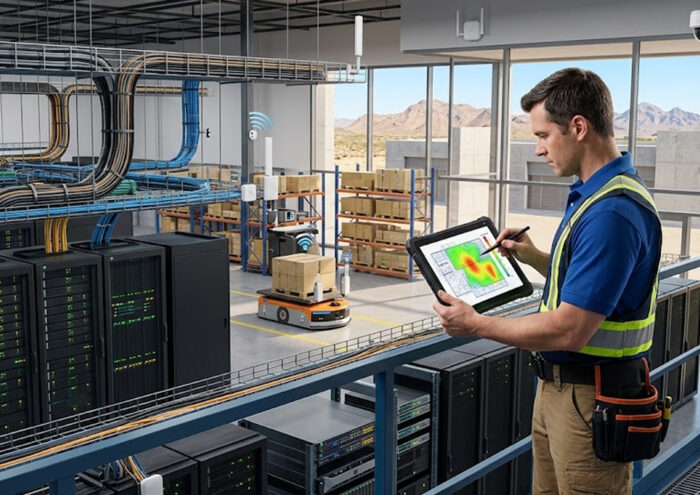
Arizona’s business landscape is rapidly evolving. From technology startups in Scottsdale and enterprise data hubs in Phoenix to manufacturing facilities in Mesa and logistics operations in Tucson, organizations rely on seamless connectivity to stay competitive. As companies embrace cloud platforms, IoT devices, automation, and hybrid work environments, Radio Frequency (RF) technology has become a critical component of modern IT Infrastructure.
While often associated primarily with Wi-Fi, Radio Frequency plays a much broader role in supporting network performance, security systems, mobile operations, and scalable growth. When properly integrated with Structured Cabling, IP Security, Data Centers, Electricity/Utility Construction, Managed Services, and Audio Visual Services and Solutions, RF strengthens the foundation of enterprise technology environments across Arizona.
Here’s how.
Powering Reliable Wireless Connectivity
At its core, Radio Frequency technology enables wireless communication. In modern office and industrial environments, RF supports:
- Wi-Fi networks
- Mobile workforce devices
- Cloud-based collaboration tools
- VoIP systems
- IoT sensors and smart building technology
In fast-growing markets like Phoenix and Tempe, businesses operate with high device density. Employees often connect multiple devices simultaneously—laptops, smartphones, tablets, and specialized equipment.
Professionally engineered RF systems ensure:
- Consistent signal strength
- Reduced interference
- Optimized bandwidth distribution
- Seamless roaming between floors and buildings
Without strong RF design, even high-speed internet connections cannot deliver consistent performance.
Supporting Hybrid Work and Collaboration
Hybrid work models are now standard in many Arizona industries. Video conferencing, wireless screen sharing, and collaborative platforms depend on stable wireless infrastructure.
Integrated Audio Visual Services and Solutions rely heavily on optimized RF networks to support:
- High-definition video conferencing
- Wireless presentation systems
- Real-time data sharing
- Cloud-based communication tools
When RF performance is weak, meetings experience lag, dropped connections, and reduced productivity. A strong wireless backbone ensures seamless collaboration.
Enabling Mobility in Industrial and Logistics Environments
Arizona’s manufacturing and logistics sectors depend on mobile technology. Warehouses, production floors, and distribution centers use handheld scanners, tablets, and automated systems to track inventory and manage operations.
Radio Frequency supports:
- Barcode scanners
- Automated guided vehicles (AGVs)
- Real-time inventory tracking
- Industrial IoT devices
In large facilities in Mesa or Tucson, RF site surveys and signal mapping ensure complete coverage and eliminate dead zones that could disrupt operations.
Strengthening IP Security Systems
Modern IP Security systems increasingly rely on wireless components. Surveillance cameras, access control devices, and monitoring systems often connect through RF networks—especially in areas where cabling is impractical.
Reliable RF infrastructure enables:
- Secure wireless video transmission
- Mobile security monitoring
- Remote access control
- Real-time alerts
When integrated with enterprise-grade IT Infrastructure, wireless security systems enhance situational awareness without compromising performance.
Complementing Structured Cabling
While wireless networks are essential, they still rely on strong wired backbones. Structured Cabling connects wireless access points to core switches and network infrastructure.
The relationship between RF and Structured Cabling is critical:
- Cabling provides stable high-speed uplinks
- RF distributes connectivity wirelessly
- Combined systems support scalability
Upgrading wireless systems without evaluating cabling capacity can create bottlenecks. Balanced infrastructure design ensures optimal performance.
Enhancing Data Center Operations
Arizona hosts numerous enterprise and regional Data Centers, particularly in the Phoenix metropolitan area.
While Data Centers primarily rely on fiber and copper connections, RF plays a supporting role by enabling:
- Wireless environmental monitoring
- Technician mobility
- Secure device connectivity
- IoT integration
Wireless backup communication channels can also enhance redundancy strategies.
Adapting to Arizona’s Environmental Challenges
Arizona’s climate presents unique considerations for infrastructure planning. Large facilities, thick concrete walls, and industrial machinery can interfere with wireless signals.
Professional RF engineering addresses:
- Heat-related equipment performance
- Signal reflection and absorption
- Outdoor wireless deployments
- Long-distance signal coverage
Customized RF planning ensures consistent performance even in challenging environments.
Improving Scalability for Growing Businesses
As Arizona businesses expand, adding new employees and devices increases network demand.
A well-designed RF system supports:
- Increased device density
- Additional access points
- Expansion into new office spaces
- Integration of emerging Technologies
Scalable wireless infrastructure reduces the need for costly redesigns as organizations grow.
Supporting Smart Building Integration
Modern commercial buildings in Arizona are incorporating smart technologies such as:
- Occupancy sensors
- Environmental controls
- Digital signage
- Automated lighting systems
RF connectivity supports these IoT-based systems. Coordination with Electricity/Utility Construction ensures reliable power distribution and surge protection for wireless hardware.
Smart building integration enhances energy efficiency and operational control.
Securing Wireless Environments
Wireless networks introduce potential security risks. Strong RF planning must include cybersecurity integration through:
- Network segmentation
- Secure authentication protocols
- Encrypted data transmission
- Continuous monitoring
Proactive Managed Services ensure wireless networks remain secure, updated, and optimized.
Why Arizona Businesses Trust Instrata
Across Arizona—including Phoenix, Scottsdale, Mesa, Tempe, Chandler, and Tucson—organizations rely on Instrata for advanced Radio Frequency and infrastructure solutions.
Instrata delivers:
- Professional RF site surveys and engineering
- Enterprise-grade IT Infrastructure integration
- Structured Cabling design and upgrades
- Advanced IP Security integration
- Reliable Electricity/Utility Construction coordination
- Data Center optimization
- Integrated Audio Visual Services and Solutions
- Proactive Managed Services
By aligning wireless performance with comprehensive infrastructure planning, Instrata helps Arizona businesses achieve secure, high-speed, and scalable connectivity.
Build a Strong Wireless Foundation
Radio Frequency technology is no longer optional—it is a central pillar of modern IT Infrastructure. From enabling mobility and collaboration to supporting security and smart building systems, RF drives performance across industries.
If your Arizona organization is upgrading wireless networks, expanding operations, or strengthening infrastructure, Instrata is ready to help.