

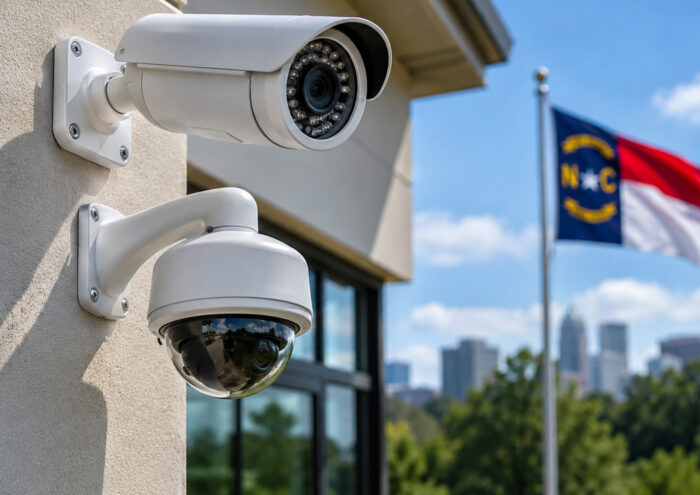
Businesses across North Carolina rely on secure, connected, and easy-to-manage technology every day. From corporate offices in Charlotte and healthcare facilities in Raleigh to manufacturing sites in Greensboro, logistics operations in Fayetteville, commercial properties in Durham, and growing organizations across the state, safety and visibility are essential.
For many companies, IP Security has become one of the most effective ways to protect people, property, data, and daily operations. However, a strong IP Security system is more than a few cameras mounted on the wall. It requires smart planning, dependable IT Infrastructure, professional Structured Cabling, secure network design, reliable monitoring, and ongoing support.
At Instrata, we help North Carolina businesses design, install, upgrade, and manage IP Security systems that are scalable, reliable, and built around real operational needs.
What Is an IP Security System?
An IP Security system uses internet protocol technology to connect and manage security devices through a network. Unlike older analog systems, IP-based solutions can support advanced visibility, remote access, centralized management, and integration with other business technologies.
A complete IP Security system may include:
- Video surveillance cameras
- Access control systems
- Door readers and smart locks
- Motion sensors
- Intercom systems
- Remote monitoring platforms
- Video management software
- Visitor management tools
- Alarm integrations
- Mobile alerts and dashboards
Because these systems operate across the network, they can be more flexible and scalable than traditional security systems. However, they also require the right infrastructure behind them to perform consistently.
Why IP Security Matters for North Carolina Businesses
Security needs vary across industries, but every business needs dependable protection. A Charlotte office may need secure access control for employees and visitors. Meanwhile, a Raleigh healthcare facility may require video monitoring, controlled access, and reliable data protection. In Greensboro, a manufacturing facility may need cameras near production areas, loading docks, and inventory spaces.
As a result, IP Security helps businesses improve:
- Employee and visitor safety
- Asset protection
- Building access control
- Remote visibility
- Incident documentation
- Emergency response
- Multi-site monitoring
- Operational accountability
- Business continuity
In addition, IP Security systems can help business owners and facility managers make better decisions by providing clearer visibility into what happens across their locations.
Component #1: Clear Security Goals
A strong IP Security system starts with clear goals. Before choosing cameras, access control devices, or monitoring software, businesses should identify what they need the system to accomplish.
For example, one business may want to reduce theft in a retail space, while another may need to control access to server rooms, inventory areas, or employee-only zones. Similarly, a warehouse may need better visibility at loading docks, parking areas, and entry points.
A security plan should answer questions such as:
- What areas need monitoring?
- Who needs access to specific spaces?
- Are there existing blind spots?
- Is remote monitoring required?
- How long should video footage be stored?
- Should cameras integrate with access control?
- Will the business add locations later?
By defining these goals early, North Carolina businesses can avoid overbuying equipment or installing systems that do not solve the real problem.
Component #2: High-Quality Surveillance Cameras
Cameras are often the most visible part of an IP Security system. However, not all cameras are the same. A strong system uses the right camera type for each environment.
Businesses may need indoor cameras, outdoor cameras, dome cameras, bullet cameras, panoramic cameras, low-light cameras, or specialty cameras for specific spaces. Additionally, camera placement matters just as much as camera quality.
Strong camera planning should consider:
- Entrances and exits
- Parking lots
- Reception areas
- Hallways
- Loading docks
- Storage rooms
- Cash handling areas
- Equipment zones
- Perimeter areas
- Customer-facing spaces
For North Carolina businesses, environmental conditions also matter. Outdoor cameras should be selected and installed to handle heat, humidity, rain, and changing light conditions. Therefore, professional design helps ensure cameras capture useful footage when it matters most.
Component #3: Reliable Access Control
Access control is another key part of a strong IP Security system. Instead of relying only on traditional keys, businesses can use digital credentials to manage who enters specific areas and when.
Access control may include:
- Key cards
- Fobs
- Mobile credentials
- PIN readers
- Door controllers
- Smart locks
- Entry schedules
- Access logs
- Remote lock and unlock features
For example, a Durham office may need to restrict access to HR files and executive areas. Meanwhile, a Fayetteville logistics facility may need different access permissions for drivers, warehouse staff, supervisors, and vendors.
As a result, access control improves both security and accountability. If an incident occurs, businesses can review access records and better understand who entered a space and when.
Component #4: Strong IT Infrastructure
Because IP Security systems run across the network, they depend on reliable IT Infrastructure. Cameras, access control devices, video storage systems, monitoring stations, switches, routers, and firewalls must all work together.
If the network is slow or poorly designed, security systems may experience video lag, dropped camera feeds, delayed alerts, or storage issues. Therefore, the infrastructure behind the security system is just as important as the devices themselves.
Strong IT Infrastructure supports:
- Smooth video transmission
- Secure remote access
- Reliable storage
- Fast alerts
- Device management
- Network segmentation
- System scalability
- Better performance during peak usage
Instrata helps North Carolina organizations align IP Security with the broader technology environment so security systems remain reliable, secure, and easy to manage.
Component #5: Professional Structured Cabling
A strong IP Security system also depends on professional Structured Cabling. Cabling connects cameras, access control panels, intercoms, switches, monitoring stations, and storage systems.
Poor cabling can cause intermittent connections, difficult troubleshooting, messy network rooms, and system downtime. By contrast, well-planned Structured Cabling creates a cleaner and more dependable foundation.
Structured Cabling supports IP Security by improving:
- Camera reliability
- Network performance
- Cable organization
- Troubleshooting speed
- Future expansion
- Equipment room safety
- Long-term scalability
For businesses building new offices, renovating facilities, or upgrading older systems, cabling should be included early in the project. This approach helps prevent delays, reduce rework, and create a cleaner final installation.
Component #6: Secure Network Design
A strong IP Security system must also be protected from cybersecurity risks. Since cameras and access control devices are connected to the network, they should be configured securely.
A secure design may include:
- Strong passwords
- Proper user permissions
- Network segmentation
- Firewall protection
- Device updates
- Encrypted access where appropriate
- Secure remote viewing
- Regular system reviews
In addition, businesses should avoid using default device settings or giving too many users administrative access. These small steps can make a major difference in protecting the system from misuse or exposure.
Component #7: Radio Frequency Planning for Wireless Security
While many security devices use wired connections, some systems rely on wireless communication. Mobile security tools, smart locks, wireless cameras, tablets, handheld devices, and monitoring systems may all depend on a reliable wireless environment.
That is where Radio Frequency planning becomes important. RF planning helps determine how wireless signals move through a building and where interference may affect performance.
Radio Frequency planning can improve:
- Wireless camera performance
- Mobile monitoring access
- Smart lock connectivity
- Security team communication
- Warehouse and facility coverage
- Multi-floor wireless reliability
- Connected device performance
For North Carolina facilities with large layouts, concrete walls, metal shelving, or high device density, RF planning helps reduce dead zones and supports better system performance.
Component #8: Video Storage and Data Center Support
Video footage must be stored securely and accessed easily when needed. Depending on the business, footage may be stored on local servers, network video recorders, cloud platforms, or hybrid systems.
For larger organizations, Data Centers and server environments may support video storage, backup, remote access, and security management platforms.
Strong storage planning should consider:
- Retention requirements
- Video resolution
- Number of cameras
- Storage capacity
- Backup needs
- Access permissions
- Network bandwidth
- Disaster recovery planning
For example, a Greensboro manufacturer may need longer video retention for incident review, while a Charlotte office may need secure storage for access control and lobby footage. Ultimately, storage planning helps ensure businesses can find and use footage when it is needed.
Component #9: Managed Services and Ongoing Support
A strong IP Security system should not be installed and forgotten. Over time, devices need updates, permissions change, storage fills up, and business needs evolve.
Instrata’s Managed Services help North Carolina businesses keep security systems maintained, monitored, and optimized. Instead of waiting for problems to cause downtime, businesses can take a proactive approach.
Managed Services may include:
- Device monitoring
- Security updates
- User access reviews
- Network support
- Camera health checks
- Troubleshooting
- Storage monitoring
- Performance optimization
- Technology planning
As a result, businesses can reduce technical stress and keep security systems performing more reliably over time.
Component #10: Audio Visual Services and Solutions Integration
Modern security often overlaps with communication and collaboration systems. Audio Visual Services and Solutions can support lobbies, command centers, reception areas, training rooms, and emergency communication spaces.
AV integration may include:
- Security monitoring displays
- Video walls
- Visitor check-in screens
- Intercom displays
- Emergency notification systems
- Digital signage
- Conference room connectivity
- Control systems
In addition, a dependable network supports connected digital platforms used for communication, reporting, customer engagement, and operational visibility.
Component #11: Electricity and Utility Construction
Security technology also needs proper power, grounding, pathways, mounting, conduit, and utility support. Cameras, access control panels, network switches, exterior devices, and monitoring systems must be installed with long-term reliability in mind.
Instrata’s Electricity/Utility Construction capabilities help North Carolina businesses support security systems from the ground up. This is especially important for new construction, facility renovations, parking lot security, warehouse upgrades, data center projects, and large commercial properties.
By coordinating power, cabling, IT Infrastructure, and IP Security, businesses can avoid costly rework and build a more reliable system.
Why North Carolina Businesses Choose Instrata
Instrata provides comprehensive technology solutions for commercial, enterprise, industrial, and residential clients across North Carolina. Our team understands that strong IP Security depends on every layer of the technology environment working together.
Organizations choose Instrata for:
- IP Security design and installation
- Structured Cabling
- IT Infrastructure upgrades
- Radio Frequency planning
- Electricity/Utility Construction
- Managed Services
- Data Centers support
- Audio Visual Services and Solutions
- Integrated Technologies for modern operations
From Charlotte office buildings and Raleigh healthcare environments to Greensboro manufacturing facilities, Durham commercial properties, Fayetteville logistics operations, and businesses across North Carolina, Instrata delivers reliable security and technology solutions built for performance, safety, and scalability.
Build a Stronger IP Security System with Instrata
A strong IP Security system includes clear planning, high-quality cameras, reliable access control, secure networks, professional Structured Cabling, dependable IT Infrastructure, Radio Frequency planning, storage strategy, Managed Services, AV integration, and proper utility support.
When these components work together, North Carolina businesses gain better visibility, stronger protection, faster response capabilities, and a security system that can grow with them.
Whether your organization needs a new security system, an upgrade to existing cameras, access control improvements, better wireless performance, or a complete technology plan, Instrata can help.