

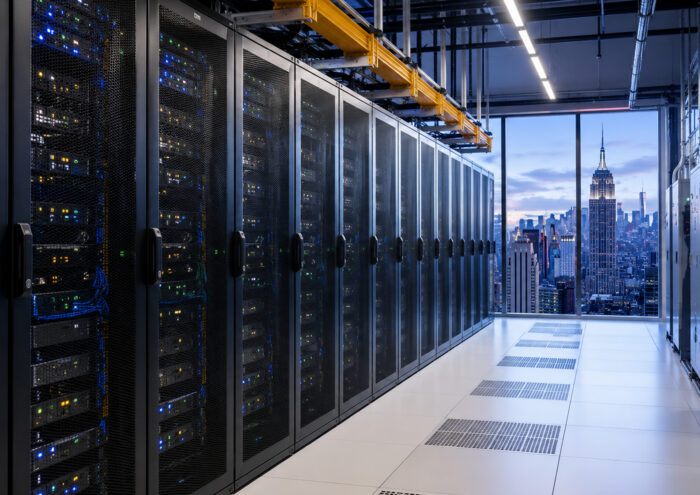
New York businesses depend on fast, secure, and always-available technology to keep operations running. From financial firms in Manhattan and healthcare facilities in Queens to legal offices in Brooklyn, universities in the Bronx, logistics operations near Long Island, and enterprise organizations across Upstate New York, companies need infrastructure that can support constant demand.
That is why reliable Data Centers are essential.
A reliable data center does more than house servers and network equipment. It supports applications, storage, backups, security platforms, cloud connectivity, and mission-critical IT Infrastructure. More importantly, it helps businesses reduce downtime, protect sensitive information, improve performance, and scale with confidence.
When supported by professional Structured Cabling, strong IP Security, strategic Radio Frequency planning, proactive Managed Services, dependable Electricity/Utility Construction, and integrated Audio Visual Services and Solutions, Data Centers become a powerful foundation for business continuity.
Why Data Center Reliability Matters in New York
New York businesses operate in high-pressure environments where even short disruptions can create major consequences. If systems go offline, employees may lose access to files, customers may experience service delays, and security platforms may become harder to manage.
Because of this, data center reliability should be viewed as a business priority, not just an IT concern.
For example, a financial office in Manhattan may need secure access to client records and trading platforms. Meanwhile, a healthcare organization in Queens may rely on protected systems for patient information and clinical workflows. Similarly, a logistics company near Long Island may need inventory, tracking, and warehouse systems to remain online throughout the day.
A reliable data center helps these organizations stay productive, secure, and prepared.
Strong IT Infrastructure Is the Foundation
Reliable IT Infrastructure is the core of every dependable data center. Servers, switches, firewalls, storage platforms, backup systems, cloud connections, and monitoring tools must work together without unnecessary delays or failures.
However, reliability does not happen by accident. It requires careful planning, professional installation, and ongoing maintenance. If infrastructure is outdated, overloaded, or poorly documented, businesses may face slow performance, recurring outages, and expensive emergency repairs.
A strong IT Infrastructure strategy should support:
- High-speed network performance
- Secure system access
- Scalable storage capacity
- Backup and recovery planning
- Redundant network pathways
- Centralized monitoring
- Future technology growth
As a result, New York organizations can operate with fewer disruptions and better control over business-critical systems.
Structured Cabling Keeps Data Centers Organized
Every reliable data center depends on professional Structured Cabling. Cabling connects servers, switches, storage systems, firewalls, access points, cameras, and communication platforms.
If cabling is messy, unlabeled, or poorly routed, troubleshooting becomes harder. In addition, poor cable management can restrict airflow, increase the risk of accidental disconnections, and make future upgrades more complicated.
In contrast, professional Structured Cabling creates a clean, organized, and scalable environment.
Structured Cabling Helps Data Centers By:
- Improving equipment organization
- Supporting high-speed connections
- Reducing cable clutter
- Simplifying troubleshooting
- Improving airflow around hardware
- Supporting future expansion
- Strengthening long-term reliability
Therefore, businesses planning data center upgrades in Manhattan, Brooklyn, Queens, Long Island, or Upstate New York should treat cabling as a critical part of the project.
IP Security Protects Critical Technology Spaces
A reliable data center must also be physically secure. Sensitive systems, network equipment, storage devices, and backup platforms need protection from unauthorized access.
That is where IP Security becomes essential.
Modern IP Security systems can include surveillance cameras, access control, intercoms, visitor management, intrusion detection, and monitoring platforms. When these systems are integrated with Data Centers and IT Infrastructure, businesses gain better control over who can access critical technology spaces.
For instance, a corporate office in Midtown may need restricted access to its server room. Likewise, a university in Brooklyn may require surveillance and entry logs for technology areas. With the right IP Security design, organizations can strengthen facility protection while improving accountability.
Redundancy and Backup Planning Reduce Downtime
Reliability depends heavily on backup systems and redundancy. If one system fails, another should be ready to support operations.
A dependable data center should include planning for:
- Backup power
- Data backups
- Network failover
- Storage redundancy
- Disaster recovery
- Secure off-site or cloud options
- Regular system testing
Additionally, businesses should review how quickly systems can recover after an outage. A backup plan is only valuable if it works when needed.
For New York businesses that depend on constant access to applications, customer records, security footage, or communication tools, recovery planning is a major part of reliability.
Radio Frequency Supports Connected Operations
Although Data Centers rely heavily on wired systems, Radio Frequency can still support important operational needs. RF technologies may assist with wireless monitoring tools, asset tracking, mobile technician access, smart sensors, and facility communication.
However, RF systems must be planned carefully. Poor wireless design can create interference, coverage gaps, or unreliable device performance. Therefore, Radio Frequency planning should be included in the broader data center strategy when wireless tools are part of operations.
This is especially valuable for large offices, campus environments, healthcare facilities, and enterprise spaces where mobility and monitoring matter.
Managed Services Keep Data Centers Performing
Installing a data center is only the beginning. Over time, equipment needs updates, monitoring, troubleshooting, maintenance, and lifecycle planning. That is why Managed Services are so valuable.
Managed Services help businesses identify issues before they cause downtime. In addition, they reduce the burden on internal IT teams by providing proactive support and expert oversight.
Managed Services can support:
- Server and network monitoring
- Backup and recovery oversight
- Device management
- Security system support
- Performance reviews
- Infrastructure documentation
- Preventive maintenance
- Upgrade planning
Consequently, New York businesses can maintain stronger uptime while making smarter long-term technology decisions.
Electricity/Utility Construction Provides the Physical Foundation
Reliable Data Centers need more than servers and software. They also require proper power, grounding, conduit, pathways, racks, mounting, cooling coordination, and utility planning.
That is where Electricity/Utility Construction becomes important.
Without proper physical infrastructure, businesses may face overloaded circuits, poor equipment placement, limited expansion options, or costly rework. However, when electrical and utility planning are aligned with IT Infrastructure, the final environment becomes safer, cleaner, and easier to maintain.
This is especially important during new construction, office renovations, data center upgrades, and commercial buildouts across New York.
Audio Visual Services and Solutions Depend on Data Center Reliability
Modern workplaces rely on Audio Visual Services and Solutions for video conferencing, training rooms, digital signage, command centers, and collaboration spaces. These systems often connect to networks, cloud platforms, servers, storage, and monitoring tools.
If data center infrastructure is unreliable, AV systems may experience lag, dropped calls, disconnected displays, or poor performance. However, when AV planning is supported by reliable Data Centers and strong IT Infrastructure, communication becomes smoother and more dependable.
For example, a Manhattan office may need executive conference rooms that support hybrid meetings, while a healthcare facility in Queens may need secure video consultation spaces. In both cases, backend reliability directly affects user experience.
Why New York Organizations Choose Instrata
Instrata provides professional technology services for commercial, enterprise, industrial, and residential clients throughout New York, as well as Arizona, North Carolina, South Carolina, New Jersey, Pennsylvania, Maryland, and Virginia.
Organizations choose Instrata for:
- Data Centers planning and support
- Structured Cabling
- IP Security
- Radio Frequency solutions
- IT Infrastructure upgrades
- Electricity/Utility Construction
- Managed Services
- Audio Visual Services and Solutions
- Scalable Technologies for growing businesses
Whether supporting a data center upgrade in Manhattan, an IP Security deployment in Brooklyn, a Structured Cabling project in Queens, or an infrastructure expansion across Long Island, Instrata delivers fast, professional, and reliable technology solutions.
Build a Reliable Data Center with Instrata
A reliable data center in New York requires strong IT Infrastructure, organized Structured Cabling, secure IP Security, thoughtful Radio Frequency planning, proactive Managed Services, proper Electricity/Utility Construction, and dependable Audio Visual Services and Solutions. When these systems work together, businesses gain stronger uptime, better security, improved performance, and a scalable foundation for future growth.