

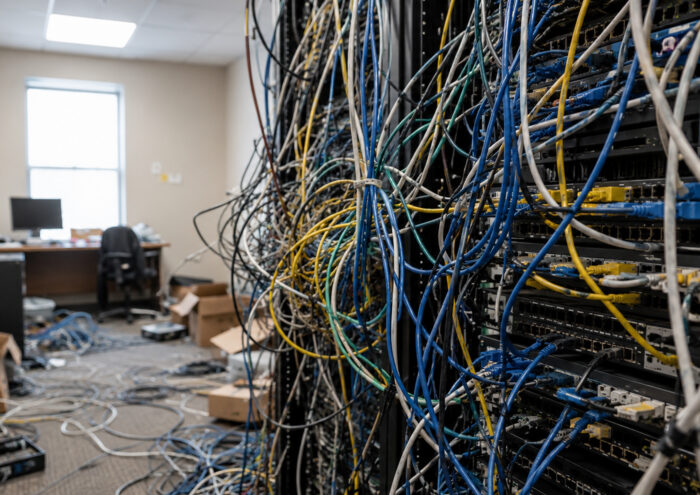
Arizona businesses rely on fast, secure, and dependable technology to keep daily operations moving. From corporate offices in Phoenix and Scottsdale to healthcare facilities in Tucson, manufacturing sites in Mesa, logistics hubs in Tempe, and commercial properties across Chandler, Glendale, and Flagstaff, organizations need network systems that can support people, devices, security, communication, and future growth.
Without Structured Cabling, however, even the best technology can become unreliable.
A professional Structured Cabling system creates the organized physical foundation for modern IT Infrastructure. It connects workstations, servers, switches, phones, wireless access points, security cameras, access control systems, conference room equipment, and other business-critical Technologies. When businesses rely on outdated, messy, or unplanned cabling, they often face slow networks, downtime, security gaps, higher costs, and limited scalability.
Why Structured Cabling Matters for Arizona Businesses
Modern businesses depend on more connected systems than ever before. Employees need cloud applications, video conferencing, secure file access, mobile connectivity, and collaboration tools. At the same time, facilities depend on IP Security, Radio Frequency systems, Data Centers, smart devices, and Audio Visual Services and Solutions.
However, these systems cannot perform reliably without organized cabling behind them. If cables are tangled, unlabeled, outdated, or installed as quick fixes, businesses may struggle to keep networks stable as technology needs grow.
In contrast, Structured Cabling creates a clean, scalable, and standardized network environment. As a result, Arizona organizations can operate more efficiently while giving IT teams better control over performance, maintenance, and future upgrades.
Challenge 1: Slow Network Performance
One of the most common problems businesses face without Structured Cabling is slow network performance. Poor cabling can limit data transmission, create bottlenecks, and reduce the reliability of connected devices.
For example, a Phoenix office may experience lag during cloud-based work or video meetings. Meanwhile, a Mesa manufacturing facility may struggle with delays between production systems, tablets, and inventory tools. Similarly, a Tucson healthcare practice may need stable connections for patient systems, administrative platforms, and secure records.
Without a strong cabling foundation, businesses may experience:
- Slow internet speeds
- Delayed file access
- Dropped VoIP calls
- Unstable cloud applications
- Poor video conferencing quality
- Weak wireless access point performance
Consequently, productivity suffers because employees spend more time waiting on systems and less time completing important work.
Challenge 2: More Downtime and Service Interruptions
Network downtime can quickly disrupt business operations. If cables are poorly installed, damaged, mislabeled, or overloaded, systems may fail without warning.
Even a short outage can affect customer service, employee communication, security monitoring, and revenue. Additionally, recurring downtime can place pressure on internal IT teams and create frustration across departments.
Professional Structured Cabling reduces these risks by creating tested, organized, and documented connections. Without that structure, troubleshooting becomes slower and service interruptions become more difficult to prevent.
Challenge 3: Difficult Troubleshooting
When a network issue occurs, IT teams need to identify the problem quickly. However, unorganized cabling makes that process harder.
If cables are tangled, unlabeled, or routed without documentation, technicians may spend unnecessary time tracing connections. In some cases, a simple issue can take hours to resolve because no one knows which cable supports which device, room, or system.
This can create problems for:
- Workstations
- Wireless access points
- Security cameras
- Access control systems
- Phones
- Servers
- AV equipment
- Data center hardware
Therefore, poor cabling does more than create clutter. It directly affects how quickly a business can recover from technology problems.
Challenge 4: Weak IP Security Performance
Modern IP Security systems rely on stable network connections. Surveillance cameras, access control devices, intercoms, intrusion detection systems, and monitoring platforms all need dependable cabling to perform correctly.
Without Structured Cabling, security systems may experience lagging video, dropped camera feeds, delayed access control responses, or limited recording reliability. As a result, businesses may face security blind spots that increase risk.
For instance, a Scottsdale office may need access control for employee entrances and executive spaces. Likewise, a Tempe logistics facility may require camera coverage across loading docks, parking areas, and storage zones. With poor cabling, these systems become harder to manage, maintain, and expand.
Challenge 5: Poor Radio Frequency and Wireless Connectivity
Although wireless technology is essential, Radio Frequency systems still depend on a strong wired backbone. Wi-Fi access points, RFID tools, mobile scanners, smart sensors, and wireless security devices often connect back to the network through cabling.
If access points are connected through weak or unorganized cabling, wireless performance can suffer. Users may experience dead zones, dropped connections, and slow speeds.
This is especially challenging for Arizona facilities with large floor plans, warehouse spaces, industrial equipment, outdoor areas, or high device density. However, when Structured Cabling and Radio Frequency planning work together, businesses can improve wireless coverage and support more connected devices.
Challenge 6: Limited Scalability
Business needs change quickly. Companies may add employees, renovate offices, expand warehouses, open new locations, or adopt new technologies. Without Structured Cabling, every expansion can become more complicated and expensive.
Unplanned cabling often forces businesses to rely on temporary fixes. Over time, those fixes create clutter, confusion, and performance problems.
A structured system makes it easier to add:
- New workstations
- Additional wireless access points
- More IP Security devices
- Conference room technology
- Data center equipment
- Smart building systems
- Future Technologies
Because of this, Structured Cabling is not just a current network improvement. It is also a long-term investment in business growth.
Challenge 7: Data Center Disorganization
Data Centers and server rooms are central to business continuity. They support applications, storage, backups, cloud connections, security platforms, and network equipment.
Without organized cabling, data center environments can become difficult to manage. Poor cable management may restrict airflow, slow maintenance, increase downtime risk, and make upgrades more complicated.
Structured Cabling helps Data Centers by:
- Improving rack organization
- Supporting high-speed connections
- Reducing cable clutter
- Simplifying troubleshooting
- Supporting redundancy
- Improving airflow
- Preparing for future growth
For Arizona businesses that depend on secure data, customer systems, healthcare platforms, or mission-critical applications, data center organization is essential.
Challenge 8: Higher Long-Term Costs
At first, quick cabling fixes may seem cheaper. Over time, however, poor cabling can lead to repeated service calls, emergency repairs, downtime, and costly rework.
Businesses may also spend more money replacing equipment that is not actually the problem. In many cases, weak infrastructure is the real issue behind recurring network failures.
Professional Structured Cabling helps reduce long-term costs by improving reliability, simplifying maintenance, and making future upgrades easier. Moreover, it gives IT teams a clearer foundation for planning and support.
Challenge 9: AV and Communication Problems
Modern workplaces depend on Audio Visual Services and Solutions for video conferencing, training rooms, conference spaces, digital signage, microphones, speakers, and collaboration platforms.
However, AV systems are only as reliable as the infrastructure behind them. Poor cabling can cause lag, weak audio, dropped video, disconnected displays, and frustrating meeting delays.
For example, a Phoenix boardroom may need dependable hybrid meeting technology, while a Flagstaff training space may require reliable displays and audio systems. In both environments, Structured Cabling helps communication tools work smoothly.
Challenge 10: Utility and Installation Complications
Technology systems require more than data cables. They also need proper power, grounding, conduit, pathways, racks, mounting, and utility coordination. That is where Electricity/Utility Construction becomes important.
If utility planning is not aligned with cabling, businesses may face exposed wiring, overloaded circuits, poor device placement, or expensive rework. Therefore, cabling should be planned alongside electrical and infrastructure needs during new construction, renovations, warehouse expansions, and data center upgrades.
How Managed Services Help Maintain Cabling Performance
Installing Structured Cabling is only the beginning. Over time, networks need monitoring, documentation updates, troubleshooting, maintenance, and upgrade planning. Managed Services help businesses keep infrastructure performing as needs evolve.
Managed Services can support:
- Network performance monitoring
- Device troubleshooting
- Cabling documentation
- Wireless optimization
- IP Security support
- Data center maintenance
- Preventive maintenance
- Technology lifecycle planning
As a result, Arizona businesses can reduce unexpected downtime and make smarter infrastructure decisions.
Why Arizona Businesses Choose Instrata
Instrata provides professional technology services for commercial, enterprise, industrial, and residential clients throughout Arizona, as well as North Carolina, South Carolina, New Jersey, New York, Pennsylvania, Maryland, and Virginia.
Organizations choose Instrata for:
- Structured Cabling
- IP Security
- Radio Frequency solutions
- IT Infrastructure upgrades
- Electricity/Utility Construction
- Managed Services
- Data Centers support
- Audio Visual Services and Solutions
- Scalable Technologies for growing businesses
Whether supporting a Structured Cabling upgrade in Phoenix, an IP Security deployment in Scottsdale, a data center project in Mesa, or a wireless improvement in Tucson, Instrata delivers fast, professional, and reliable technology solutions.
Build a Stronger Network Foundation with Instrata
Without Structured Cabling, Arizona businesses may face slow networks, downtime, security gaps, poor wireless performance, higher costs, and limited scalability. When Structured Cabling is combined with IP Security, Radio Frequency, Managed Services, Data Centers, Electricity/Utility Construction, Audio Visual Services and Solutions, and strong IT Infrastructure, businesses gain a dependable foundation for long-term success.