

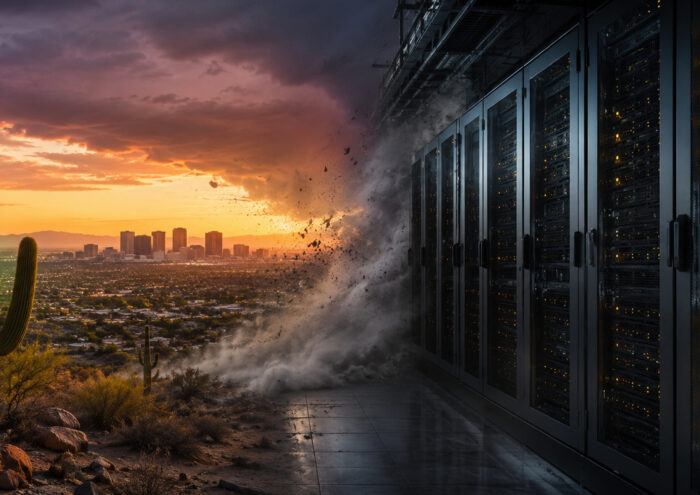
Arizona businesses rely on data every day to manage customers, employees, operations, security, finance, communications, and growth. From corporate offices in Phoenix and Scottsdale to healthcare facilities in Tucson, warehouses in Mesa, industrial sites in Chandler, and enterprise campuses across the state, reliable technology is essential for business continuity.
However, without professionally designed Data Centers, organizations can face serious risks. Data may become harder to protect, systems may be more vulnerable to downtime, and recovery after disruptions can take longer than expected. As companies depend more on cloud platforms, connected devices, IP Security, Radio Frequency tools, and modern Technologies, a weak data environment can quickly become a business liability.
For Arizona organizations, Instrata helps reduce these risks with scalable solutions that include Data Centers, Structured Cabling, IT Infrastructure, Managed Services, Electricity/Utility Construction, and Audio Visual Services and Solutions.
Why Data Centers Matter for Arizona Businesses
Data Centers provide secure, organized, and reliable environments for storing, processing, and managing critical business systems. A data center may support servers, storage platforms, network equipment, backup systems, applications, monitoring tools, and security infrastructure.
Without this type of planned environment, businesses may rely on scattered equipment, overloaded server rooms, poor cabling, limited backup systems, or unsecured storage. As a result, daily operations become more fragile.
A professional data center supports:
- Secure data storage
- Better system uptime
- Centralized IT Infrastructure
- Backup and disaster recovery
- IP Security integration
- Reliable power and utility planning
- Easier monitoring and maintenance
- Long-term scalability
Because Arizona businesses operate in competitive industries, dependable infrastructure is not optional. It is a key part of staying productive, secure, and prepared.
Risk 1: Increased Downtime
One of the biggest risks without Data Centers is downtime. When systems are not housed in a controlled and organized environment, they are more likely to experience failures, overheating, network issues, or power-related problems.
Downtime can affect:
- Employee productivity
- Customer service
- Online platforms
- Security systems
- Payment processing
- File access
- Communication tools
- Business applications
For example, a medical office in Tucson may need constant access to patient records. Meanwhile, a logistics company in Mesa may rely on real-time inventory systems. If those systems go offline, operations can slow immediately.
With properly designed Data Centers, businesses gain a stronger foundation for uptime, monitoring, and recovery.
Risk 2: Poor Data Protection
Data is one of the most valuable assets a business owns. Customer records, financial files, employee information, security footage, project documents, and operational data all need protection.
Without secure Data Centers, sensitive information may be stored in environments that lack proper access control, backup planning, monitoring, or physical security. Consequently, businesses may face greater exposure to data loss, unauthorized access, and compliance concerns.
Professional Data Centers can support secure storage, controlled access, network segmentation, monitoring tools, and backup systems. In addition, when paired with IP Security, businesses can protect both digital assets and physical infrastructure.
Risk 3: Weak IT Infrastructure Performance
Strong IT Infrastructure depends on reliable servers, storage systems, switches, firewalls, cabling, wireless systems, and backup tools. If these components are scattered, outdated, or poorly maintained, performance can suffer.
Without a data center strategy, Arizona businesses may experience slow applications, unstable networks, failed backups, and difficult troubleshooting. Over time, these problems can reduce productivity and increase support costs.
A well-planned data center creates a centralized environment where systems are easier to manage, monitor, and upgrade. Therefore, businesses gain more consistent performance and better long-term value from their technology investments.
Risk 4: Poor Structured Cabling and Network Organization
Behind every reliable data environment is professional Structured Cabling. Cabling connects servers, storage devices, switches, security systems, wireless equipment, and workstations.
Without organized cabling, businesses may face:
- Tangled network rooms
- Unlabeled connections
- Slower troubleshooting
- Accidental disconnections
- Signal issues
- Limited expansion options
- Higher repair costs
Structured Cabling helps create cleaner, safer, and more scalable technology environments. Moreover, it allows IT teams to identify problems faster and make changes with less disruption.
For businesses in Phoenix, Scottsdale, Tempe, and Chandler, professional cabling can make the difference between a network that supports growth and one that slows it down.
Risk 5: Limited Disaster Recovery
Unexpected disruptions can happen at any time. Power outages, hardware failures, cyber incidents, accidental deletions, and severe weather can all impact business systems.
Without Data Centers and proper backup planning, recovery may take longer. In some cases, important information may be lost completely.
Data Centers support disaster recovery by helping businesses centralize backups, protect storage systems, document infrastructure, and restore access more efficiently. As a result, organizations can improve operational continuity and reduce the damage caused by unexpected events.
Risk 6: Weaker IP Security and Physical Protection
Security systems need reliable infrastructure to perform well. Cameras, access control, monitoring platforms, alarms, and video storage all depend on stable networks and secure environments.
Without Data Centers, IP Security systems may struggle with storage limitations, poor connectivity, and inconsistent monitoring. Additionally, if servers or recording equipment are stored in unsecured spaces, security data may be more vulnerable.
A professional data center can support secure video storage, protected equipment areas, access control, and monitoring tools. Therefore, businesses can maintain better visibility across offices, warehouses, campuses, and restricted spaces.
Risk 7: Difficulty Supporting Radio Frequency and Connected Technologies
Many Arizona businesses use Radio Frequency solutions for wireless communication, asset tracking, inventory management, mobile devices, and operational visibility. These tools often depend on strong networks, reliable storage, and secure applications.
Without Data Centers, RF systems may experience performance issues, data delays, or limited integration with other platforms. This can be especially disruptive for logistics, healthcare, manufacturing, retail, and industrial environments.
When Radio Frequency systems are supported by reliable IT Infrastructure and Data Centers, businesses can improve data flow, communication, and operational awareness.
Risk 8: Unreliable Audio Visual Services and Solutions
Modern workplaces depend on Audio Visual Services and Solutions for meetings, training, video conferencing, digital signage, command centers, and hybrid collaboration. However, these systems often rely on network connectivity, applications, storage, and secure infrastructure.
Without strong data center support, AV systems may experience lag, connection failures, content access issues, or inconsistent performance. For Arizona businesses that depend on professional presentations, remote collaboration, and training, these problems can affect productivity and client confidence.
Risk 9: Power and Utility Challenges
Technology systems need reliable power and physical infrastructure. Without proper Electricity/Utility Construction, businesses may face power limitations, overloaded rooms, poor equipment placement, or installation delays.
Data Centers require careful planning for power, cooling, cabling pathways, equipment access, and future expansion. When utility construction and IT planning are coordinated, businesses can avoid costly rework and build safer, more dependable environments.
Why Arizona Businesses Choose Instrata
Instrata serves commercial, enterprise, industrial, and residential clients across Arizona, as well as North Carolina, South Carolina, New Jersey, New York, Pennsylvania, Maryland, and Virginia.
From Data Centers in Phoenix to Structured Cabling in Tucson, IP Security in Scottsdale, IT Infrastructure upgrades in Mesa, Radio Frequency solutions in Chandler, and Audio Visual Services and Solutions in Tempe, Instrata delivers scalable technology solutions tailored to each client’s needs.
Reduce Data Center Risks With Instrata
Without Data Centers, Arizona businesses face higher risks of downtime, data loss, weak security, poor performance, limited scalability, and slower recovery. However, with the right technology partner, organizations can build secure, reliable, and future-ready infrastructure.