

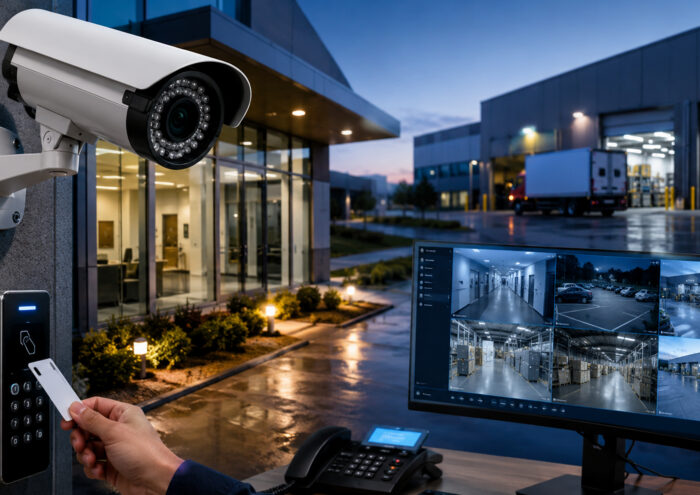
Pennsylvania businesses need security systems that do more than record what happened after an incident. From corporate offices in Philadelphia and healthcare facilities in Pittsburgh to manufacturing plants in Allentown, logistics hubs near Harrisburg, universities in State College, and commercial properties across Lancaster, Scranton, and Erie, organizations need connected protection that supports safety, visibility, and business continuity.
That is why IP Security has become essential.
Unlike traditional analog systems, IP Security uses network-connected cameras, access control devices, intercoms, alarms, and monitoring platforms to create a smarter security environment. When supported by professional Structured Cabling, reliable Radio Frequency, proactive Managed Services, secure Data Centers, coordinated Electricity/Utility Construction, modern Audio Visual Services and Solutions, and strong IT Infrastructure, IP Security helps Pennsylvania businesses reduce risk while improving operational control.
Why IP Security Matters for Pennsylvania Businesses
Security needs are changing quickly. Today, businesses must protect employees, visitors, equipment, inventory, data, facilities, and daily operations. At the same time, many organizations need remote access, real-time monitoring, video storage, access control logs, and scalable systems that can grow with the business.
Because of this, IP Security should not be treated as a standalone camera installation. Instead, it should be part of a complete technology strategy.
For example, a logistics company near Harrisburg may need surveillance across loading docks, parking areas, and warehouse aisles. Meanwhile, a healthcare facility in Pittsburgh may require access control for sensitive areas and patient-facing spaces. Similarly, a corporate office in Philadelphia may need visitor management, lobby cameras, and controlled entry across multiple floors.
With the right IP Security design, each environment can gain stronger protection and better day-to-day visibility.
Benefit 1: Better Visibility Across Facilities
One of the biggest benefits of IP Security is improved visibility. Network-connected cameras and monitoring platforms allow businesses to view activity across offices, warehouses, parking lots, campuses, and restricted areas.
As a result, teams can respond faster when something looks unusual. In addition, video management tools can help businesses review incidents, verify activity, and support internal investigations.
IP Security can help monitor:
- Entrances and exits
- Parking lots and garages
- Loading docks
- Reception areas
- Storage rooms
- Production floors
- Server rooms
- Multi-building campuses
- Remote gates and access points
For Pennsylvania organizations with multiple locations, centralized monitoring can be especially valuable. Instead of managing disconnected systems at each site, businesses can create a more unified security approach.
Benefit 2: Stronger Access Control
Access control is another major advantage of IP Security. Rather than relying only on keys or manual processes, businesses can use credentials, card readers, intercoms, door controllers, and monitoring platforms to manage who enters specific areas.
This helps protect sensitive spaces such as server rooms, executive offices, inventory zones, healthcare areas, and restricted workspaces. Additionally, access logs can support better accountability by showing when authorized users entered certain areas.
For example, a manufacturing facility in Allentown may need controlled access for production areas and equipment rooms. Likewise, a university in State College may need secure entry for labs, offices, and technology spaces. With IP-based access control, organizations can manage permissions more efficiently and adjust access as staffing or facility needs change.
Benefit 3: Improved IT Infrastructure Integration
Modern IT Infrastructure connects networks, servers, switches, cloud platforms, storage systems, wireless devices, and security technologies. Since IP Security runs on the network, it can integrate more naturally with existing systems than older analog solutions.
However, infrastructure planning is critical. Cameras, access control panels, video storage systems, and monitoring software all need reliable bandwidth and secure connectivity.
A strong IT Infrastructure strategy helps support:
- Stable video transmission
- Secure device access
- Centralized monitoring
- Reliable storage
- Remote management
- Scalable system expansion
- Faster troubleshooting
Consequently, businesses can avoid common issues such as lagging video, dropped camera feeds, slow access control response, and limited recording capacity.
Benefit 4: Reliable Performance Through Structured Cabling
Although IP Security is network-based, it still depends on a strong physical foundation. Structured Cabling connects cameras, access control devices, intercoms, switches, servers, monitoring stations, and Data Centers.
If cabling is messy, outdated, or poorly labeled, security systems may become unreliable. In contrast, professional Structured Cabling helps keep systems organized, easier to troubleshoot, and ready for future expansion.
Structured Cabling Supports IP Security By:
- Improving camera connection reliability
- Supporting better video quality
- Reducing troubleshooting time
- Organizing equipment rooms
- Supporting future device additions
- Strengthening network performance
- Improving long-term system stability
For businesses planning renovations, new construction, or facility expansions in Pennsylvania, cabling should be included early in the security design process. This helps prevent costly rework and supports cleaner installations.
Benefit 5: Expanded Coverage with Radio Frequency
Some areas are difficult or expensive to wire. Parking lots, storage yards, temporary job sites, remote gates, and multi-building campuses may need wireless or hybrid connectivity. In these situations, Radio Frequency can help extend IP Security coverage.
Radio Frequency solutions can support wireless cameras, point-to-point connections, mobile monitoring tools, and temporary security deployments. However, RF must be planned carefully to avoid interference, weak signals, or coverage gaps.
For instance, a logistics facility near Harrisburg may need wireless security coverage across a large exterior yard. Meanwhile, a construction site outside Philadelphia may need temporary cameras and remote monitoring during active development. With professional RF planning, businesses can improve coverage without sacrificing reliability.
Benefit 6: Secure Storage Through Data Centers
Data Centers and server rooms often support the backend systems behind IP Security. Video footage, access logs, monitoring platforms, backups, and security applications may all depend on centralized infrastructure.
Because security systems generate large amounts of data, storage planning matters. Without the right data center strategy, businesses may experience limited retention, slow footage retrieval, or unreliable recording performance.
A well-designed data center environment can support:
- Secure video storage
- Access control records
- Backup and recovery systems
- Monitoring applications
- Network equipment
- Redundancy planning
- Business continuity
As Pennsylvania businesses grow, secure and scalable Data Centers become even more important for maintaining reliable protection.
Benefit 7: Lower Downtime with Managed Services
Installing IP Security is only the beginning. Over time, cameras, access control systems, firmware, software, storage platforms, and network devices all need support. That is where Managed Services provide long-term value.
Managed Services help businesses maintain security systems through proactive monitoring, troubleshooting, updates, documentation, and preventive maintenance.
Managed Services can help with:
- Camera health checks
- Access control troubleshooting
- Firmware and software updates
- Network performance reviews
- Storage and retention planning
- User access management
- System documentation
- Upgrade recommendations
Because this support is proactive, businesses can identify issues earlier and reduce the chance of security disruptions.
Benefit 8: Stronger Physical Deployment with Electricity/Utility Construction
IP Security systems require proper power, grounding, mounting, conduit, pathways, and utility coordination. Therefore, Electricity/Utility Construction plays an important role in reliable security deployment.
Without proper planning, businesses may face exposed wiring, overloaded circuits, poorly placed cameras, or expensive rework. However, when electrical and utility planning is aligned with IP Security, Structured Cabling, Radio Frequency, and IT Infrastructure, installations become cleaner and more dependable.
This is especially valuable during new construction, office renovations, warehouse expansions, and commercial buildouts across Pennsylvania.
Benefit 9: Better Communication with Audio Visual Services and Solutions
Audio Visual Services and Solutions can also strengthen IP Security. Video walls, paging systems, intercoms, emergency displays, command centers, and conference systems help teams communicate faster during incidents.
For example, an operations center in Philadelphia may use displays to monitor camera feeds and facility alerts. Meanwhile, a campus in State College may use AV systems for emergency announcements and visitor communication. When AV and IP Security work together, organizations can improve awareness, coordination, and response times.
Why Pennsylvania Organizations Choose Instrata
Instrata provides professional technology services for commercial, enterprise, industrial, and residential clients throughout Pennsylvania, as well as Arizona, North Carolina, South Carolina, New Jersey, New York, Maryland, and Virginia.
Organizations choose Instrata for:
- IP Security
- Structured Cabling
- Radio Frequency solutions
- IT Infrastructure upgrades
- Electricity/Utility Construction
- Managed Services
- Data Centers support
- Audio Visual Services and Solutions
- Scalable Technologies for growing businesses
Whether supporting an IP Security deployment in Philadelphia, a Structured Cabling project in Pittsburgh, a wireless security expansion near Harrisburg, or a data center upgrade in Allentown, Instrata delivers fast, professional, and reliable technology solutions.
Strengthen Security with Instrata
IP Security benefits Pennsylvania businesses by improving visibility, strengthening access control, supporting business continuity, and creating a scalable foundation for long-term protection. When combined with Structured Cabling, Radio Frequency, Managed Services, Data Centers, Electricity/Utility Construction, Audio Visual Services and Solutions, and strong IT Infrastructure, IP Security becomes a powerful part of modern business operations.