

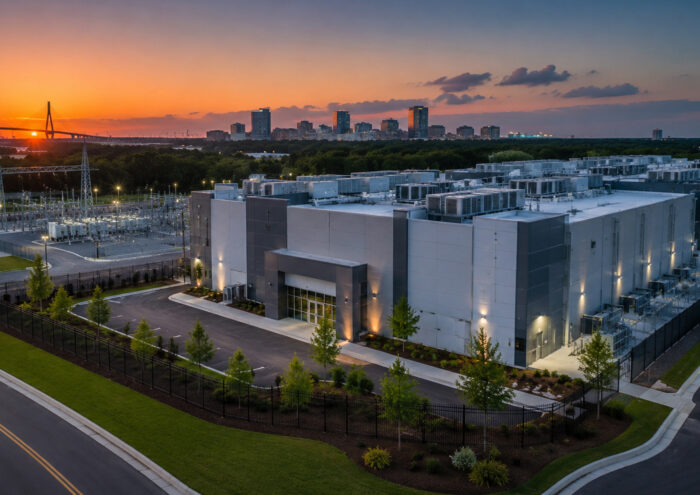
For businesses across South Carolina, reliable technology is essential to daily operations. Whether your organization is located in Charleston, Columbia, Greenville, Spartanburg, Myrtle Beach, Rock Hill, Florence, or another growing commercial community, your teams depend on secure access to applications, data, communications, cloud platforms, and business systems.
Because of this, Data Centers play a critical role in helping companies stay productive, secure, and prepared for growth. A well-designed data center environment supports uptime, protects sensitive information, improves performance, and strengthens business continuity.
When combined with strong IT Infrastructure, professional Structured Cabling, secure IP Security, reliable Managed Services, and modern Technologies, data centers give South Carolina businesses the foundation they need to operate with confidence.
What Is a Data Center?
A Data Center is a dedicated environment that houses and supports critical technology systems. These systems may include servers, storage devices, switches, routers, firewalls, backup systems, cloud connections, and monitoring tools.
Data Centers can be located on-premise, hosted offsite, cloud-based, or designed as part of a hybrid infrastructure strategy. Regardless of the model, the goal is the same: keep business systems secure, available, and performing reliably.
A professional data center solution may support:
- Business applications
- Secure data storage
- Cloud connectivity
- Backup and disaster recovery
- Network performance
- Cybersecurity systems
- IP Security platforms
- Remote access tools
- Server and storage management
- Business continuity planning
For South Carolina organizations in healthcare, logistics, manufacturing, finance, education, legal services, and enterprise operations, data centers are often central to daily success.
Benefit 1: Improved Business Uptime
One of the most important benefits of Data Centers is improved uptime. When systems go down, employees may lose access to files, applications, email, phones, security systems, and customer platforms. As a result, productivity can slow quickly.
A well-planned data center helps reduce downtime through:
- Redundant systems
- Backup power planning
- Network reliability
- Disaster recovery support
- Server monitoring
- Secure storage
- Proactive maintenance
For example, a logistics company in Spartanburg may need uninterrupted access to warehouse and inventory platforms. Meanwhile, a healthcare organization in Columbia may depend on reliable access to patient systems. Similarly, a corporate office in Charleston may need cloud and application availability for hybrid teams.
In each case, data centers help keep operations moving.
Benefit 2: Stronger IT Infrastructure
Reliable IT Infrastructure is the backbone of a successful business. It includes servers, storage, switches, firewalls, routers, cloud platforms, backup systems, and network equipment. A data center brings these components together in a more organized and controlled environment.
This improves:
- System performance
- Network stability
- Application availability
- Remote access
- Security controls
- Equipment management
- Scalability
- Troubleshooting
Moreover, data centers help businesses avoid the risks of relying on outdated server closets or poorly organized equipment rooms. Instead, companies gain a stronger foundation for current operations and future technology needs.
Benefit 3: Better Data Security
Sensitive business data needs strong protection. Customer records, financial data, employee files, intellectual property, contracts, healthcare records, and operational systems all require secure storage and controlled access.
Data Centers support better security by combining physical and digital safeguards.
Security measures may include:
- Firewalls
- Network segmentation
- Access controls
- Backup systems
- Monitoring tools
- User permissions
- Secure storage
- IP Security cameras
- Door access systems
- Video surveillance
For South Carolina businesses that manage regulated or sensitive information, secure data center planning is especially important. Additionally, when IP Security is integrated with the data center environment, organizations can better protect server rooms, network closets, equipment areas, and restricted spaces.
Benefit 4: Easier Scalability
As businesses grow, technology demands increase. More employees, devices, applications, locations, cloud platforms, and security systems all place more pressure on the network.
Data Centers make scalability easier by giving businesses room to expand infrastructure in a planned and organized way.
A scalable data center can support:
- Additional servers
- More storage capacity
- Cloud and hybrid systems
- Expanded security tools
- Higher bandwidth requirements
- New business applications
- Multi-location connectivity
- Future technology upgrades
For example, a manufacturer in Greenville may need to support new production systems. At the same time, a business in Myrtle Beach may be expanding customer-facing services and cloud applications. With the right data center solution, growth becomes easier to manage.
This also gives companies greater confidence when investing in future technology.
Benefit 5: Stronger Structured Cabling and Organization
Professional Structured Cabling is essential to data center performance. Poor cable management can cause downtime, restrict airflow, slow troubleshooting, and make future upgrades more difficult.
Structured Cabling supports Data Centers by providing:
- Fiber optic backbone connections
- Copper network cabling
- Rack-to-rack connectivity
- Organized patch panels
- Clean cable pathways
- Easier maintenance
- Better documentation
- Scalable expansion
Furthermore, clean cabling helps IT teams and Managed Services providers work more efficiently. When cables are labeled, tested, and organized, technicians can identify issues faster and make upgrades with less disruption.
Benefit 6: Better Support for Managed Services
Data Centers require ongoing attention. Systems need monitoring, updates, backups, security reviews, and maintenance. Therefore, Managed Services are an important part of data center success.
Managed Services can help with:
- Server monitoring
- Network support
- Backup verification
- Cybersecurity management
- Patch updates
- Hardware lifecycle planning
- Disaster recovery planning
- Performance reporting
- Vendor coordination
For busy IT managers and business leaders, managed support reduces the pressure of maintaining every system internally. In addition, proactive service helps identify small problems before they become major outages.
Benefit 7: Improved Cloud and Hybrid Technology Performance
Many South Carolina businesses use a combination of local systems, cloud platforms, and remote access tools. Data Centers help support these hybrid Technologies by connecting applications, users, storage, and security systems more reliably.
A strong data center environment can support:
- Cloud application access
- Secure remote work
- Virtual servers
- Backup platforms
- Collaboration tools
- Business applications
- Hybrid infrastructure
- Data synchronization
As a result, employees can access the systems they need more consistently, whether they are working from an office, warehouse, client site, or remote location.
Benefit 8: Support for Radio Frequency and Wireless Operations
Although Data Centers are often associated with wired infrastructure, they also support broader wireless environments. Businesses that rely on Radio Frequency systems, mobile devices, scanners, sensors, and wireless access points need dependable backend infrastructure.
Radio Frequency solutions may support:
- Warehouse scanning
- Asset tracking
- Mobile workstations
- Campus communication
- Facility monitoring
- Wireless security tools
- Industrial connectivity
For warehouses, distribution centers, healthcare facilities, campuses, and manufacturing sites in South Carolina, strong data center infrastructure helps keep wireless systems connected to business applications and storage platforms.
Benefit 9: Better Audio Visual Services and Solutions
Modern communication systems often depend on the network and data center environment. Video conferencing, digital signage, training room technology, monitoring displays, and collaboration platforms all require reliable infrastructure.
Professional Audio Visual Services and Solutions benefit from data center support through:
- Stable network connectivity
- Cloud platform access
- Secure storage
- Digital signage management
- Video system reliability
- Conference room performance
- Business continuity
Consequently, teams can communicate more effectively across offices, departments, and remote locations.
Benefit 10: Stronger Planning for Electricity and Utility Construction
Data Centers depend on proper power, grounding, conduit, pathways, cooling coordination, equipment space, and utility planning. Because of this, Electricity/Utility Construction should be considered early in the process.
This is especially important for:
- New construction projects
- Server room upgrades
- Backup power planning
- Network closet expansions
- Industrial facilities
- Multi-building campuses
- Outdoor technology deployments
By coordinating utility planning with data center design, businesses can reduce delays, avoid rework, and build a stronger technology foundation.
Why South Carolina Businesses Choose Instrata
Instrata helps South Carolina businesses design, deploy, and support reliable data center and technology environments. From Charleston and Columbia to Greenville, Spartanburg, Myrtle Beach, Rock Hill, Florence, and surrounding communities, Instrata supports commercial, enterprise, industrial, and residential clients with scalable technology solutions.
Instrata specializes in:
- Structured Cabling
- IP Security
- Radio Frequency
- IT Infrastructure
- Electricity/Utility Construction
- Technologies
- Managed Services
- Data Centers
- Audio Visual Services and Solutions
By bringing these services together, Instrata helps organizations avoid the complexity of working with multiple disconnected vendors. Instead, businesses can rely on one experienced partner for data centers, cabling, infrastructure, security, managed IT, RF planning, AV systems, and utility coordination.
Additionally, Instrata serves clients across Arizona, North Carolina, New Jersey, New York, Pennsylvania, Maryland, and Virginia, making it a strong choice for regional and multi-location organizations.
Build a Stronger Data Center Foundation with Instrata
Data Centers offer key benefits for South Carolina businesses, including improved uptime, stronger security, better scalability, reliable IT Infrastructure, organized Structured Cabling, Managed Services support, IP Security integration, Radio Frequency connectivity, and dependable Audio Visual Services and Solutions.
For organizations that depend on technology every day, the right data center solution can protect operations and support long-term growth.
Contact us today to learn how structured cabling can transform your business operations