

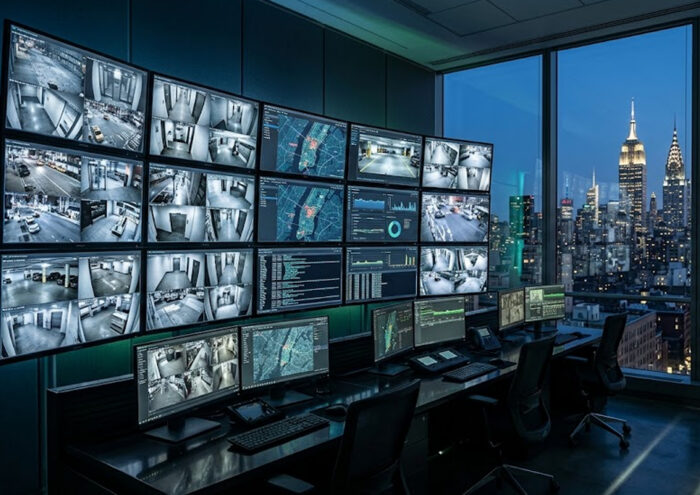
Businesses across New York face a wide range of security challenges every day. From busy offices in Manhattan and Brooklyn to warehouses on Long Island, healthcare facilities in Queens, commercial properties in Westchester, and enterprise locations in Albany, Buffalo, and Rochester, organizations need reliable ways to protect people, property, equipment, and sensitive information.
That is why IP Security systems have become so valuable. Unlike traditional analog security systems, IP-based security uses network-connected cameras, access control, video management platforms, intercoms, and monitoring tools to give businesses smarter, more flexible protection.
When supported by professional Structured Cabling, strong IT Infrastructure, proactive Managed Services, secure Data Centers, and modern Technologies, IP Security systems can help New York businesses improve safety, increase visibility, and respond faster to potential risks.
What Are IP Security Systems?
IP Security systems use internet protocol technology to connect security devices through a business network. These systems can often be monitored locally, remotely, or across multiple locations from a centralized platform.
Common IP Security solutions include:
- Network-connected surveillance cameras
- Access control systems
- Video management software
- Door entry systems
- Intercoms
- Remote monitoring platforms
- Motion detection alerts
- Cloud-based video storage
- Visitor management tools
- Security operations displays
Because these systems are connected, they offer more flexibility than older standalone security equipment. As a result, businesses can manage security more efficiently and scale systems as their needs change.
Benefit 1: Better Visibility Across Your Facility
One of the biggest benefits of IP Security systems is improved visibility. Business owners, facility managers, IT managers, and security teams need to know what is happening across their properties.
IP Security cameras can help monitor:
- Entrances and exits
- Reception areas
- Hallways
- Parking lots
- Loading docks
- Warehouses
- Server rooms
- Data Centers
- Restricted departments
- Outdoor spaces
For example, a retail business in Manhattan may need visibility across customer areas, storage rooms, and entrances. Meanwhile, a warehouse on Long Island may need camera coverage for loading docks, inventory zones, and parking areas. Similarly, a healthcare facility in Queens may need monitoring for restricted access areas and public spaces.
With the right system in place, businesses gain better awareness and stronger daily control.
Benefit 2: Stronger Access Control
Surveillance is important, but security also depends on controlling who can enter specific spaces. IP Security systems can include access control tools that help businesses manage employee, visitor, vendor, and contractor access.
Access control can protect:
- Server rooms
- Network closets
- Executive offices
- Storage areas
- Data Centers
- Finance departments
- Human resources offices
- Employee-only zones
- Utility rooms
- Restricted operational areas
Additionally, access control systems can create logs that show who entered a space and when. This improves accountability and makes incident review easier.
For New York businesses handling sensitive data, expensive equipment, confidential files, or regulated operations, access control is a critical layer of protection.
Benefit 3: Faster Incident Response
When a security issue occurs, response time matters. IP Security systems can help teams verify events quickly, review footage, check access logs, and respond with better information.
These systems can support faster response through:
- Real-time alerts
- Live camera views
- Recorded video playback
- Motion detection
- Access control logs
- Remote monitoring
- Centralized dashboards
As a result, businesses do not have to rely only on delayed reports or incomplete information. Instead, they can review what happened, identify key details, and take appropriate action.
Moreover, recorded footage can support insurance claims, internal investigations, workplace safety reviews, and operational improvements.
Benefit 4: Improved Protection for Sensitive Data and Technology
Business security is not only about protecting physical property. It is also about protecting the technology systems that store, process, and transmit sensitive information.
Data Centers, server rooms, network closets, and equipment areas need strong physical security. If unauthorized individuals access these spaces, business systems and data may be at risk.
IP Security can help protect critical technology areas through:
- Camera coverage at entrances
- Access control for restricted spaces
- Video monitoring of equipment rooms
- Visitor tracking
- Motion alerts
- Remote oversight
- Security logs
For New York organizations in finance, healthcare, legal services, education, logistics, media, and enterprise operations, this protection is essential. Furthermore, combining IP Security with cybersecurity practices creates a more complete business protection strategy.
Benefit 5: Scalable Security for Growing Businesses
As businesses grow, security needs change. A company may add new offices, expand warehouse space, increase staff, install more equipment, or require better access control.
IP Security systems are highly scalable because businesses can often add new cameras, doors, monitoring points, and storage options as needed.
This scalability supports:
- Office expansions
- New locations
- Additional cameras
- More access-controlled doors
- Remote monitoring
- Cloud storage
- Multi-site management
- Future technology upgrades
Consequently, New York businesses can build security systems that grow with them instead of replacing outdated systems every time operations expand.
Benefit 6: Stronger IT Infrastructure Integration
Modern IP Security systems depend on reliable IT Infrastructure. Cameras, access control panels, video storage tools, intercoms, and monitoring platforms all require stable network performance.
Strong IT Infrastructure supports IP Security by improving:
- Camera uptime
- Video quality
- Remote access
- Storage reliability
- Network segmentation
- User permissions
- System monitoring
- Cybersecurity controls
Without reliable infrastructure, businesses may experience dropped camera feeds, delayed alerts, poor video playback, or unreliable access control. Therefore, IP Security should always be planned as part of the larger technology environment.
Benefit 7: Better Performance with Structured Cabling
Professional Structured Cabling is essential for dependable IP Security performance. Even advanced cameras and access control systems can underperform if cabling is outdated, poorly installed, or disorganized.
Structured Cabling supports IP Security through:
- Reliable camera connections
- Power over Ethernet support
- Clean cable pathways
- Organized patch panels
- Scalable device expansion
- Easier troubleshooting
- Better long-term reliability
Additionally, structured cabling makes it easier to expand security systems in the future. For New York businesses renovating offices, upgrading facilities, or opening new locations, cabling should be included early in the security design process.
Benefit 8: Easier Management with Managed Services
IP Security systems need ongoing support. Cameras must stay online, software needs updates, storage must be monitored, and user permissions should be reviewed regularly.
That is why Managed Services are valuable for businesses using IP Security.
Managed Services can help with:
- Device health monitoring
- Network performance reviews
- Security software updates
- User access management
- Video storage support
- Troubleshooting
- Cybersecurity oversight
- Backup coordination
- Documentation
- Vendor management
For busy IT managers and facility teams, managed support reduces the burden of maintaining every system internally. In addition, proactive service helps identify small problems before they become major security gaps.
This creates stronger operational balance as businesses manage security, technology, and daily operations across one or multiple locations.
Benefit 9: Support for Radio Frequency and Wireless Environments
Some New York businesses need security coverage across large facilities, campuses, warehouses, parking areas, or multi-building properties. In these environments, Radio Frequency planning can support wireless security devices, mobile monitoring tools, and broader connectivity.
Radio Frequency can help with:
- Wireless coverage planning
- Outdoor monitoring areas
- Mobile security devices
- Warehouse communication
- Campus connectivity
- Remote access points
- Large property security systems
However, RF systems must be designed carefully to avoid interference, weak coverage, and device dropouts. When Radio Frequency planning works with Structured Cabling and IT Infrastructure, businesses gain more reliable security coverage.
Benefit 10: Stronger Communication with Audio Visual Services and Solutions
Modern Audio Visual Services and Solutions can enhance IP Security by improving how teams view, communicate, and respond to events. Security operations rooms, video walls, intercom systems, emergency messaging, and monitoring displays all support stronger facility awareness.
AV systems can support:
- Security command centers
- Reception area communication
- Visitor screening
- Emergency alerts
- Facility-wide announcements
- Monitoring displays
- Safety training rooms
As a result, businesses can improve coordination between security teams, IT staff, facility managers, and leadership.
Electricity and Utility Construction Considerations
IP Security systems also require proper power, mounting locations, conduit, pathways, grounding, and equipment space. Therefore, Electricity/Utility Construction should be considered early in security planning.
This is especially important for:
- Outdoor cameras
- Parking lot surveillance
- Gate access systems
- Data center security
- Multi-building campuses
- Industrial properties
- New construction projects
- Network closet upgrades
By coordinating power and utility requirements early, businesses can avoid delays, reduce rework, and place security devices where they are most effective.
Why New York Businesses Choose Instrata
Instrata helps New York businesses design, deploy, and support reliable IP Security and technology environments. From Manhattan, Brooklyn, Queens, and Long Island to Westchester, Albany, Buffalo, Rochester, and surrounding communities, Instrata supports commercial, enterprise, industrial, and residential clients with scalable technology solutions.
Instrata specializes in:
- Structured Cabling
- IP Security
- Radio Frequency
- IT Infrastructure
- Electricity/Utility Construction
- Technologies
- Managed Services
- Data Centers
- Audio Visual Services and Solutions
By bringing these services together, Instrata helps organizations avoid the complexity of working with disconnected vendors. Instead, businesses can rely on one experienced partner for security, cabling, infrastructure, managed IT, data centers, RF planning, AV systems, and utility coordination.
Additionally, Instrata serves clients across Arizona, North Carolina, South Carolina, New Jersey, Pennsylvania, Maryland, and Virginia, making it a strong choice for regional and multi-location organizations.
Strengthen Security with Instrata
IP Security systems benefit New York businesses by improving visibility, strengthening access control, supporting faster response, protecting sensitive areas, and creating scalable security environments.
When supported by professional Structured Cabling, reliable IT Infrastructure, Managed Services, Data Centers, Radio Frequency, Electricity/Utility Construction, Technologies, and Audio Visual Services and Solutions, IP Security becomes a powerful foundation for modern business protection.