

South Carolina’s economy is growing across manufacturing, logistics, healthcare, education, and corporate services. From advanced production facilities in Greenville and Spartanburg to port operations in Charleston and corporate offices in Columbia, organizations depend on reliable, secure, and scalable IT Infrastructure to maintain performance and competitiveness.
However, as digital demands increase, many South Carolina businesses face infrastructure challenges that can impact productivity, security, and long-term growth. Understanding these challenges is the first step toward building resilient systems that support operational success.
Here are the most common IT Infrastructure challenges businesses encounter across South Carolina.
Aging Infrastructure and Legacy Systems
Many organizations still rely on outdated hardware, unsupported software, and aging Structured Cabling systems. While these systems may still function, they often struggle to support modern demands such as:
- Cloud computing
- High-definition video conferencing
- IoT integrations
- AI-powered analytics
- Real-time inventory management
Legacy systems can lead to frequent downtime, slow performance, and limited scalability. In rapidly growing markets like Charleston and Greenville, outdated infrastructure can quickly become a competitive disadvantage.
Insufficient Network Bandwidth and Scalability
As companies expand operations and increase device density, bandwidth limitations become more noticeable.
Common symptoms include:
- Slow application performance
- Lag during video conferencing
- Dropped VoIP calls
- Network congestion during peak hours
Without scalable architecture, businesses may repeatedly upgrade equipment without addressing the root problem. A strategic IT Infrastructure plan must account for future growth rather than just current needs.
Weak Wireless and Radio Frequency Performance
Wireless connectivity is critical in modern offices, warehouses, and industrial facilities. Poor Radio Frequency (RF) planning can cause:
- Dead zones
- Signal interference from machinery
- Inconsistent Wi-Fi coverage
- Limited support for high-density devices
Manufacturing and logistics facilities across South Carolina often face RF challenges due to large metal structures and heavy equipment. Professional RF engineering is essential for reliable wireless performance.
Cybersecurity Vulnerabilities
Cyber threats continue to increase, targeting businesses of all sizes. Inadequate cybersecurity measures can expose organizations to:
- Ransomware attacks
- Data breaches
- Phishing campaigns
- Compliance violations
Many businesses struggle with outdated firewalls, weak network segmentation, and limited monitoring capabilities. Integrating digital protection with physical IP Security systems strengthens overall resilience.
Proactive oversight through professional Managed Services significantly reduces risk exposure.
Power Reliability and Utility Constraints
South Carolina’s severe weather—including hurricanes, thunderstorms, and heatwaves—can strain power systems. Without proper Electricity/Utility Construction planning, businesses may face:
- Power surges
- Equipment damage
- Unplanned outages
- Inadequate backup systems
Critical infrastructure, including Data Centers, must have redundant power feeds, UPS systems, and generator support to maintain uptime during disruptions.
Data Center Capacity and Redundancy Issues
As data demands grow, on-site server rooms and regional Data Centers must scale accordingly.
Common Data Center challenges include:
- Limited rack space
- Insufficient cooling
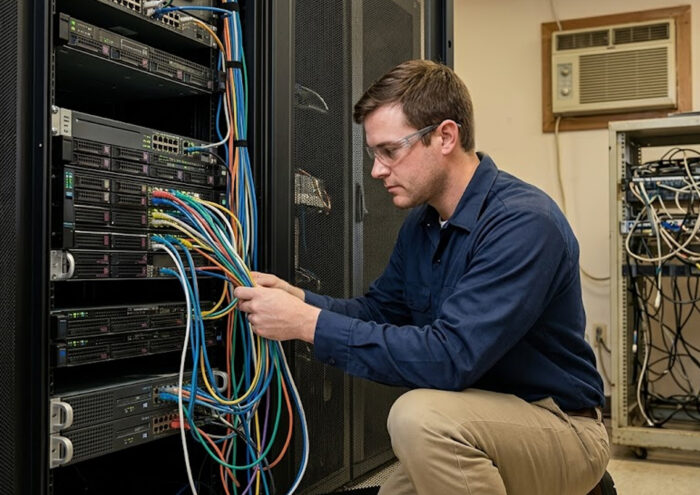
- Poor cable management
- Lack of redundancy
- Inefficient storage utilization
Without proper planning, these limitations can cause overheating, slow performance, and increased downtime risk.
Poor Integration Between Systems
Modern businesses rely on interconnected technologies, including:
- Structured Cabling
- Wireless networks
- IP Security systems
- Audio Visual Services and Solutions
- Cloud platforms
- Enterprise software
When these systems operate in silos rather than as an integrated ecosystem, visibility and performance suffer.
A unified infrastructure design ensures seamless communication between all components.
Rising IT Costs and Budget Uncertainty
Maintaining and upgrading infrastructure can strain budgets—especially when issues are addressed reactively.
Unplanned expenses often stem from:
- Emergency repairs
- Hardware failures
- Security incidents
- Inconsistent vendor coordination
Predictable budgeting through strategic planning and Managed Services helps businesses control costs while improving reliability.
Compliance and Regulatory Pressures
Industries such as healthcare, finance, and government contracting in South Carolina must meet strict compliance standards.
Common compliance challenges include:
- Secure data storage
- Encrypted communication
- Access control documentation
- Audit readiness
- Incident reporting
Failure to maintain compliance can lead to financial penalties and reputational damage.
Limited Internal IT Resources
Many small to mid-sized businesses lack sufficient in-house IT staff to manage complex environments. Internal teams often struggle to handle:
- Infrastructure upgrades
- Security monitoring
- Wireless optimization
- Structured Cabling assessments
- Data Center planning
Without specialized expertise, infrastructure improvements may be delayed or misconfigured.
Lack of Future-Ready Planning
Perhaps the most significant challenge is reactive planning. Businesses that only upgrade systems when failures occur often face recurring disruptions.
Future-ready IT Infrastructure requires:
- Scalable network architecture
- Modern Structured Cabling
- Optimized Radio Frequency systems
- Integrated IP Security
- Reliable Electricity/Utility Construction
- Proactive Managed Services
Planning ahead ensures long-term performance and growth.
Why South Carolina Businesses Trust Instrata
Across South Carolina—including Charleston, Columbia, Greenville, Spartanburg, Rock Hill, and Myrtle Beach—organizations rely on Instrata to overcome infrastructure challenges.
Instrata delivers:
- Comprehensive IT Infrastructure assessments
- Enterprise-grade Structured Cabling solutions
- Advanced Radio Frequency engineering
- Integrated IP Security systems
- Professional Electricity/Utility Construction coordination
- Data Center optimization
- Audio Visual Services and Solutions
- Proactive Managed Services
By aligning technology performance with strategic planning, Instrata helps South Carolina businesses build resilient, scalable, and secure environments.
Overcome Infrastructure Challenges with Confidence
IT Infrastructure challenges are inevitable—but they do not have to limit growth. With the right strategy and expert support, businesses can transform vulnerabilities into opportunities for improvement.
If your South Carolina organization is experiencing performance issues, security concerns, or scalability limitations, Instrata is ready to help.