

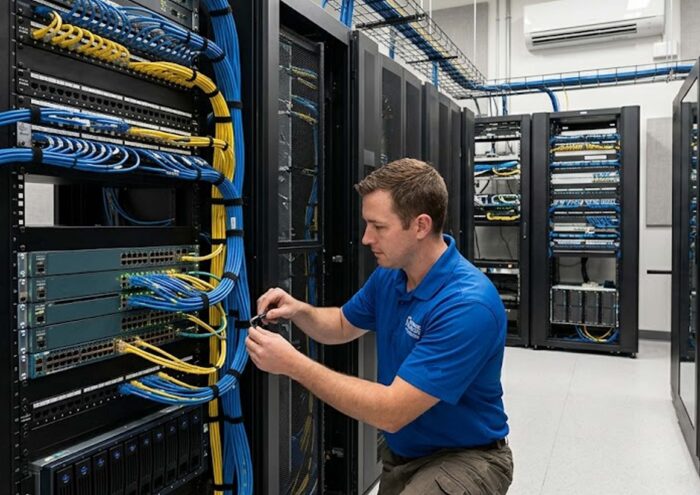
As businesses across Colorado continue to expand—from tech companies in Denver to manufacturing operations in Colorado Springs and logistics hubs in Aurora—reliable network infrastructure has become essential. At the core of this infrastructure is Structured Cabling, which supports everything from daily communication to advanced IT Infrastructure, IP Security, and Data Centers.
However, Colorado’s unique environment and rapid business growth present several challenges when it comes to network cabling. Understanding these issues—and how to solve them—can help businesses build stronger, more efficient systems that support long-term success.
Why Network Cabling Matters
Network cabling is the backbone of your business operations. It connects:
- Computers and servers
- Cloud-based applications
- IP Security systems
- Audio Visual Services and Solutions
- Radio Frequency systems in large facilities
When cabling is poorly designed or installed, it can lead to slow performance, downtime, and scalability issues.
Challenge #1: Harsh and Variable Climate Conditions
Colorado is known for its fluctuating temperatures, dry air, and seasonal weather extremes. These environmental factors can impact cabling performance.
The Problem:
- Expansion and contraction of cables due to temperature swings
- Increased wear and tear on materials
- Potential damage in outdoor or exposed installations
The Solution:
- Use temperature-rated and weather-resistant cabling
- Install protective conduits for exposed wiring
- Design systems with environmental conditions in mind
Planning for climate ensures your Structured Cabling system remains reliable year-round.
Challenge #2: Poor Cable Management
Disorganized cabling is one of the most common issues in network infrastructure.
The Problem:
- Difficult troubleshooting
- Increased risk of accidental disconnections
- Reduced airflow in server rooms and Data Centers
The Solution:
- Implement structured cable pathways and trays
- Clearly label all cables and connections
- Maintain clean and organized rack layouts
Proper cable management improves efficiency and reduces downtime.
Challenge #3: Electrical Interference
Network cables can be affected by interference from nearby power lines or equipment.
The Problem:
- Signal degradation
- Slower network performance
- Intermittent connectivity issues
The Solution:
- Maintain proper separation between power and data cables
- Use shielded cabling where necessary
- Coordinate with Electricity/Utility Construction teams
This ensures consistent and reliable network performance.
Challenge #4: Rapid Business Growth and Scalability
Colorado’s growing economy means businesses often expand quickly—but their infrastructure may not keep up.
The Problem:
- Insufficient cabling capacity
- Frequent and costly upgrades
- Disruptions during expansion
The Solution:
- Design scalable IT Infrastructure from the start
- Install additional capacity for future growth
- Use high-performance cabling such as fiber optics
Scalable systems allow businesses to grow without limitations.
Challenge #5: Inconsistent Installation Standards
Not all contractors follow best practices, leading to inconsistent results.
The Problem:
- Poor-quality installations
- Lack of proper testing and certification
- Increased maintenance costs
The Solution:
- Work with experienced professionals
- Ensure compliance with industry standards (TIA/EIA)
- Require full testing and documentation
High-quality installation ensures long-term reliability.
Challenge #6: Integration with Multiple Technologies
Modern businesses rely on interconnected systems, but many installations treat them separately.
The Problem:
- Compatibility issues between systems
- Increased complexity
- Reduced efficiency
The Solution:
- Choose a provider that offers integrated solutions
- Align cabling with overall IT Infrastructure
- Plan for seamless integration with IP Security, AV, and Data Centers
Integration improves performance and simplifies management.
Challenge #7: Space Constraints in Commercial Buildings
In cities like Denver and Boulder, space limitations can make installations more complex.
The Problem:
- Limited room for cable pathways
- Overcrowded server rooms
- Difficulty expanding systems
The Solution:
- Use high-density cabling solutions
- Optimize rack layouts and cable routing
- Plan efficient use of available space
Smart design ensures maximum performance even in tight environments.
Challenge #8: Lack of Ongoing Maintenance
Many businesses treat network cabling as a one-time project, neglecting long-term upkeep.
The Problem:
- Gradual performance degradation
- Undetected issues
- Unexpected downtime
The Solution:
- Implement proactive Managed Services
- Schedule regular inspections and updates
- Maintain accurate documentation
Ongoing maintenance keeps systems running at peak performance.
Challenge #9: Data Center Complexity
For businesses operating Data Centers, cabling becomes even more critical.
The Problem:
- High-density environments
- Cooling and airflow challenges
- Complex cable management
The Solution:
- Use structured layouts for racks and cabinets
- Separate power and data lines
- Ensure proper airflow and cooling design
Efficient cabling improves both performance and reliability in data centers.
Challenge #10: Keeping Up with Modern Technologies
As businesses adopt new tools and platforms, their cabling systems must keep pace.
The Problem:
- Outdated infrastructure
- Inability to support high-bandwidth applications
- Limited compatibility with new Technologies
The Solution:
- Invest in future-ready cabling (e.g., fiber optics)
- Plan for high-speed data transmission
- Ensure compatibility with evolving systems
Future-proofing your network is essential for long-term success.
Real-World Impact in Colorado
These challenges affect businesses across industries:
- Denver tech companies: Need high-speed, scalable networks
- Colorado Springs manufacturers: Require reliable Radio Frequency systems
- Aurora logistics hubs: Depend on real-time data and connectivity
- Healthcare facilities statewide: Require secure, stable networks
In each case, strong network cabling is critical to operational efficiency.
Why Colorado Businesses Choose Instrata
Instrata helps businesses across Colorado overcome network cabling challenges with reliable, scalable solutions.
What Sets Instrata Apart:
- Expertise in Structured Cabling and IT Infrastructure
- Seamless integration with IP Security, Data Centers, and AV systems
- High-quality, standards-based installations
- Scalable designs for growing businesses
- Ongoing support through Managed Services
From Denver to Colorado Springs, Instrata delivers fast, professional, and dependable solutions tailored to Colorado’s unique environment.
Build a Stronger Network Foundation
Network cabling is more than just infrastructure—it’s the foundation of your business operations. Addressing these challenges early ensures better performance, reduced downtime, and long-term scalability.
By following best practices and working with experienced professionals, Colorado businesses can build systems that support growth and success.
Instrata provides comprehensive solutions across Structured Cabling, IP Security, Radio Frequency, IT Infrastructure, Electricity/Utility Construction, Managed Services, Data Centers, and Audio Visual Services and Solutions.
Contact us today to learn how structured cabling can transform your business operations