

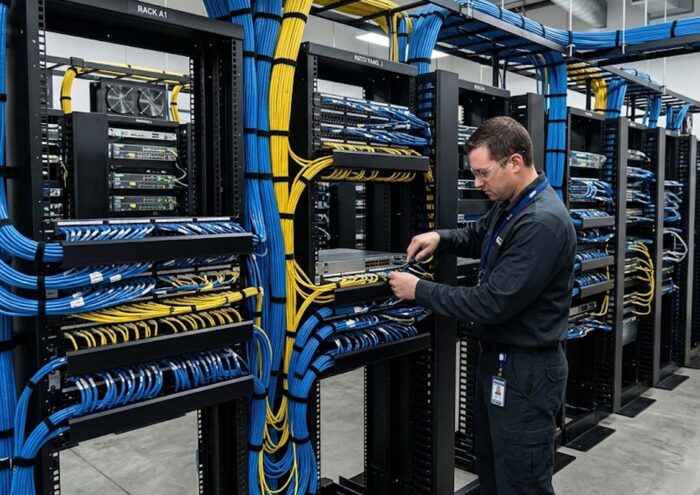
As commercial development continues to expand across Virginia—from office complexes in Northern Virginia to healthcare facilities in Richmond and mixed-use buildings in Virginia Beach—the need for reliable, scalable technology infrastructure is more important than ever. At the core of this infrastructure is Structured Cabling.
Whether you’re constructing a new building or upgrading an existing one, structured cabling plays a critical role in supporting modern business operations. It’s not just about connectivity—it’s about performance, scalability, and long-term efficiency.
Here’s what Virginia businesses, developers, and facility managers need to know.
What Is Structured Cabling?
Structured Cabling is a standardized system of cables, connectors, and hardware that supports your building’s entire IT Infrastructure.
It Connects:
- Data networks and internet systems
- Voice communication systems
- IP Security and access control
- Audio Visual Services and Solutions
- Data Centers and server rooms
Unlike traditional point-to-point wiring, structured cabling is organized, scalable, and designed for long-term performance.
Why It Matters for Commercial Buildings
Commercial buildings in Virginia must support multiple tenants, high device density, and evolving technology needs.
Structured Cabling Provides:
- Reliable and consistent network performance
- Flexibility for tenant changes and expansions
- Support for high-bandwidth applications
- Simplified maintenance and troubleshooting
For property owners and managers, this translates into higher tenant satisfaction and long-term value.
Key Components of a Structured Cabling System
Understanding the core components helps ensure a successful installation.
1. Horizontal Cabling
- Connects workstations to network closets
- Typically uses Cat6 or Cat6a cables
2. Backbone Cabling
- Connects different floors or buildings
- Often uses fiber optics for high-speed transmission
3. Telecommunications Rooms
- Central hubs for network equipment
- Must be properly designed for accessibility and cooling
4. Patch Panels and Racks
- Organize and manage cable connections
- Simplify maintenance and upgrades
Each component must be carefully planned to ensure optimal performance.
Planning for Scalability and Future Growth
One of the biggest advantages of Structured Cabling is its ability to scale.
Best Practices:
- Install extra capacity for future tenants or devices
- Use high-performance cabling (Cat6a or fiber)
- Design systems that support emerging Technologies
In fast-growing regions like Northern Virginia, scalability is essential for long-term success.
Integration with IT Infrastructure
Structured cabling should align with your broader IT Infrastructure.
Integration Areas Include:
- Network hardware (switches, routers, servers)
- Cloud platforms and enterprise applications
- IP Security systems
- Audio Visual Services and Solutions
A well-integrated system ensures seamless communication across all technologies.
Supporting Data Centers and Server Rooms
Many commercial buildings include dedicated spaces for Data Centers or server rooms.
Cabling Best Practices:
- Maintain clean and organized cable layouts
- Ensure proper airflow and cooling
- Label all connections clearly
Efficient cabling improves performance and simplifies future upgrades.
Addressing Virginia’s Unique Requirements
Virginia’s commercial buildings often serve industries with specific needs, such as government, defense, and healthcare.
Considerations Include:
- High-security requirements supported by IP Security
- Compliance with industry and government regulations
- Support for large-scale, multi-tenant environments
Your cabling system must be designed to meet these demands.
The Role of Electricity and Utility Construction
Structured cabling depends on reliable power infrastructure.
Why It Matters:
- Ensures consistent power to network equipment
- Prevents interference between power and data lines
- Supports safe and compliant installations
Electricity/Utility Construction plays a key role in creating a stable foundation for your IT systems.
Enhancing Connectivity with Radio Frequency Solutions
In large commercial buildings, Radio Frequency solutions can enhance connectivity.
Applications Include:
- Wireless networks across multiple floors
- Mobile device connectivity
- IoT and smart building systems
RF technology complements structured cabling, creating a more flexible and efficient environment.
Improving Tenant Experience and Building Value
Modern tenants expect reliable, high-speed connectivity.
Structured Cabling Benefits:
- Faster internet and network performance
- Support for advanced communication tools
- Seamless integration with business technologies
For building owners, this increases property value and attracts high-quality tenants.
The Importance of Professional Installation
The quality of installation directly impacts system performance.
Professional Installation Includes:
- Strategic design and planning
- Standards-based installation (TIA/EIA)
- Clean cable management and labeling
- Full testing and certification
Working with experienced professionals ensures your system is built to last.
Managed Services for Ongoing Performance
After installation, ongoing support is essential. Managed Services help maintain system performance over time.
Benefits Include:
- Continuous monitoring of network health
- Early detection of potential issues
- Regular maintenance and updates
- Reduced downtime
For commercial buildings, this ensures consistent service for tenants.
Common Mistakes to Avoid
Avoid these common pitfalls when implementing structured cabling:
- Designing only for current needs
- Using low-quality materials
- Poor cable management and labeling
- Ignoring integration with other systems
- Skipping testing and documentation
Avoiding these mistakes can save significant time and costs.
Real-World Applications in Virginia
Structured cabling supports a wide range of commercial environments:
- Northern Virginia office buildings: Supporting high-density IT operations and government contractors
- Richmond healthcare facilities: Ensuring secure and reliable data access
- Virginia Beach commercial properties: Enabling scalable connectivity for multiple tenants
- Industrial facilities statewide: Supporting Radio Frequency systems and automation
In each case, structured cabling is essential for performance and growth.
Why Virginia Businesses Choose Instrata
Instrata delivers expert Structured Cabling solutions tailored to commercial buildings across Virginia.
What Sets Instrata Apart:
- Deep expertise in Structured Cabling and IT Infrastructure
- Seamless integration with IP Security, Data Centers, and AV systems
- Scalable solutions for multi-tenant and enterprise environments
- High-quality, standards-based installations
- Ongoing support through Managed Services
From Northern Virginia to Richmond, Virginia Beach to Norfolk, Instrata provides reliable, professional solutions designed for long-term success.
Build a Future-Ready Commercial Building
Structured cabling is the foundation of modern commercial buildings. By investing in a well-designed system, Virginia businesses and property owners can ensure reliable performance, support tenant needs, and prepare for future growth.
Instrata provides comprehensive solutions across Structured Cabling, IP Security, Radio Frequency, IT Infrastructure, Electricity/Utility Construction, Managed Services, Data Centers, and Audio Visual Services and Solutions.
Contact us today to learn how structured cabling can transform your business operations