

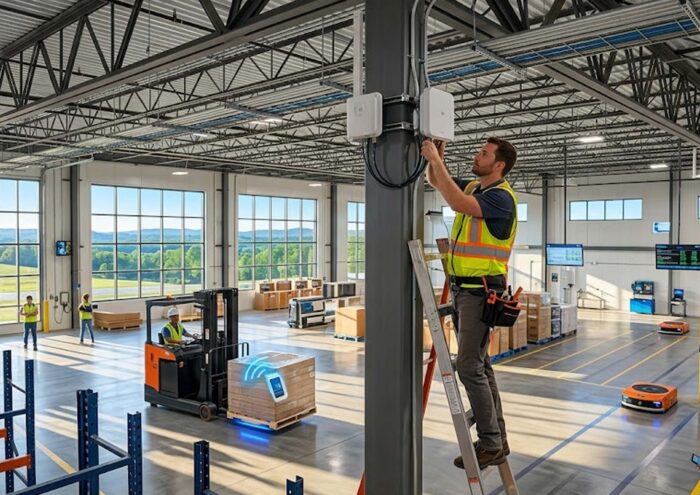
As businesses across North Carolina continue to embrace digital transformation—from manufacturing facilities in Charlotte to healthcare systems in Raleigh and logistics hubs in Greensboro—the demand for flexible, high-performance connectivity is rapidly increasing. While Structured Cabling provides the backbone of most networks, modern environments require more dynamic solutions.
That’s where Radio Frequency (RF) systems come in.
RF systems are a critical component of advanced IT Infrastructure, enabling wireless communication, real-time data transfer, and seamless integration across large-scale operations. For organizations looking to scale and innovate, RF technology is essential.
What Are Radio Frequency Systems?
Radio Frequency (RF) systems use wireless signals to transmit data between devices without relying solely on physical cables.
Common Applications Include:
- Wi-Fi networks
- RFID tracking systems
- Industrial wireless communication
- IoT (Internet of Things) devices
- Mobile workforce connectivity
When integrated with Structured Cabling and core infrastructure, RF systems create a hybrid network that balances speed, flexibility, and scalability.
The Role of RF in Advanced IT Infrastructure
Modern IT Infrastructure must support both wired and wireless connectivity. RF systems extend the reach of your network, enabling communication in areas where cabling alone is not practical.
Key Capabilities:
- Wireless coverage across large facilities
- Real-time data transmission
- Seamless device connectivity
- Support for mobile and remote operations
For North Carolina businesses operating in large or complex environments, RF is essential for maintaining efficiency.
Enhancing Connectivity in Large-Scale Environments
Industries across North Carolina often operate in expansive facilities where traditional cabling has limitations.
RF Systems Are Ideal For:
- Warehouses and distribution centers
- Manufacturing plants
- Healthcare campuses
- Corporate campuses
Benefits:
- Eliminates connectivity gaps
- Reduces the need for extensive cabling
- Enables consistent communication across all areas
This is particularly valuable in logistics hubs like Greensboro, where real-time tracking is critical.
Supporting Manufacturing and Industrial Automation
North Carolina has a strong manufacturing presence, and RF systems play a key role in modernizing operations.
Applications Include:
- Machine-to-machine communication
- Wireless monitoring of production lines
- Integration with automation systems
- Real-time data collection
Business Impact:
- Increased productivity
- Reduced downtime
- Improved operational efficiency
RF systems enable smarter, more responsive manufacturing environments.
Improving Logistics and Inventory Management
In logistics and warehousing, speed and accuracy are everything.
RF Solutions Enable:
- RFID-based inventory tracking
- Real-time shipment updates
- Mobile scanning devices
- Warehouse management systems
Benefits:
- Faster order processing
- Reduced errors
- Improved supply chain visibility
For North Carolina’s growing logistics sector, RF technology is a game-changer.
Enabling Mobility and Workforce Efficiency
Modern workforces need mobility to stay productive.
RF Systems Support:
- Wireless access to business applications
- Mobile communication across teams
- Real-time collaboration
Example:
In healthcare facilities in Raleigh, RF-enabled devices allow staff to access patient data instantly—improving both efficiency and care quality.
Integration with IT Infrastructure
RF systems must integrate seamlessly with your broader IT Infrastructure to deliver maximum value.
Integration Areas Include:
- Structured Cabling for core connectivity
- Data Centers for storage and processing
- Cloud platforms and enterprise applications
- IP Security systems for wireless surveillance
- Audio Visual Services and Solutions for communication
A unified system ensures consistent performance and simplifies management.
Supporting Data Centers and Smart Systems
While Data Centers rely heavily on wired connections, RF systems enhance flexibility.
Use Cases:
- Wireless monitoring of equipment
- Mobile access for IT teams
- Integration with smart sensors and IoT devices
Benefits:
- Improved operational visibility
- Faster response to issues
- Enhanced efficiency
RF adds an extra layer of functionality to traditional data center environments.
Enhancing Communication and Collaboration
Effective communication is essential for business success.
RF Systems Improve:
- Wireless communication networks
- VoIP and mobile communication tools
- Collaboration across large facilities
For businesses in North Carolina, this means faster decision-making and improved teamwork.
Supporting Advanced Technologies and IoT
As organizations adopt new Technologies, RF systems become even more important.
RF Enables:
- IoT devices and smart building systems
- Automation and predictive maintenance
- Wireless sensors and monitoring tools
These innovations are transforming industries across North Carolina.
Reducing Infrastructure Costs and Complexity
Expanding wired networks can be expensive and time-consuming.
RF Systems Help By:
- Reducing the need for extensive cabling
- Simplifying network expansion
- Enabling faster deployment of new systems
This makes RF a cost-effective solution for growing businesses.
Enhancing Security with RF Integration
RF systems also support modern IP Security solutions.
Applications Include:
- Wireless surveillance cameras
- Mobile security monitoring
- Access control systems
Benefits:
- Flexible deployment of security devices
- Real-time alerts and monitoring
- Improved coverage across large areas
For North Carolina businesses, this enhances both safety and operational control.
The Importance of Professional Design and Deployment
RF systems require careful planning to ensure optimal performance.
Key Considerations:
- Coverage area and signal strength
- Interference from physical structures
- Integration with Structured Cabling
- Alignment with overall IT Infrastructure
Working with experienced professionals ensures reliable, high-performance connectivity.
The Role of Managed Services
Maintaining RF systems requires ongoing monitoring and optimization. Managed Services ensure long-term performance.
Benefits Include:
- Continuous monitoring of network performance
- Early detection of signal issues
- Regular updates and optimization
- Reduced downtime
For North Carolina businesses, this proactive approach ensures consistent reliability.
Real-World Applications in North Carolina
RF systems are driving efficiency across industries:
- Charlotte manufacturing facilities: Supporting automation and real-time communication
- Raleigh healthcare systems: Enabling mobile access to critical data
- Greensboro logistics hubs: Improving inventory tracking and operations
- Corporate campuses statewide: Enhancing collaboration and connectivity
In each case, RF technology is a key component of advanced infrastructure.
Why North Carolina Businesses Choose Instrata
Instrata delivers advanced Radio Frequency solutions designed for modern IT Infrastructure.
What Sets Instrata Apart:
- Expertise in Radio Frequency and Structured Cabling
- Seamless integration with IT Infrastructure, Data Centers, and IP Security
- Scalable solutions tailored to business growth
- High-quality, standards-based installations
- Ongoing support through Managed Services
From Charlotte to Raleigh, Greensboro to Durham, Instrata provides reliable, future-ready RF systems.
Build a Smarter, More Connected Infrastructure
In today’s digital landscape, connectivity must go beyond cables. Radio Frequency systems provide the flexibility, mobility, and real-time communication needed to support advanced operations.
By integrating RF with Structured Cabling and core IT Infrastructure, North Carolina businesses can improve efficiency, reduce costs, and scale with confidence.
Instrata provides comprehensive solutions across Structured Cabling, IP Security, Radio Frequency, IT Infrastructure, Electricity/Utility Construction, Managed Services, Data Centers, and Audio Visual Services and Solutions.
Contact us today to learn how structured cabling can transform your business operations