

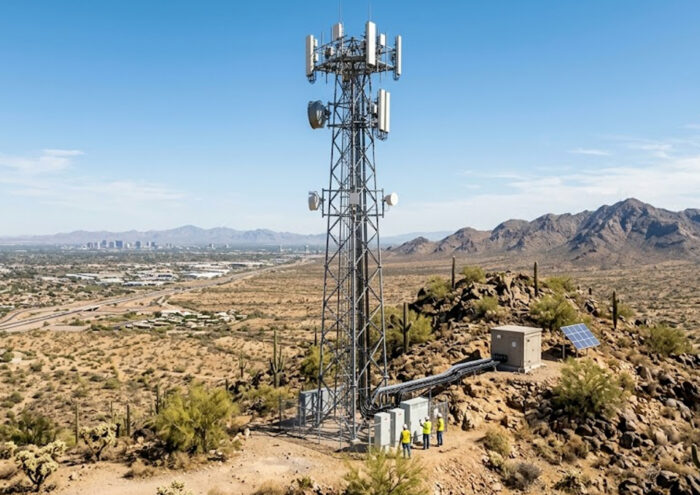
Arizona’s telecommunications landscape is expanding rapidly. From high-growth metro areas like Phoenix and Scottsdale to industrial corridors in Mesa and Tucson, reliable connectivity is essential for businesses, government agencies, healthcare providers, and educational institutions.
At the core of modern telecommunications systems is Radio Frequency (RF) technology. RF enables wireless communication across vast distances and supports the backbone of mobile networks, broadband connectivity, emergency communications, and enterprise systems.
When engineered and integrated properly with IT Infrastructure, Structured Cabling, and resilient Electricity/Utility Construction, Radio Frequency technology strengthens telecommunications infrastructure across Arizona’s diverse environments.
Understanding Radio Frequency in Telecommunications
Radio Frequency refers to the use of electromagnetic waves to transmit data wirelessly between devices, towers, and network systems. In telecommunications infrastructure, RF supports:
- Cellular networks (4G, 5G, and beyond)
- Fixed wireless broadband
- Public safety communication systems
- Satellite communications
- Microwave backhaul systems
- IoT and smart infrastructure connectivity
In Arizona’s expansive geographic landscape—including urban centers, rural communities, and desert regions—RF technology ensures consistent communication across long distances.
Why RF Is Critical in Arizona
Arizona presents unique infrastructure challenges:
- Large rural areas with limited wired connectivity
- Rapid population growth in metro regions
- High temperatures that impact equipment performance
- Expanding industrial and logistics operations
Radio Frequency technology bridges connectivity gaps where fiber deployment may be impractical or cost-prohibitive. It enables telecommunications providers to deliver high-speed wireless services across the state efficiently.
In growing cities like Phoenix and Chandler, RF supports high-density cellular traffic, while in rural communities, it provides essential broadband access.
RF and Cellular Network Expansion
As 5G networks continue to expand across Arizona, RF engineering becomes increasingly important. Telecommunications providers must carefully design:
- Cell tower placement
- Small cell deployments
- Signal strength optimization
- Frequency spectrum allocation
- Interference mitigation strategies
Proper RF planning ensures reliable mobile connectivity for businesses, residents, and public safety agencies.
High-performance telecommunications infrastructure supports mobile workforces, cloud-based applications, and advanced IP Security systems that depend on uninterrupted connectivity.
Supporting Enterprise IT Infrastructure
Modern enterprises rely on telecommunications networks to support their IT Infrastructure. RF technology enhances enterprise operations by enabling:
- Wireless WAN connectivity
- Backup network redundancy
- Remote site communication
- Secure data transmission
For logistics centers in Tucson or corporate campuses in Scottsdale, RF-enabled telecommunications provide flexibility and continuity in case of wired network disruptions.
Integrating Structured Cabling with RF Systems
Although RF powers wireless communication, it still depends on a reliable physical backbone. Structured Cabling connects:
- Cellular base stations
- Network switches and routers
- Antenna systems
- Data Center equipment
- Edge computing devices
High-quality cabling ensures efficient signal transmission between RF equipment and core telecommunications infrastructure.
Professional installation minimizes signal loss and supports scalable network expansion throughout Arizona.
Data Centers and Telecommunications Infrastructure
Arizona continues to attract new Data Centers, particularly in metro Phoenix. These facilities rely on telecommunications infrastructure powered by RF and fiber integration.
RF plays a role in:
- Microwave backhaul connections
- Wireless monitoring systems
- Redundant communication links
- Edge data transmission
When integrated with resilient Electricity/Utility Construction, telecommunications infrastructure supports the uptime and redundancy requirements critical to Data Center operations.
Public Safety and Emergency Communications
Radio Frequency technology is essential for public safety systems across Arizona. Fire departments, law enforcement, emergency responders, and utility crews rely on RF-based communication networks for:
- Two-way radios
- Emergency dispatch systems
- Disaster response coordination
- Rural communication coverage
Reliable RF telecommunications infrastructure ensures seamless communication during extreme heat events, monsoon storms, and other emergencies.
Electricity/Utility Construction for RF Reliability
Telecommunications towers and RF equipment require dependable power infrastructure. Professional Electricity/Utility Construction ensures:
- Stable electrical feeds for tower sites
- Backup generators and battery systems
- Surge protection
- Climate-controlled equipment enclosures
Arizona’s extreme temperatures can strain telecommunications equipment. Proper electrical and environmental planning extends equipment lifespan and improves reliability.
Enhancing Security with IP Security Integration
Telecommunications facilities and tower sites must be protected from unauthorized access. Integrating IP Security systems with RF infrastructure enhances protection through:
- Remote surveillance monitoring
- Access control systems
- Perimeter detection sensors
- Real-time alerts
Secure telecommunications infrastructure ensures network integrity and prevents service disruptions.
The Role of Managed Services
Ongoing monitoring and optimization are essential for RF-based telecommunications systems. Through proactive Managed Services, organizations can:
- Monitor network performance
- Detect interference issues
- Manage firmware updates
- Optimize signal strength
- Ensure regulatory compliance
Managed Services provide long-term reliability and help telecommunications providers adapt to evolving technology demands.
Supporting Audio Visual and Smart Infrastructure
Telecommunications infrastructure powered by RF also supports Audio Visual Services and Solutions in commercial and municipal environments.
Examples include:
- Digital signage networks
- Public information displays
- Smart transportation systems
- Campus-wide communication platforms
Reliable RF connectivity ensures these systems operate without disruption.
Benefits of Professional RF Engineering
Organizations that invest in professional Radio Frequency planning gain significant advantages:
- Improved signal reliability
- Expanded coverage areas
- Reduced interference
- Greater scalability
- Enhanced network redundancy
In Arizona’s diverse geographic and economic landscape, optimized RF infrastructure supports both urban growth and rural connectivity.
Why Arizona Organizations Choose Instrata
Across Arizona—including Phoenix, Mesa, Tucson, Scottsdale, Chandler, and surrounding communities—businesses and telecommunications providers rely on Instrata for comprehensive infrastructure solutions.
Instrata delivers:
- Expert Radio Frequency engineering
- Enterprise-grade Structured Cabling
- Robust IT Infrastructure design
- Advanced IP Security systems
- Professional Electricity/Utility Construction
- Data Center support
- Integrated Audio Visual Services and Solutions
- Proactive Managed Services
By combining RF expertise with full-spectrum technology integration, Instrata helps organizations build resilient and scalable telecommunications infrastructure.
Build Stronger Telecommunications Infrastructure in Arizona
As demand for wireless connectivity, 5G expansion, and smart technologies continues to grow, Radio Frequency will remain at the heart of Arizona’s telecommunications infrastructure.
If your organization is planning a network expansion, tower deployment, facility upgrade, or infrastructure modernization, Instrata is ready to help.