

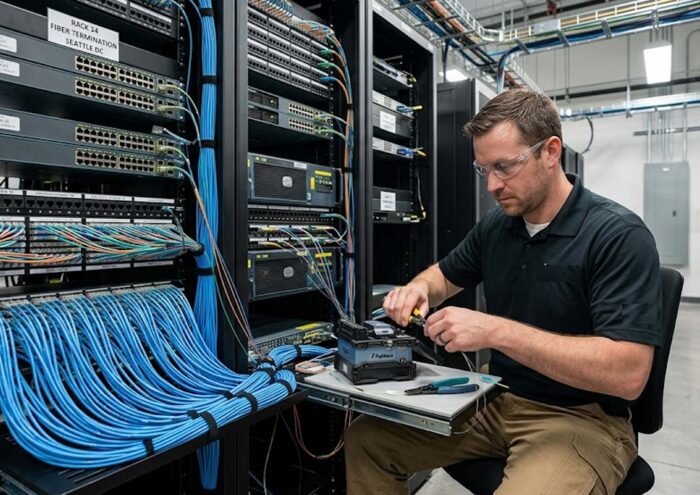
In today’s high-speed digital economy, Washington businesses—from Seattle tech firms to healthcare facilities in Spokane and manufacturing operations in Tacoma—depend on fast, reliable connectivity. Fiber optic infrastructure has become the backbone of modern IT Infrastructure, powering everything from cloud applications to IP Security systems and enterprise Data Centers.
But here’s the critical question: Is your current fiber optic installation supporting your growth—or slowing you down?
If your network struggles with performance, scalability, or reliability, your fiber setup may be holding your organization back.
Why Fiber Optic Infrastructure Is Mission-Critical
Fiber optics offer unmatched bandwidth, speed, and signal integrity compared to traditional copper cabling. For Washington organizations embracing digital transformation, fiber supports:
- High-speed cloud connectivity
- Hybrid and remote work environments
- Advanced Radio Frequency wireless networks
- Real-time data processing
- Enterprise-grade IP Security systems
- Seamless Audio Visual Services and Solutions
However, not all fiber installations are created equal. Improper design or outdated infrastructure can limit performance and create operational risks.
Signs Your Fiber Installation May Be Holding You Back
Many businesses don’t realize their infrastructure limitations until problems surface. Here are common warning signs.
Network Bottlenecks During Peak Usage
If your systems slow down during high-traffic periods, your fiber backbone may lack proper capacity planning. Insufficient bandwidth can impact:
- Cloud-based applications
- VoIP systems
- Video conferencing
- Surveillance camera feeds
- Data transfers between offices
A professionally designed Structured Cabling and fiber system should anticipate future growth—not just current demand.
Frequent Downtime or Intermittent Connectivity
Unexplained outages often trace back to:
- Poor termination practices
- Inadequate testing and certification
- Physical cable damage
- Improper routing or protection
In Washington’s varied climate—where moisture and temperature fluctuations can affect infrastructure—professional-grade installation is critical.
Limited Scalability for Expansion
Washington’s business landscape is expanding rapidly, especially in technology, healthcare, and logistics sectors. If your infrastructure cannot easily support:
- Additional workstations
- Expanded Data Centers
- New office locations
- Increased wireless density
then your fiber design may not be future-ready.
Poor Documentation and Cable Management
Disorganized fiber runs and unlabeled connections create headaches for IT teams. Troubleshooting becomes time-consuming and costly.
A high-quality installation includes:
- Clean cable management
- Detailed labeling
- Testing reports
- As-built documentation
These best practices support long-term operational efficiency and simplify upgrades.
Common Fiber Installation Mistakes
Understanding common pitfalls can help you evaluate your current provider or plan your next upgrade.
Cutting Corners on Materials
Low-quality fiber components may reduce upfront costs but increase long-term risks. Inferior connectors, patch panels, or enclosures can degrade performance.
Ignoring Redundancy Planning
For enterprise clients in Seattle, Bellevue, and across Washington, redundancy is essential. Without backup paths and diversified routing, a single cable failure can disrupt operations.
Failing to Integrate with Broader IT Infrastructure
Fiber installation should align with your entire IT Infrastructure strategy, including:
- Network architecture
- Power systems through Electricity/Utility Construction
- Security segmentation
- Wireless design using Radio Frequency analysis
- Managed monitoring and optimization
When fiber is treated as an isolated project, inefficiencies follow.
The Business Impact of Poor Fiber Design
A suboptimal fiber setup doesn’t just cause IT frustration—it affects your bottom line.
Potential consequences include:
- Lost productivity
- Revenue disruptions
- Security vulnerabilities
- Compliance risks
- Increased maintenance costs
For industries such as healthcare, finance, manufacturing, and technology, even brief downtime can have significant financial and reputational consequences.
How to Optimize Your Fiber Optic Installation in Washington
If your current setup is limiting performance, the solution starts with a comprehensive assessment.
Conduct a Professional Infrastructure Audit
A qualified technology partner will evaluate:
- Current bandwidth usage
- Fiber routing and redundancy
- Termination quality
- Environmental protection
- Future capacity requirements
This assessment identifies both immediate concerns and long-term improvement opportunities.
Upgrade to Scalable Structured Cabling
Modern Structured Cabling designs integrate fiber and copper infrastructure for maximum flexibility. Planning for higher-density environments ensures your network grows with your business.
Integrate Security and Data Center Best Practices
Enterprise fiber networks should support:
- Secure IP Security camera systems
- Segmented network traffic
- High-availability Data Centers
- Disaster recovery planning
Implement Ongoing Managed Services
Fiber infrastructure is not “set it and forget it.” Proactive Managed Services provide:
- Continuous monitoring
- Performance optimization
- Preventative maintenance
- Rapid response to issues
This approach minimizes downtime and extends the life of your investment.
Why Washington Businesses Choose Instrata
Organizations across Washington trust Instrata for comprehensive technology solutions that go beyond simple installation.
Our expertise includes:
- Advanced fiber optic and Structured Cabling systems
- Enterprise-grade IP Security integration
- Strategic Radio Frequency wireless deployments
- Scalable IT Infrastructure design
- Code-compliant Electricity/Utility Construction
- Secure, high-performance Data Centers
- Integrated Audio Visual Services and Solutions
- Proactive Managed Services
From Seattle corporate campuses to Tacoma industrial facilities and Spokane healthcare networks, we deliver fast, professional, and reliable solutions tailored to each client’s operational goals.
We understand Washington’s regulatory environment, growth trajectory, and industry demands. Every fiber deployment is designed with scalability, security, and business continuity in mind.
Don’t Let Your Infrastructure Limit Your Growth
Your fiber optic installation should empower your organization—not restrict it. If you’re experiencing performance issues, planning an expansion, or upgrading legacy infrastructure, now is the time to evaluate your system.
Instrata provides innovative, scalable technology solutions designed to support Washington businesses at every stage of growth.