

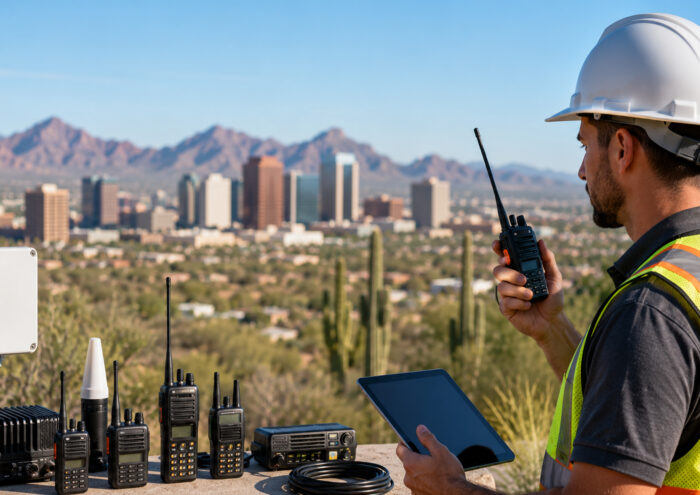
Arizona businesses rely on dependable wireless connectivity to keep teams productive, facilities secure, and operations running smoothly. From corporate offices in Phoenix and Scottsdale to healthcare facilities in Tucson, manufacturing sites in Mesa, logistics hubs in Tempe, and commercial properties across Chandler, Glendale, and Flagstaff, organizations need Radio Frequency solutions that support speed, security, mobility, and long-term growth.
Choosing the right RF solution is not just about adding access points or boosting wireless signal. Instead, it requires a complete look at your IT Infrastructure, building layout, connected devices, security needs, Structured Cabling, IP Security, Managed Services, Data Centers, Electricity/Utility Construction, and Audio Visual Services and Solutions.
When the right systems work together, Arizona businesses can improve reliability, reduce downtime, and prepare for future Technologies with confidence.
Why Radio Frequency Matters for Arizona Businesses
Radio Frequency, often called RF, enables wireless communication between devices, networks, equipment, and systems. It supports Wi-Fi, RFID tracking, mobile scanners, wireless cameras, smart sensors, point-to-point links, warehouse tools, and collaboration platforms.
Because businesses now depend on mobile and connected technologies, RF performance directly affects daily operations. If wireless coverage is weak, employees may experience dropped connections, slow applications, unreliable scanners, or poor video conferencing. As a result, productivity can decline and IT teams may spend more time troubleshooting recurring problems.
For example, a logistics facility in Tempe may need RF coverage for mobile scanners and inventory systems. Meanwhile, a healthcare organization in Tucson may require secure wireless access for clinical staff moving between departments. Similarly, a Phoenix office may need reliable wireless connectivity for conference rooms, guest networks, and hybrid employees.
Start by Evaluating Your Facility and Use Case
Before choosing a Radio Frequency solution, businesses should evaluate how wireless technology is used throughout the facility. A corporate office, warehouse, healthcare environment, school, and manufacturing plant will all have different RF needs.
Important factors include:
- Facility size and layout
- Number of users and connected devices
- Indoor and outdoor coverage needs
- Building materials and possible interference
- Security and compliance requirements
- Mobile device usage
- Future growth plans
- Integration with existing IT Infrastructure
Additionally, Arizona businesses should consider environmental conditions. Large industrial spaces, outdoor yards, concrete walls, metal shelving, and high device density can all affect wireless performance.
Consider Coverage, Capacity, and Reliability
A good RF solution must provide more than basic coverage. It also needs enough capacity to support users, devices, and applications during peak demand.
Coverage answers the question, “Where does the signal reach?” Capacity answers, “How many devices can use the network effectively at the same time?” Both matter.
Warning Signs Your RF System May Need Improvement
Businesses may need a new RF solution if they experience:
- Wireless dead zones
- Slow speeds during busy periods
- Dropped connections
- Poor scanner or tablet performance
- Unreliable video meetings
- Weak outdoor connectivity
- Interference from nearby systems
- Difficulty supporting new devices
Therefore, a professional RF assessment is often the best starting point. It helps identify signal gaps, interference sources, access point placement, and the right technology fit for the environment.
Make Sure Structured Cabling Supports RF Performance
Although Radio Frequency is wireless, it still depends on strong wired infrastructure. Structured Cabling connects access points, switches, servers, security devices, AV systems, and network equipment to the broader business network.
If cabling is outdated, poorly labeled, or installed without a scalable design, RF performance may suffer. Access points may not receive enough bandwidth, troubleshooting may take longer, and future upgrades may become more expensive.
Professional Structured Cabling helps support:
- Stronger access point performance
- Faster network speeds
- Cleaner equipment rooms
- Easier troubleshooting
- Better support for IP Security
- Connectivity for Data Centers
- Long-term IT Infrastructure scalability
Consequently, businesses should evaluate cabling before investing in major RF upgrades.
Align RF with IP Security Requirements
Modern IP Security systems often rely on wired and wireless connectivity. Cameras, access control devices, intercoms, alarms, sensors, and monitoring platforms need stable communication to protect people, property, and operations.
In some Arizona facilities, cabling every security device may not be practical. Parking lots, remote gates, outdoor storage yards, temporary job sites, and multi-building campuses may require wireless or hybrid RF solutions.
For instance, a Scottsdale commercial property may need wireless cameras for parking areas. Likewise, a Mesa manufacturing site may need connected security coverage across production zones and exterior spaces. With proper RF planning, businesses can extend IP Security coverage while reducing blind spots.
Review Data Centers and Backend Infrastructure
Data Centers and server rooms support many systems that depend on RF technology. Wireless controllers, network switches, security platforms, storage systems, backups, and monitoring tools may all connect through backend infrastructure.
If these systems are outdated or overloaded, wireless performance can decline. Therefore, businesses should evaluate data center readiness before choosing an RF solution.
A strong data center environment should support:
- Network performance
- Storage and backup needs
- Security platforms
- Monitoring systems
- Scalable switching
- Redundancy planning
- Future technology growth
As a result, RF systems can operate more reliably and support larger business demands over time.
Include Electricity/Utility Construction in the Plan
Radio Frequency systems require proper physical support. Access points, antennas, network cabinets, security devices, and connected equipment may need power, grounding, conduit, mounting, pathways, and utility coordination.
That is where Electricity/Utility Construction becomes important. During new construction, renovations, office expansions, warehouse upgrades, or data center improvements, electrical planning should align with RF and IT Infrastructure needs.
If this step is skipped, businesses may face poor device placement, overloaded circuits, exposed wiring, or costly rework. However, when utility planning is coordinated early, the final installation is cleaner, safer, and more reliable.
Think About Audio Visual Services and Solutions
Modern Audio Visual Services and Solutions often depend on strong wireless performance. Video conferencing, wireless presentation systems, microphones, room controls, digital displays, and collaboration platforms all require stable connectivity.
If RF coverage is weak, meetings may suffer from dropped audio, lagging video, disconnected devices, or unreliable screen sharing. Because of this, Arizona businesses should include AV requirements when evaluating RF solutions.
A Phoenix boardroom, Scottsdale training center, or Tucson healthcare conference space may all need RF support that keeps collaboration tools working smoothly.
Plan for Managed Services and Ongoing Optimization
Choosing the right RF solution does not end after installation. Wireless environments change as businesses add employees, devices, walls, equipment, applications, and security systems.
That is why Managed Services are valuable. Managed Services help businesses monitor, maintain, troubleshoot, and optimize Radio Frequency systems over time.
Managed Services can support:
- Wireless performance monitoring
- Access point health checks
- Device connectivity reviews
- Network troubleshooting
- IP Security support
- Data center coordination
- Documentation updates
- Upgrade planning
Consequently, Arizona businesses can reduce downtime, improve user experience, and make smarter technology decisions as needs evolve.
Why Arizona Businesses Choose Instrata
Instrata provides professional technology services for commercial, enterprise, industrial, and residential clients throughout Arizona, as well as North Carolina, South Carolina, New Jersey, New York, Pennsylvania, Maryland, and Virginia.
Organizations choose Instrata for:
- Radio Frequency planning and deployment
- Structured Cabling
- IP Security
- IT Infrastructure upgrades
- Electricity/Utility Construction
- Managed Services
- Data Centers support
- Audio Visual Services and Solutions
- Scalable Technologies for growing businesses
Whether supporting an RF upgrade in Phoenix, an IP Security deployment in Scottsdale, a Structured Cabling project in Tucson, or a data center improvement in Mesa, Instrata delivers fast, professional, and reliable technology solutions.
Choose the Right RF Solution with Confidence
The right Radio Frequency solution should support coverage, capacity, security, scalability, and long-term reliability. When RF is planned alongside Structured Cabling, IP Security, Managed Services, Data Centers, Electricity/Utility Construction, Audio Visual Services and Solutions, and strong IT Infrastructure, Arizona businesses gain a stronger foundation for modern operations.
Contact us today to learn how structured cabling can transform your business operations