

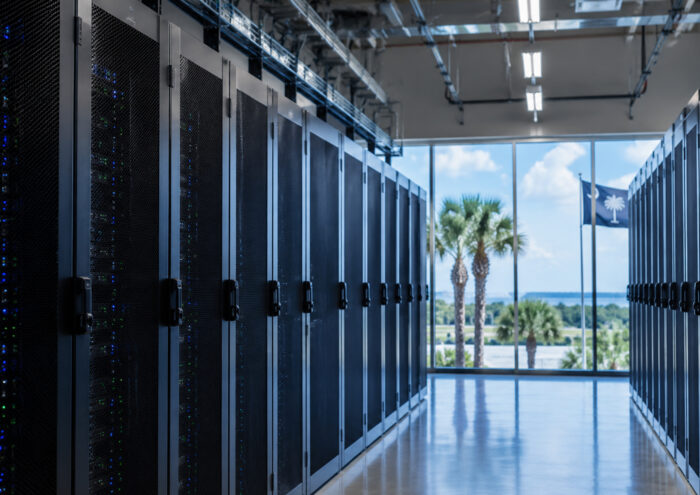
Choosing the right Data Center solution is one of the most important technology decisions a South Carolina business can make. Whether your organization operates in Charleston, Columbia, Greenville, Spartanburg, Myrtle Beach, Rock Hill, Florence, or another growing commercial community, your data center environment directly affects uptime, security, scalability, and day-to-day performance.
Today, businesses rely on data centers to support cloud platforms, secure storage, business applications, remote teams, IP Security, backup systems, and mission-critical operations. However, not every data center solution is the right fit for every organization. The best choice depends on your business goals, infrastructure needs, security requirements, growth plans, and available support.
For IT managers, facility managers, business owners, contractors, and enterprise leaders, the right data center strategy should support both current operations and future expansion.
Understand Your Business Requirements First
Before choosing a data center solution, start by identifying what your business actually needs. Some companies need a small server room to support local applications. Others require a larger data center environment with redundancy, advanced security, backup power, and hybrid cloud connectivity.
Important questions include:
- How much data does your business store and process?
- Which applications are mission-critical?
- How much downtime can your company tolerate?
- Do you need cloud, on-premise, or hybrid infrastructure?
- What are your security and compliance requirements?
- How many users, devices, and locations need support?
- Will your business expand in the next few years?
For example, a healthcare organization in Columbia may need secure storage and reliable access to sensitive records. Meanwhile, a logistics company in Spartanburg may need high availability for inventory platforms and warehouse systems. Similarly, a corporate office in Greenville may need scalable infrastructure for hybrid employees and cloud-based applications.
By understanding these requirements early, businesses can avoid underbuilding or overinvesting in the wrong solution.
Evaluate Uptime and Redundancy Needs
Uptime is one of the main reasons businesses invest in professional Data Centers. If your systems go down, employees may lose access to files, customers may experience delays, and operations may slow or stop.
Therefore, redundancy should be a key part of your decision.
A reliable data center solution may include:
- Backup power systems
- Redundant internet connections
- Multiple network paths
- Failover systems
- Backup storage
- Cooling redundancy
- Disaster recovery planning
- Continuous monitoring
For South Carolina businesses in healthcare, finance, manufacturing, education, logistics, and enterprise operations, even brief downtime can create major disruptions. As a result, choosing a data center solution with the right redundancy level can protect productivity and business continuity.
Consider Your IT Infrastructure
A data center is only as strong as the IT Infrastructure supporting it. Servers, switches, routers, firewalls, storage systems, backup platforms, and cloud connections all need to work together reliably.
When reviewing data center options, consider whether the solution supports:
- Secure network design
- High-speed connectivity
- Cloud and hybrid environments
- Remote access
- Data backup
- Cybersecurity tools
- Monitoring platforms
- Scalable equipment upgrades
- Strong documentation
For instance, a growing business in Charleston may need hybrid cloud connectivity to support remote workers. At the same time, an industrial facility in Greenville may need reliable infrastructure for production systems, wireless devices, and security platforms.
Moreover, strong IT Infrastructure helps prevent bottlenecks as your business adds users, applications, and connected devices.
Do Not Overlook Structured Cabling
Professional Structured Cabling is essential for data center performance. Even the best servers and network equipment can underperform if the cabling is messy, outdated, unlabeled, or poorly installed.
Structured Cabling supports data centers by providing:
- High-speed fiber and copper connections
- Rack-to-rack connectivity
- Organized patch panels
- Cleaner cable pathways
- Easier troubleshooting
- Better airflow
- Scalable expansion
- Improved documentation
In addition, clean cabling helps reduce downtime during maintenance or upgrades. When cables are properly labeled and organized, IT teams can make changes faster and with less risk.
For South Carolina businesses planning new data centers, server room upgrades, or facility expansions, Structured Cabling should be designed before equipment is installed. This approach improves long-term performance and makes future growth easier to manage.
Prioritize Security and IP Security
Data center security must include both digital and physical protection. Cybersecurity tools help protect systems from unauthorized access, malware, and data loss. However, physical security is equally important because servers, storage systems, and network equipment must be protected from tampering or unauthorized entry.
A complete security strategy may include:
- Firewalls
- Endpoint protection
- Multi-factor authentication
- Network segmentation
- User access controls
- Backup and recovery systems
- IP Security cameras
- Access control systems
- Video monitoring
- Door entry management
IP Security is especially important for server rooms, restricted areas, equipment cages, and data center entrances. With network-connected cameras and access control, businesses can monitor activity, review incidents, and control who enters sensitive spaces.
Consequently, South Carolina organizations that handle financial data, healthcare records, customer information, or operational systems should make security a top priority when choosing a data center solution.
Decide Between On-Premise, Cloud, and Hybrid Data Centers
There is no single data center model that works for every business. Instead, companies should choose a solution based on performance, control, security, budget, and scalability.
On-Premise Data Centers
An on-premise data center is located inside your facility. This option gives your business more direct control over equipment, access, and configuration. However, it also requires space, power, cooling, maintenance, security, and internal or outsourced support.
Cloud Data Centers
Cloud-based solutions allow businesses to use offsite infrastructure managed by a cloud provider. This can reduce the need for local hardware and improve flexibility. However, businesses still need reliable local networking, cybersecurity, and access management.
Hybrid Data Centers
Hybrid solutions combine on-premise systems with cloud platforms. This approach is often ideal for businesses that need local performance for some applications and cloud flexibility for others.
For many South Carolina companies, hybrid infrastructure offers the best balance of control, scalability, and resilience.
Plan for Managed Services Support
Even a well-designed data center requires ongoing attention. Systems must be monitored, updated, secured, backed up, and maintained. That is why Managed Services are valuable for data center environments.
Managed Services can help with:
- Server monitoring
- Network support
- Cybersecurity management
- Backup verification
- Patch management
- Hardware lifecycle planning
- Help desk support
- Performance reporting
- Disaster recovery planning
- Vendor coordination
For busy IT teams and business leaders, managed support reduces the burden of maintaining every system internally. Furthermore, proactive monitoring helps identify issues before they lead to downtime.
Consider Radio Frequency and Wireless Needs
Although data centers rely heavily on wired infrastructure, Radio Frequency may still play a role in the larger technology environment. Businesses with warehouses, campuses, industrial sites, or mobile teams may need RF planning to support wireless devices and operational systems.
Radio Frequency can support:
- Mobile workstations
- Asset tracking
- Warehouse scanning
- Facility monitoring
- Wireless security tools
- Maintenance devices
- Campus communication
When RF planning is aligned with data center design, businesses gain stronger connectivity across the entire facility.
Include Electricity and Utility Construction Planning
Data centers depend on proper power, grounding, conduit, cooling coordination, pathways, and site infrastructure. Therefore, Electricity/Utility Construction should be considered early in the planning process.
This is especially important for:
- New construction projects
- Server room upgrades
- Backup power planning
- Outdoor technology deployments
- Industrial facilities
- Utility sites
- Multi-building campuses
- Large commercial properties
By coordinating utility needs early, businesses can avoid costly rework and installation delays.
Support Communication with Audio Visual Services and Solutions
Modern Audio Visual Services and Solutions often depend on data center and network reliability. Video conferencing, digital signage, monitoring displays, training rooms, and collaboration platforms all need stable infrastructure.
For South Carolina offices, schools, healthcare organizations, and enterprise facilities, AV systems can improve communication and operational awareness. Additionally, data center reliability helps ensure these systems remain available when teams need them most.
Why South Carolina Businesses Choose Instrata
Instrata helps South Carolina businesses design, deploy, and support reliable data center and technology environments. From Charleston and Columbia to Greenville, Spartanburg, Myrtle Beach, Rock Hill, Florence, and surrounding communities, Instrata supports commercial, enterprise, industrial, and residential clients with scalable technology solutions.
Instrata specializes in:
- Structured Cabling
- IP Security
- Radio Frequency
- IT Infrastructure
- Electricity/Utility Construction
- Technologies
- Managed Services
- Data Centers
- Audio Visual Services and Solutions
By bringing these services together, Instrata helps organizations avoid the complexity of working with disconnected vendors. Instead, businesses can rely on one experienced partner for data centers, cabling, infrastructure, security, managed IT, RF planning, utility coordination, and AV systems.
Additionally, Instrata serves clients across Arizona, North Carolina, New Jersey, New York, Pennsylvania, Maryland, and Virginia, making it a strong choice for regional and multi-location organizations.
Choose a Data Center Solution Built for Growth
The right data center solution should protect your systems, support uptime, strengthen security, and scale with your business. Whether your South Carolina organization needs an on-premise server room, cloud connectivity, hybrid infrastructure, improved Structured Cabling, IP Security, Managed Services, or complete IT Infrastructure planning, Instrata can help.
Contact us today to learn how structured cabling can transform your business operations