

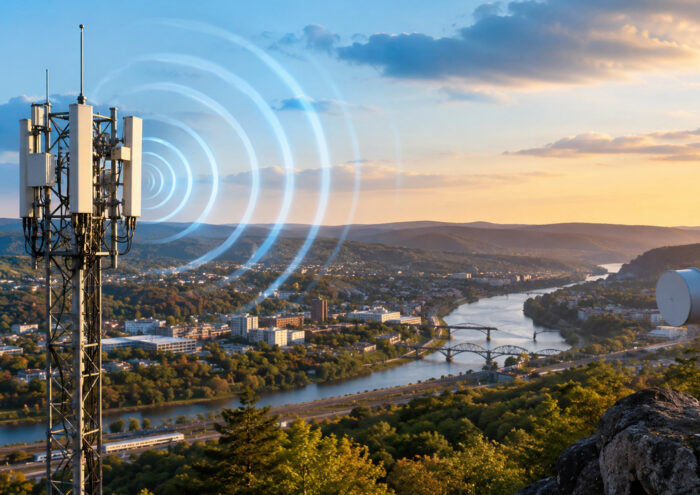
Pennsylvania businesses rely on fast, accurate, and dependable data transmission to keep operations moving. From corporate offices in Philadelphia and Pittsburgh to healthcare facilities in Harrisburg, logistics hubs in Scranton, manufacturing plants in Allentown, and enterprise campuses across the state, organizations need systems that can move information quickly and securely.
That is where Radio Frequency technology plays an important role. By using wireless signals to transmit data between devices, networks, and business systems, Radio Frequency solutions help companies improve communication, tracking, mobility, and operational efficiency. When paired with strong IT Infrastructure, professional Structured Cabling, secure IP Security, reliable Data Centers, and ongoing Managed Services, RF technology becomes a powerful part of a modern business environment.
Why Data Transmission Matters for Pennsylvania Businesses
Data transmission affects almost every part of business operations. Employees need to access files, update records, communicate with teams, track assets, monitor systems, and share information in real time. If data moves slowly or inconsistently, productivity can suffer quickly.
For example, a warehouse in Scranton may need real-time inventory updates. Meanwhile, a healthcare organization in Harrisburg may depend on wireless communication tools to coordinate patient care. Similarly, a manufacturing facility in Allentown may rely on connected equipment to send production data across the network.
Because these environments depend on timely information, Radio Frequency systems help businesses reduce delays and make faster decisions.
What Is Radio Frequency Technology?
Radio Frequency technology uses wireless signals to send and receive information between devices. Businesses may use RF systems for wireless communication, RFID tracking, inventory management, mobile devices, sensors, access systems, and connected equipment.
Unlike systems that depend only on physical cables at every endpoint, RF technology allows data to move wirelessly across facilities, campuses, warehouses, offices, and industrial spaces. As a result, teams gain more flexibility while still maintaining access to important information.
How Radio Frequency Improves Data Transmission
1. Faster Wireless Communication
Radio Frequency solutions allow devices to exchange data without requiring a direct wired connection at every point. Consequently, employees can send updates, receive alerts, scan inventory, and access information from different areas of a facility.
This is especially valuable for businesses with large or complex spaces, including:
- Warehouses
- Healthcare facilities
- Manufacturing plants
- Logistics centers
- Retail environments
- Corporate campuses
- Industrial sites
- Multi-building properties
With the right RF design, data can move faster between people, devices, and systems, which helps teams stay productive throughout the day.
2. Improved Real-Time Visibility
Modern businesses need real-time information to operate efficiently. Radio Frequency technology helps provide that visibility by supporting quick data exchange between mobile devices, sensors, inventory systems, and business applications.
For instance, logistics teams can track shipments as they move through a facility. Additionally, manufacturing teams can monitor equipment status and production activity. In healthcare environments, staff can use RF-supported tools to improve coordination and reduce communication gaps.
As a result, leaders gain better insight into operations and can respond faster when conditions change.
3. Reduced Manual Data Entry
Manual data entry can be slow and prone to mistakes. However, Radio Frequency tools such as RFID scanners and wireless devices can help automate data collection.
Instead of writing down information or entering updates later, employees can transmit data directly from the field, floor, warehouse, or work area. This helps reduce errors, improve accuracy, and speed up workflows.
For Pennsylvania businesses managing inventory, equipment, supplies, or sensitive records, this can create major productivity gains.
The Role of IT Infrastructure in RF Performance
Reliable IT Infrastructure is essential for strong Radio Frequency performance. Wireless signals may move data between devices, but the broader network still supports the flow of information.
Access points, switches, servers, storage systems, applications, firewalls, and monitoring tools must work together. If the network is weak or overloaded, RF systems may experience dropped connections, slow updates, or inconsistent coverage.
Therefore, Instrata helps Pennsylvania businesses plan RF systems as part of a complete technology strategy. This includes coverage planning, network capacity, device connectivity, cybersecurity, and future scalability.
Structured Cabling Supports Wireless Systems
Although Radio Frequency technology is wireless, it still depends on professional Structured Cabling behind the scenes. Cabling connects access points, switches, servers, security systems, network closets, and Data Centers that support wireless performance.
Poor cabling can create bottlenecks and make troubleshooting difficult. On the other hand, organized Structured Cabling supports reliable data transmission by giving wireless systems a strong physical foundation.
A professional cabling system can support:
- Reliable access point connections
- Cleaner network rooms
- Faster troubleshooting
- Better documentation
- Easier upgrades
- Reduced downtime
- Stronger scalability
For businesses expanding in Philadelphia, Pittsburgh, Lancaster, Erie, or Allentown, structured cabling helps create infrastructure that can support future growth.
Radio Frequency and IP Security
Radio Frequency systems can also strengthen IP Security environments. Wireless sensors, access systems, asset tracking tools, and connected devices can work alongside cameras, access control, alarms, and monitoring platforms.
For example, a warehouse in Harrisburg may use RF tools to track equipment movement while IP Security cameras monitor restricted zones. Likewise, an enterprise office in Pittsburgh may use access control and wireless communication tools to improve workplace safety.
When these systems are integrated correctly, businesses gain stronger visibility into people, assets, and facility activity.
Data Centers Support Secure RF Data
Radio Frequency systems often generate valuable operational data. That information may include inventory updates, equipment activity, access events, sensor readings, and communication records.
Secure Data Centers and server rooms help store, process, and protect this data. Additionally, reliable data center infrastructure supports the applications and platforms that receive RF-transmitted information.
For businesses that manage sensitive records, customer data, operational systems, or security footage, secure storage is essential. Strong data center planning helps protect information while keeping it available when teams need it.
Managed Services Keep RF Systems Running
Even well-designed RF systems need ongoing support. Managed Services help businesses monitor, maintain, troubleshoot, and optimize the technology environments that support Radio Frequency data transmission.
Managed support may include network monitoring, device troubleshooting, software coordination, documentation, vendor management, and lifecycle planning. As a result, internal IT teams can spend less time reacting to technical issues and more time supporting strategic goals.
Moreover, proactive support helps identify performance problems before they disrupt operations, which improves uptime and supports stronger digital velocity.
Audio Visual Services and Connected Communication
Modern workplaces also rely on Audio Visual Services and Solutions for meetings, training, command centers, digital signage, and hybrid collaboration. These systems often depend on reliable network connectivity and wireless performance.
When RF planning is aligned with AV design, businesses can reduce interference, improve wireless presentation tools, and create smoother communication experiences. For example, a corporate office in Philadelphia may need conference rooms that support video calls, wireless sharing, and clear audio without connection issues.
By coordinating AV systems, RF design, Structured Cabling, and IT Infrastructure, Instrata helps businesses create more dependable communication environments.
Electricity/Utility Construction Supports Reliable Data Flow
Reliable data transmission also depends on proper power and physical infrastructure. Electricity/Utility Construction supports access points, antennas, network closets, server rooms, security equipment, Data Centers, and connected facilities.
When electrical, utility, low-voltage, cabling, and IT systems are planned together, businesses can avoid installation delays, power limitations, and costly rework. Consequently, Pennsylvania organizations gain safer, cleaner, and more scalable technology environments.
Why Pennsylvania Businesses Choose Instrata
Instrata serves commercial, enterprise, industrial, and residential clients across Pennsylvania, as well as Arizona, North Carolina, South Carolina, New Jersey, New York, Maryland, and Virginia.
From Radio Frequency solutions in Philadelphia to Structured Cabling in Pittsburgh, IP Security in Harrisburg, IT Infrastructure upgrades in Allentown, Data Centers in Scranton, and Audio Visual Services and Solutions in Lancaster, Instrata delivers scalable technology solutions tailored to each client’s needs.
Improve Data Transmission With Instrata
Radio Frequency improves data transmission by enabling faster wireless communication, stronger real-time visibility, reduced manual errors, and better operational efficiency. However, the best results come from a complete strategy that includes Structured Cabling, IP Security, IT Infrastructure, Electricity/Utility Construction, Technologies, Managed Services, Data Centers, and Audio Visual Services and Solutions.
Contact us today to learn how structured cabling can transform your business operations