

How Managed Services Helps Prevent Costly Downtime for New York Facilities
For New York facilities, downtime is never just an inconvenience. It carries real financial consequences, productivity losses, and reputational damage that can take months to recover from. Managed services give businesses a proactive way to monitor, maintain, and protect their entire IT infrastructure before problems escalate.
Whether you operate a commercial building, an enterprise campus, or a data center, the stakes are high. Instrata delivers reliable managed services solutions designed specifically for the fast-moving demands of New York facilities and businesses across the region.
What Are Managed Services and Why Do They Matter?
Managed services refer to the practice of outsourcing your IT operations and technology management to a dedicated provider. Instead of reacting to failures after they happen, a managed services provider monitors your systems continuously and resolves issues early.
This proactive approach is especially important for New York facilities. Because of this, businesses that invest in managed IT support experience far fewer unexpected outages. They also benefit from predictable costs and expert-level oversight around the clock.
The Real Cost of Downtime for New York Businesses
Downtime costs New York businesses thousands of dollars every hour. In addition, it disrupts employee workflows, delays client deliverables, and damages trust with customers.
For commercial facilities and enterprise environments, even a short network outage can shut down operations entirely. Therefore, having a managed services plan in place is not a luxury. It is a critical component of business continuity.
Studies consistently show that unplanned downtime costs businesses far more than the investment required to prevent it. As a result, forward-thinking organizations are turning to managed IT providers to close that gap before a crisis hits.
How Managed Services Prevents Downtime Proactively
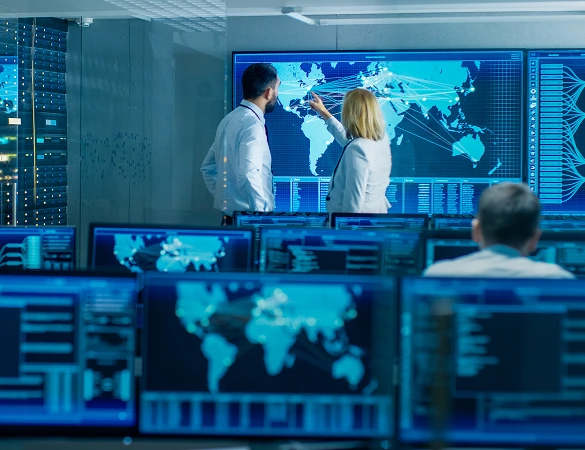
Proactive monitoring is the core of any strong managed services strategy. Trained technicians watch your network, servers, and connected devices in real time, identifying anomalies before they become failures.
For example, a managed provider might detect unusual bandwidth spikes that signal an impending hardware issue. Meanwhile, automated alerts notify the support team so they can respond immediately. Because of this early intervention, many problems are resolved before users even notice them.
Additionally, managed services include regular patch management and software updates. These updates close security vulnerabilities and keep systems performing at their best. Consistent maintenance is one of the most effective ways to prevent both security breaches and system failures.
Key Managed Services Solutions That Protect New York Facilities
There are several specific solutions that make managed services so effective for New York facilities. Each one targets a different layer of your technology environment.
- Network Monitoring and Management: Continuous oversight of your wired and wireless networks keeps connectivity stable and reliable.
- Help Desk and Remote Support: Fast, expert support resolves user issues quickly without waiting for an on-site visit.
- Data Backup and Disaster Recovery: Automated backups protect your data so recovery is fast when the unexpected occurs.
- Cybersecurity Management: Managed security tools actively defend your systems against threats, ransomware, and unauthorized access.
- Structured Cabling Oversight: Physical infrastructure management ensures your cabling and connectivity remain clean, organized, and fault-free.
- IT Infrastructure Maintenance: Regular assessments of servers, switches, and endpoints keep your hardware performing reliably.
Together, these services create a comprehensive safety net for your entire technology environment. However, the right combination depends on the size and complexity of your facility.
Why New York Facilities Face Unique Downtime Risks
New York facilities operate in one of the most demanding business environments in the world. High density, complex infrastructure, and extreme weather events all contribute to elevated downtime risk.
For example, power fluctuations and utility disruptions are more common in dense urban areas. Additionally, older commercial buildings sometimes have aging infrastructure that increases the likelihood of failures. Therefore, a managed services provider with deep regional experience makes a significant difference.
Furthermore, New York businesses often rely on multiple technology vendors and platforms. Coordinating updates, patches, and integrations across all of them requires dedicated expertise. Managed services consolidate that oversight under one reliable provider, simplifying management and reducing risk.
Facilities that partner with experienced digital marketing and technology firms often strengthen their operational visibility across multiple fronts, ensuring both their IT systems and their market presence remain competitive.
Managed Services and Business Continuity Planning
Business continuity planning is only as strong as the infrastructure behind it. Managed services help build and maintain the foundation that keeps your continuity plan effective.
A skilled managed services provider will document your critical systems, define recovery time objectives, and test your backup processes regularly. Additionally, they will identify single points of failure and recommend redundancy solutions before a problem occurs.
As a result, when disruptions do happen, recovery is faster and more organized. Your team spends less time scrambling and more time serving clients. This level of preparedness is a significant competitive advantage for New York facilities.
Choosing the Right Managed Services Partner in New York
Not all managed services providers offer the same depth of expertise. Choosing the right partner requires careful evaluation of their capabilities, experience, and local knowledge.
Look for a provider that offers comprehensive coverage across networking, cybersecurity, infrastructure, and support. In addition, they should have proven experience working with commercial and enterprise facilities in New York and the surrounding region.
However, technical capability is only part of the equation. A strong provider also communicates clearly, responds quickly, and understands the specific demands of your industry. Therefore, always ask for references and review their service level agreements carefully before committing.
Frequently Asked Questions
What does a managed services provider actually do?
A managed services provider monitors and manages your IT infrastructure on an ongoing basis. They handle everything from network monitoring and cybersecurity to help desk support and data backups. Because of this, your internal team can focus on core business activities instead of troubleshooting IT issues.
How quickly can managed services resolve a downtime event?
Response times depend on the service agreement, but most providers offer rapid response within minutes for critical issues. Additionally, proactive monitoring means many problems are caught and resolved before they cause any downtime at all. This dramatically reduces the impact of potential failures.
Is managed services cost-effective for smaller New York facilities?
Yes, managed services are scalable and can be tailored to fit facilities of any size. In fact, smaller facilities often benefit most because they gain enterprise-level expertise without the cost of a full in-house IT team. Therefore, the return on investment is typically very strong.
Can managed services support both on-site and cloud-based systems?
Absolutely. Modern managed services providers support hybrid environments that include on-premises servers, cloud platforms, and remote access tools. As a result, your entire technology ecosystem stays protected and managed under one unified strategy.
How do managed services help with cybersecurity in New York?
Managed services providers deploy advanced security tools including firewalls, endpoint protection, and intrusion detection systems. Additionally, they monitor for threats continuously and apply security patches promptly. This layered approach significantly reduces your facility’s exposure to cyberattacks and data breaches.
Disclaimer
This article is for educational purposes only and is not a substitute for professional medical advice, diagnosis, or treatment. If you are experiencing a mental health emergency, call or text 988 for immediate support.
Ready to upgrade your technology infrastructure? Contact Instrata today to schedule a consultation and discover reliable, innovative, and scalable technology solutions tailored to your business needs.