

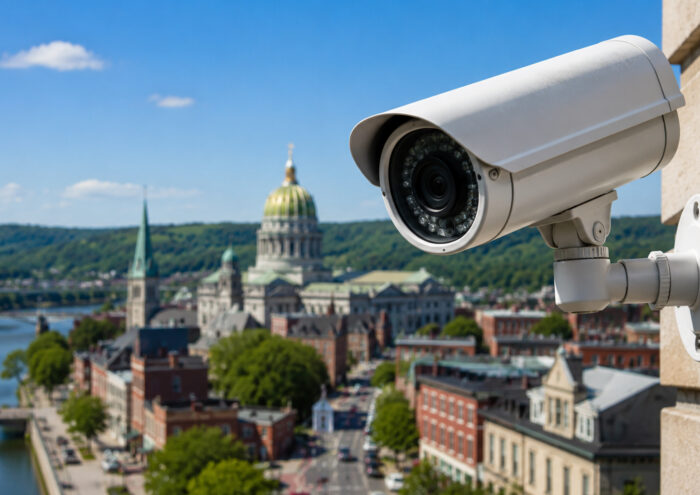
For businesses across Pennsylvania, safety is essential to protecting people, property, equipment, data, and daily operations. Whether your organization operates in Philadelphia, Pittsburgh, Harrisburg, Allentown, Lancaster, Erie, Scranton, or State College, reliable security technology can help reduce risk and improve confidence across the workplace.
That is why IP Security systems have become so important for modern organizations. Unlike older standalone security systems, IP-based solutions connect surveillance cameras, access control, video management, monitoring tools, and alerts through a secure network. Additionally, when IP Security is supported by Structured Cabling, IT Infrastructure, Managed Services, Radio Frequency, Data Centers, Electricity/Utility Construction, modern Technologies, and Audio Visual Services and Solutions, businesses gain a stronger safety strategy.
Instrata helps commercial, enterprise, industrial, and residential clients across Pennsylvania build secure, scalable, and reliable technology environments designed for protection, performance, and long-term growth.
Why IP Security Matters for Workplace Safety
Safety is not only about responding after an incident occurs. Instead, it is about creating visibility, controlling access, improving response times, and reducing potential risks before they become larger problems.
IP Security systems help businesses monitor facilities, manage entry points, review activity, and protect sensitive areas more effectively.
IP Security systems may include:
- Surveillance camera systems
- Access control platforms
- Video management software
- Door entry and intercom systems
- Remote monitoring tools
- Motion detection and alerts
- Secure video storage
- Network-connected security devices
As a result, Pennsylvania businesses can create safer environments for employees, visitors, customers, students, patients, and operations teams.
Improved Surveillance and Facility Visibility
One of the biggest safety advantages of IP Security is improved surveillance. Modern IP cameras can provide clearer video, wider coverage, and easier access to footage than many older systems.
For example, a corporate office in Philadelphia may need surveillance for entrances, parking areas, and shared spaces. Meanwhile, a warehouse in Allentown may require cameras near loading docks, inventory zones, and perimeter areas. Similarly, a healthcare facility in Harrisburg may need monitoring for patient areas, staff entrances, and restricted spaces.
Because clearer footage supports faster incident review, businesses can make better safety decisions and respond with more confidence.
Stronger Access Control for Sensitive Areas
Access control is another key part of IP Security. After all, workplace safety depends on knowing who can enter specific spaces and when.
Instead of relying only on traditional keys, businesses can use cards, credentials, keypads, or mobile access tools. Moreover, access permissions can be adjusted as employee roles change.
Access control helps businesses:
- Limit entry to authorized users
- Track access activity
- Reduce risks from lost or copied keys
- Protect sensitive equipment and records
- Improve employee and visitor safety
- Support compliance and internal policies
For Pennsylvania businesses in healthcare, education, finance, logistics, manufacturing, and professional services, access control provides a practical way to improve accountability and reduce risk.
Better Emergency Response and Communication
During an emergency, fast communication matters. Therefore, IP Security systems can help teams identify issues quickly, review camera feeds, monitor access events, and coordinate responses more effectively.
Additionally, IP Security can work with Audio Visual Services and Solutions to support video walls, intercoms, emergency displays, visitor management areas, and facility-wide announcements. As a result, security teams, facility managers, and leadership groups can share important information faster.
This connected approach improves safety by helping businesses move from uncertainty to action with greater vigilance.
Structured Cabling Supports Reliable Security Performance
Even the most advanced IP Security system needs a strong physical foundation. Structured Cabling connects cameras, access control panels, intercoms, switches, servers, and monitoring platforms.
If cabling is outdated, poorly installed, or disorganized, security devices may disconnect, video may lag, and troubleshooting may take longer. However, professional Structured Cabling helps keep security systems stable and easier to maintain.
Structured Cabling supports IP Security by providing:
- Stable camera connections
- Cleaner equipment rooms and pathways
- Easier troubleshooting
- Reliable video transmission
- Support for future security expansion
- Stronger connectivity to network systems
For Pennsylvania businesses renovating offices, expanding facilities, or upgrading older systems, cabling and security should be planned together.
IT Infrastructure Makes IP Security Smarter
Modern IP Security systems depend on strong IT Infrastructure. Cameras, access control devices, storage systems, servers, and monitoring tools all rely on secure networks, reliable bandwidth, and proper configuration.
When security systems are integrated with IT Infrastructure, businesses can manage devices more efficiently and improve system performance. Moreover, IT teams can better support user permissions, cybersecurity, updates, storage, and remote access.
Strong IT Infrastructure supports:
- Secure video transmission
- Reliable device connectivity
- Centralized security management
- Remote access for approved users
- Integration with business Technologies
- Scalable security expansion
Consequently, IP Security becomes part of a complete technology strategy instead of a disconnected facility system.
Data Centers Help Protect Security Information
Data Centers and server rooms often support IP Security by storing video footage, managing security applications, and protecting access control data. Because these systems are important to safety and continuity, they must be secure, organized, and reliable.
IP Security also helps protect Data Centers themselves through cameras, access control, secure entry points, and activity tracking. For organizations in Pittsburgh, Philadelphia, Harrisburg, and other Pennsylvania markets, this added layer of protection helps safeguard critical systems and sensitive information.
Managed Services Keep Security Systems Reliable
Installing IP Security is only the beginning. Over time, cameras, access control systems, software, storage platforms, and network devices require monitoring and maintenance.
That is where Managed Services become valuable. Managed Services help businesses maintain security systems through device health checks, troubleshooting, updates, vendor coordination, lifecycle planning, and performance support.
As a result, internal teams can spend less time reacting to technical problems and more time focusing on safety, operations, and strategic priorities.
Radio Frequency Supports Connected Safety Tools
Some facilities rely on wireless connectivity for mobile security tools, tablets, smart building systems, scanners, and connected devices. Radio Frequency planning helps improve wireless coverage, reduce interference, and support dependable communication across complex spaces.
For instance, a large campus in State College may need RF planning for security teams and mobile devices. Additionally, an industrial facility near Pittsburgh may require strong wireless coverage across production and warehouse areas. Likewise, a commercial property in Lancaster may need reliable wireless access for staff, visitors, and security systems.
When Radio Frequency planning works with IP Security and IT Infrastructure, businesses gain more dependable coverage across the full environment.
Electricity/Utility Construction Supports Secure Deployments
Security systems require proper power, pathways, mounting locations, equipment spaces, and utility coordination. Therefore, Electricity/Utility Construction plays an important role during new construction, renovations, data center upgrades, and facility expansions.
By coordinating power, cabling, and security infrastructure early, Pennsylvania businesses can reduce delays, avoid rework, and create cleaner, more reliable technology environments.
Why Pennsylvania Businesses Choose Instrata
Instrata serves clients throughout Pennsylvania, as well as Arizona, North Carolina, South Carolina, New Jersey, New York, Maryland, and Virginia. Businesses choose Instrata because they need a technology partner that understands both physical infrastructure and digital systems.
From IP Security and Structured Cabling to IT Infrastructure, Managed Services, Radio Frequency, Data Centers, Electricity/Utility Construction, Technologies, and Audio Visual Services and Solutions, Instrata delivers comprehensive support for commercial, enterprise, industrial, and residential environments.
Improve Safety With IP Security in Pennsylvania
IP Security systems enhance safety by improving surveillance, strengthening access control, supporting faster response, protecting critical areas, and integrating with modern technology infrastructure.