

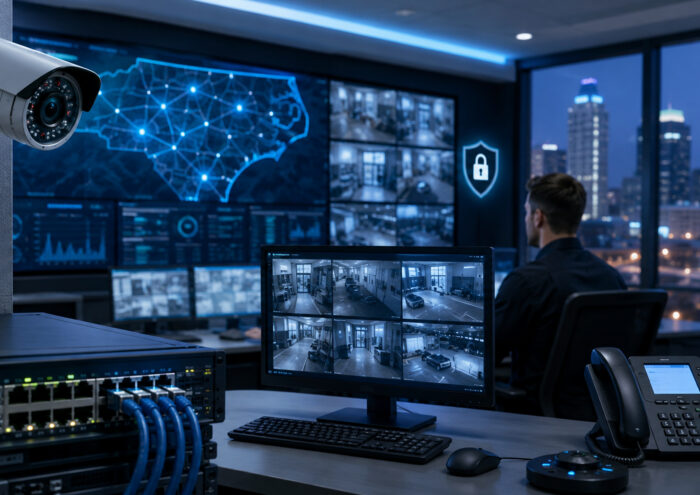
North Carolina businesses face more technology risk than ever before. From corporate offices in Charlotte and Raleigh to healthcare facilities in Durham, logistics operations in Wilmington, manufacturing plants in Greensboro, and enterprise campuses across the Research Triangle, organizations rely on connected systems to manage data, people, facilities, and daily operations.
As more security cameras, access control systems, cloud platforms, wireless devices, and business applications connect to the network, cybersecurity and physical security must work together. That is where IP Security becomes essential. With the right design, installation, and support, IP Security helps businesses protect facilities, monitor activity, control access, and reduce vulnerabilities across modern technology environments.
For North Carolina organizations, Instrata delivers scalable IP Security solutions supported by Structured Cabling, IT Infrastructure, Managed Services, Data Centers, Radio Frequency, Electricity/Utility Construction, and Audio Visual Services and Solutions.
Why Cyber Threat Protection Matters for North Carolina Businesses
Cyber threats can affect businesses of every size. A weak device, unsecured camera, outdated access control system, or poorly managed network can create risk. Once attackers find a vulnerable system, they may attempt to access sensitive data, disrupt operations, or move deeper into the business network.
However, cybersecurity is not limited to computers and servers. Modern buildings use connected security systems, wireless tools, smart devices, and cloud-based platforms. Therefore, businesses need IP Security systems that are properly secured, monitored, and integrated with broader IT Infrastructure.
Without a strong security strategy, businesses may face:
- Unauthorized network access
- Data exposure
- Camera or device vulnerabilities
- Operational downtime
- Compromised access control systems
- Weak visibility into facility activity
- Higher recovery costs
- Compliance concerns
Because these risks can affect productivity, reputation, and business continuity, IP Security should be treated as a critical part of the overall technology environment.
What Is IP Security?
IP Security refers to network-based security systems that use internet protocol technology to connect cameras, access control devices, intercoms, sensors, alarms, and monitoring platforms.
Unlike older analog systems, IP Security can integrate with business networks, remote monitoring tools, storage systems, and other connected Technologies. As a result, businesses gain better visibility, stronger control, and more flexible management.
A professional IP Security system may include:
- High-definition surveillance cameras
- Access control systems
- Remote monitoring
- Video management software
- Motion detection
- Event alerts
- Secure video storage
- Visitor management
- Integration with IT systems
When these systems are designed correctly, they help protect both physical spaces and digital environments.
How IP Security Helps Reduce Cyber Risk
1. Better Control Over Network-Connected Devices
Every connected device can create a potential entry point. Security cameras, access panels, sensors, and monitoring equipment must be configured properly to reduce risk.
Professional IP Security planning helps businesses manage these devices more securely. This includes proper network design, device documentation, access permissions, and system monitoring. In addition, secure setup helps reduce the chances of unauthorized users gaining access to sensitive systems.
For example, a healthcare facility in Durham may need secure monitoring for patient areas, while a corporate office in Charlotte may need controlled access to server rooms and executive spaces. In both cases, IP Security helps protect critical areas while supporting cybersecurity goals.
2. Stronger Access Control
Cyber threats are not always remote. Sometimes risk begins when the wrong person gains physical access to a restricted space. Server rooms, network closets, storage areas, and data environments must be protected from unauthorized entry.
IP Security systems can include access control tools that limit who can enter specific areas. Moreover, these systems can track access events, helping managers review who entered a space and when.
When access control is paired with video monitoring, businesses gain a clearer record of activity. Consequently, teams can investigate incidents faster and improve accountability.
3. Real-Time Monitoring and Faster Response
Cybersecurity depends on visibility. If businesses cannot see what is happening across their facilities, they may respond too late.
IP Security systems provide real-time monitoring through cameras, alerts, and centralized dashboards. For instance, a warehouse in Greensboro can monitor loading docks and restricted zones, while a logistics company in Wilmington can review activity across multiple entry points.
Because alerts and footage are easier to access, teams can respond faster to suspicious activity, unauthorized access, or system issues. This improves both security and operational governance.
The Role of IT Infrastructure in IP Security
IP Security performs best when supported by reliable IT Infrastructure. Cameras, access control devices, monitoring platforms, servers, storage systems, and network switches all depend on stable connectivity.
If infrastructure is weak, security systems may experience delays, outages, or recording failures. However, when IP Security is planned alongside the broader network, businesses gain stronger performance and better protection.
Instrata helps North Carolina organizations align IP Security with bandwidth planning, network segmentation, secure access, device management, and long-term scalability. As a result, businesses can reduce cybersecurity gaps while improving system reliability.
Why Structured Cabling Matters
Behind every dependable IP Security system is professional Structured Cabling. Cabling connects cameras, access devices, network closets, monitoring stations, Data Centers, and storage systems.
Poor cabling can create downtime, signal issues, difficult troubleshooting, and security gaps. On the other hand, organized Structured Cabling supports cleaner installations and more reliable performance.
Structured Cabling helps businesses achieve:
- Reliable camera connections
- Cleaner network rooms
- Faster troubleshooting
- Better documentation
- Easier system expansion
- Safer installations
- Reduced downtime
For North Carolina businesses renovating offices, expanding facilities, or building new locations, structured cabling creates a secure foundation for connected security systems.
Data Centers and Secure Storage
Security footage, access logs, alerts, and monitoring data must be stored securely. Data Centers and server rooms help protect this information while keeping it available when teams need to review incidents.
A reliable data center can support video storage, backup systems, monitoring platforms, and secure access controls. Additionally, it helps protect important business information from loss, unauthorized access, or system failure.
For businesses that manage sensitive records, customer data, healthcare information, or regulated operations, secure storage is a key part of cyber threat protection.
Managed Services Strengthen Long-Term Security
Even the best IP Security system needs ongoing support. Managed Services help businesses maintain, monitor, troubleshoot, and optimize technology environments over time.
Managed support may include system updates, device monitoring, documentation, vendor coordination, storage planning, and performance reviews. Therefore, internal IT teams can focus on strategic priorities while Instrata helps keep security systems operating properly.
Additionally, proactive support can help identify issues before they become serious risks. This reduces downtime and strengthens long-term security.
Radio Frequency, AV, and Connected Technologies
Many North Carolina businesses also rely on Radio Frequency solutions for wireless communication, inventory tracking, asset management, and operational visibility. These tools often work alongside IP Security systems to improve awareness across facilities.
Similarly, Audio Visual Services and Solutions can support command centers, security displays, emergency messaging, and training spaces. When IP Security, Radio Frequency, AV systems, and IT Infrastructure are integrated correctly, businesses gain a more complete technology environment.
This approach is especially valuable for warehouses, healthcare facilities, enterprise offices, manufacturing plants, and multi-location organizations.
Electricity/Utility Construction Supports Reliable Protection
Security systems also require dependable power and physical infrastructure. Electricity/Utility Construction supports cameras, access control devices, network closets, exterior equipment, server rooms, gates, and connected facilities.
When electrical, utility, low-voltage, cabling, and IT systems are planned together, businesses can avoid installation delays, exposed wiring, power limitations, and costly rework. Consequently, North Carolina organizations gain cleaner, safer, and more scalable security environments.
Why North Carolina Businesses Choose Instrata
Instrata serves commercial, enterprise, industrial, and residential clients across North Carolina, as well as Arizona, South Carolina, New Jersey, New York, Pennsylvania, Maryland, and Virginia.
From IP Security installations in Charlotte to Structured Cabling in Raleigh, IT Infrastructure upgrades in Durham, Data Centers in Greensboro, Radio Frequency solutions in Wilmington, and Audio Visual Services and Solutions in Asheville, Instrata delivers scalable technology solutions tailored to each client’s needs.
Protect Your Business With Instrata IP Security
IP Security helps North Carolina businesses protect against cyber threats by securing connected devices, improving access control, supporting real-time monitoring, protecting data, and strengthening overall technology resilience.
Contact us today to learn how structured cabling can transform your business operations