

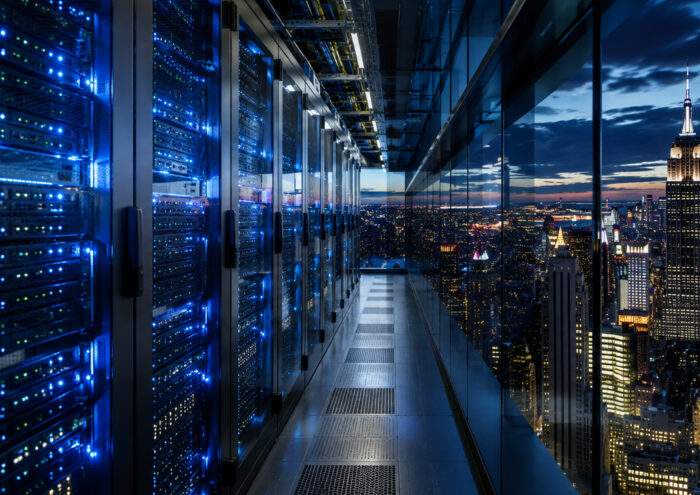
New York businesses operate in one of the most data-driven markets in the country. From financial firms in Manhattan and healthcare facilities in Queens to legal offices in Brooklyn, universities in the Bronx, logistics operations near Long Island, and enterprise organizations across Upstate New York, companies rely on secure, reliable access to information every day.
Because of this, Data Centers play a critical role in protecting business operations.
A well-designed data center does more than store servers and network equipment. It supports data protection, uptime, compliance, access control, system monitoring, disaster recovery, and long-term technology growth. When combined with professional Structured Cabling, IP Security, Radio Frequency, Managed Services, Electricity/Utility Construction, Audio Visual Services and Solutions, and modern IT Infrastructure, Data Centers help New York organizations reduce risk and operate with greater confidence.
Why Data Security Matters for New York Businesses
Data security is essential for organizations of every size. Businesses manage customer records, financial information, employee data, intellectual property, contracts, operational systems, security footage, and cloud applications. If that information becomes unavailable, exposed, or compromised, the impact can be serious.
For New York organizations, the stakes are especially high. Many companies operate in industries where uptime, privacy, and fast response times matter. A financial services firm in Manhattan may need secure access to trading platforms and client records. Meanwhile, a healthcare provider in Queens may need to protect patient information and clinical systems. Similarly, a law firm in Brooklyn may depend on secure document storage and controlled access to confidential case files.
As a result, Data Centers must be planned as part of a complete security strategy.
Data Centers Create a Controlled Environment
One of the biggest benefits of Data Centers is control. Instead of spreading critical systems across closets, desks, or unmanaged equipment rooms, businesses can centralize technology in a protected environment.
A professional data center can help secure:
- Servers and storage systems
- Network switches and firewalls
- Backup infrastructure
- Security platforms
- Cloud connectivity equipment
- Monitoring systems
- Access control records
- Business applications
Because these systems are organized in one secure location, IT teams can monitor performance more effectively and respond to issues faster. In addition, centralized infrastructure helps reduce the risks created by scattered or poorly maintained equipment.
Physical Security Supports Digital Protection
Data security is not only about software. Physical protection is just as important. If unauthorized users can access servers, switches, storage devices, or network cabinets, sensitive information may be at risk.
That is where IP Security becomes essential. Modern IP Security systems can include surveillance cameras, access control, intercoms, intrusion detection, visitor management, and monitoring platforms. When integrated with Data Centers, these tools help control who can enter sensitive spaces and how activity is recorded.
For example, a corporate office in Midtown may need restricted access to its server room. Meanwhile, a university in the Bronx may require camera coverage and access logs for technology areas. Likewise, a healthcare facility in New York City may need secure entry points to protect systems that support patient care.
With the right IP Security design, businesses gain stronger visibility, accountability, and assurance across their technology environments.
Structured Cabling Reduces Risk and Improves Reliability
Reliable Structured Cabling is a major part of data center security and performance. Cabling connects servers, switches, firewalls, access points, storage devices, cameras, and communication systems. If cabling is messy, unlabeled, or poorly installed, IT teams may struggle to troubleshoot issues quickly.
Poor cable management can also increase the risk of accidental disconnections, airflow problems, downtime, and delayed repairs. On the other hand, professional Structured Cabling creates a cleaner and more dependable foundation.
Structured Cabling Helps Data Centers By:
- Organizing network connections
- Supporting faster troubleshooting
- Improving airflow around equipment
- Reducing accidental cable damage
- Supporting high-speed data transmission
- Making upgrades easier
- Helping maintain system documentation
Consequently, businesses can protect uptime while improving the long-term manageability of their IT Infrastructure.
Strong IT Infrastructure Protects Business Continuity
Data security depends on reliable IT Infrastructure. Firewalls, switches, servers, storage systems, backup platforms, wireless networks, and monitoring tools must all work together to protect information.
When infrastructure is outdated or overloaded, businesses may face slower performance, security gaps, system failures, or limited recovery options. Therefore, Data Centers should be designed to support both current needs and future growth.
A strong IT Infrastructure strategy can help New York businesses improve:
- Availability by keeping critical systems online
- Protection through secure network architecture
- Scalability as data storage and application needs grow
- Visibility through monitoring and documentation
- Recovery with stronger backup and disaster planning
For organizations that depend on constant access to data, this level of planning is essential.
Managed Services Strengthen Data Center Security
Installing a secure data center is only the beginning. Over time, systems need updates, monitoring, maintenance, documentation, and troubleshooting. Managed Services help businesses keep Data Centers operating securely and efficiently.
Managed Services can support:
- Network and server monitoring
- Backup and recovery oversight
- Security system maintenance
- Device management
- Performance reviews
- Patch and update coordination
- Infrastructure documentation
- Preventive maintenance
- Upgrade planning
Because Managed Services are proactive, businesses can identify issues before they create downtime or security concerns. Additionally, ongoing support helps internal IT teams focus on strategic priorities instead of constant emergency repairs.
Radio Frequency Supports Secure Connected Operations
Although Data Centers rely heavily on wired systems, Radio Frequency technologies can still support secure operations. RF may be used for wireless monitoring tools, asset tracking, technician devices, facility communications, and smart sensors.
However, RF must be designed carefully. Poor wireless planning can create coverage gaps, interference, or unsecured access points. With professional Radio Frequency planning, businesses can improve wireless reliability while maintaining stronger control over connected devices.
This is especially useful for large New York facilities, multi-floor offices, campus environments, and enterprise spaces where mobile access and monitoring tools are part of daily operations.
Electricity/Utility Construction Provides the Foundation for Security
Data Centers need dependable power, grounding, cooling coordination, conduit, pathways, racks, and utility planning. Electricity/Utility Construction helps create the physical foundation required for secure and reliable technology systems.
Without proper power and utility planning, businesses may face overloaded circuits, poor equipment placement, limited expansion options, or avoidable downtime. For that reason, data center planning should begin early during construction, renovation, or infrastructure upgrade projects.
Instrata helps coordinate Electricity/Utility Construction with Data Centers, Structured Cabling, IP Security, Radio Frequency, and broader technology requirements. As a result, businesses receive a cleaner, safer, and more scalable environment.
Audio Visual Services and Solutions Depend on Secure Data
Modern workplaces also rely on Audio Visual Services and Solutions for conference rooms, command centers, training spaces, digital signage, and video collaboration. These systems often connect to networks, cloud platforms, servers, and storage environments.
Because of this, AV systems should be included in data security planning. A boardroom in Manhattan may require secure video conferencing. Meanwhile, an operations center in Long Island may use displays connected to real-time monitoring platforms. When AV technology is supported by secure Data Centers and strong IT Infrastructure, communication becomes more reliable and better protected.
Why New York Organizations Choose Instrata
Instrata provides professional technology services for commercial, enterprise, industrial, and residential clients throughout New York, as well as Arizona, North Carolina, South Carolina, New Jersey, Pennsylvania, Maryland, and Virginia.
Organizations choose Instrata for:
- Data Centers planning and support
- Structured Cabling
- IP Security
- Radio Frequency solutions
- IT Infrastructure upgrades
- Electricity/Utility Construction
- Managed Services
- Audio Visual Services and Solutions
- Scalable Technologies for growing businesses
Whether supporting a data center upgrade in Manhattan, an IP Security deployment in Brooklyn, a Structured Cabling project in Queens, or an infrastructure expansion across Long Island, Instrata delivers fast, professional, and reliable technology solutions.
Strengthen Data Security with Instrata
Data Centers support data security in New York by protecting critical systems, improving uptime, centralizing infrastructure, supporting secure access, and preparing businesses for future growth. When combined with Structured Cabling, IP Security, Radio Frequency, Managed Services, Electricity/Utility Construction, Audio Visual Services and Solutions, and strong IT Infrastructure, Data Centers create a resilient foundation for modern business operations.
Contact us today to learn how structured cabling can transform your business operations