

In today’s always-on economy, downtime is more than an inconvenience—it’s a serious business risk. Across Pennsylvania, organizations in healthcare, finance, manufacturing, education, and government rely on high-performing Data Centers to power daily operations. Whether in Philadelphia, Pittsburgh, Harrisburg, Allentown, or Erie, businesses depend on uninterrupted access to data, applications, and communication systems.
Preventing downtime requires more than basic redundancy. It demands strategic planning, resilient IT Infrastructure, reliable Electricity/Utility Construction, optimized Structured Cabling, integrated IP Security, engineered Radio Frequency systems, and proactive Managed Services.
Here’s how Pennsylvania Data Centers can minimize risk and maintain operational continuity.
Building Redundant Power Infrastructure
Power failure is one of the leading causes of Data Center downtime. Pennsylvania’s weather patterns—including winter storms and severe thunderstorms—can strain electrical grids and disrupt operations.
To prevent outages, Data Centers should implement:
- Dual power feeds from separate utility sources
- Uninterruptible Power Supply (UPS) systems
- Backup generators with automatic transfer switches
- Surge protection and proper grounding
- Routine load testing and maintenance
Professional Electricity/Utility Construction ensures that power systems are designed to handle current demand and future growth. Redundant power infrastructure keeps critical systems online even during grid disruptions.
Designing Scalable and Resilient IT Infrastructure
Modern IT Infrastructure must be engineered with redundancy and scalability in mind. Single points of failure can bring operations to a halt.
Downtime prevention strategies include:
- Redundant core switches and routers
- Server virtualization for workload distribution
- Network segmentation
- Failover clustering
- Cloud-based backup integration
By distributing workloads across multiple systems, Data Centers reduce the risk of catastrophic failure.
Optimizing Structured Cabling for Reliability
Disorganized or outdated Structured Cabling can create performance bottlenecks, signal interference, and extended troubleshooting times.
A properly designed cabling system supports:
- High-speed fiber backbones
- Clearly labeled and documented pathways
- Organized rack layouts
- Redundant data pathways
- Improved airflow for cooling efficiency
In Pennsylvania’s growing enterprise markets, clean cabling design reduces maintenance complexity and improves overall system stability.
Implementing Advanced Monitoring and Managed Services
Proactive oversight is essential for preventing downtime. Through professional Managed Services, businesses gain:
- 24/7 infrastructure monitoring
- Real-time performance alerts
- Predictive maintenance insights
- Security patch management
- Capacity planning
Continuous monitoring allows technicians to detect anomalies before they escalate into full outages. This preventative approach significantly reduces unplanned downtime.
Strengthening Physical and Cyber Security
Security breaches—whether physical or digital—can lead to system shutdowns and operational disruption.
Integrated IP Security systems protect Data Centers through:
- Biometric access control
- 24/7 surveillance monitoring
- Intrusion detection systems
- Secure visitor management
- Environmental monitoring alerts
At the same time, cybersecurity strategies protect network integrity and prevent ransomware or malware attacks that can cause extended downtime.
Enhancing Network Reliability with Radio Frequency Planning
While Data Centers primarily rely on wired networks, Radio Frequency (RF) systems support wireless monitoring devices, technician mobility, and IoT integrations.
Optimized RF design ensures:
- Strong signal coverage
- Minimal interference
- Secure wireless segmentation
- Reliable communication between devices
Proper RF engineering adds an additional layer of resilience to infrastructure operations.
Cooling and Environmental Management
Overheating is a major contributor to equipment failure. Data Centers must maintain optimal temperature and humidity levels to protect hardware.
Downtime prevention measures include:
- Precision cooling systems
- Hot aisle and cold aisle containment
- Environmental sensors
- Automated alerts for temperature fluctuations
Regular maintenance and monitoring ensure equipment operates within safe parameters.
Integrating Audio Visual and Command Center Systems
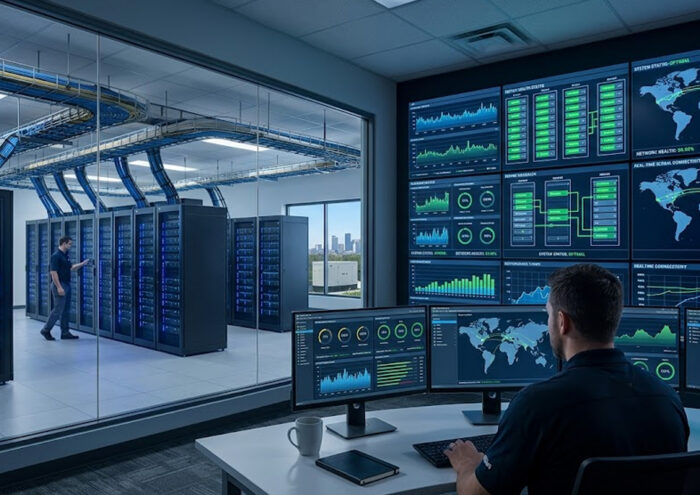
Enterprise Data Centers often include monitoring hubs or Network Operations Centers (NOCs). Integrated Audio Visual Services and Solutions provide:
- Real-time system dashboards
- Video wall monitoring
- Incident response coordination
- Secure conferencing capabilities
Centralized visibility allows teams to respond quickly to potential threats or performance issues.
Preparing for Disaster Recovery
Even with preventative measures, unexpected events can occur. A strong disaster recovery plan ensures business continuity.
Pennsylvania Data Centers should implement:
- Off-site data replication
- Cloud failover environments
- Routine recovery testing
- Documented response procedures
- Geographically distributed backups
Testing disaster recovery protocols regularly ensures they function properly during real-world events.
Conducting Regular Infrastructure Audits
Infrastructure evolves over time. Regular audits identify vulnerabilities before they cause disruption.
Audits should evaluate:
- Power capacity and redundancy
- Cabling integrity
- Network performance
- Security configurations
- Data storage utilization
- Equipment lifecycle status
Routine assessments help businesses plan upgrades strategically rather than reactively.
The Benefits of Proactive Downtime Prevention
Pennsylvania organizations that prioritize Data Center resilience experience:
- Increased operational reliability
- Reduced financial losses from outages
- Improved compliance readiness
- Enhanced customer confidence
- Greater scalability for growth
Preventing downtime is not just about avoiding disruption—it’s about maintaining competitive advantage.
Why Pennsylvania Businesses Trust Instrata
Across Pennsylvania—including Philadelphia, Pittsburgh, Harrisburg, Allentown, and Erie—organizations rely on Instrata for comprehensive Data Center solutions designed to prevent downtime.
Instrata delivers:
- Resilient Data Center design and optimization
- Enterprise-grade IT Infrastructure planning
- Professional Structured Cabling installations
- Reliable Electricity/Utility Construction coordination
- Advanced IP Security integration
- Radio Frequency engineering
- Integrated Audio Visual Services and Solutions
- Proactive Managed Services
By combining deep technical expertise with strategic infrastructure planning, Instrata helps businesses build future-ready environments that minimize risk and maximize uptime.
Protect Your Operations from Costly Downtime
Downtime can disrupt productivity, damage reputation, and impact revenue. Preventative planning and integrated infrastructure design are essential for maintaining continuous operations.
If your Pennsylvania organization is evaluating Data Center performance or strengthening business continuity strategies, Instrata is ready to help.