

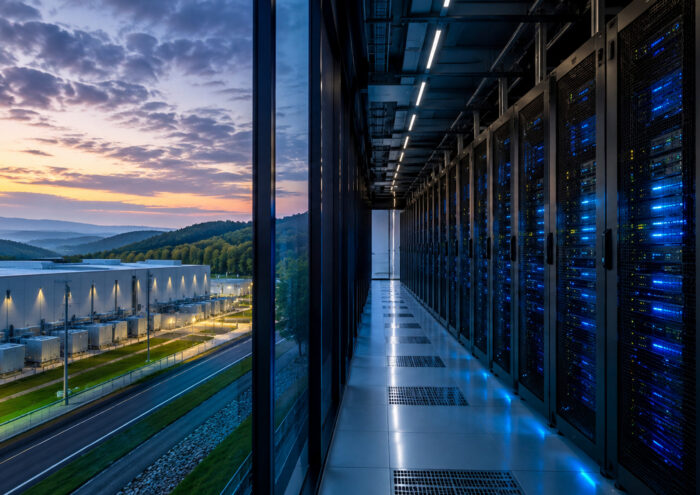
Pennsylvania businesses rely on dependable technology to keep operations moving, protect sensitive information, and serve customers without interruption. From corporate offices in Philadelphia and Pittsburgh to healthcare facilities in Harrisburg, manufacturing plants in Allentown, logistics hubs in Scranton, and enterprise campuses across the state, reliable IT Infrastructure is essential for productivity and long-term growth.
As organizations depend more on cloud platforms, connected devices, security systems, business applications, and remote teams, the need for strong Data Centers becomes even more important. A properly designed data center helps centralize critical systems, improve uptime, support secure storage, and create a more stable technology environment.
For Pennsylvania organizations, Instrata delivers scalable technology solutions that combine Data Centers, Structured Cabling, IP Security, Managed Services, Radio Frequency, Electricity/Utility Construction, and Audio Visual Services and Solutions into one reliable infrastructure strategy.
Why IT Infrastructure Reliability Matters
Reliable IT Infrastructure allows employees, customers, and business systems to stay connected. When networks, servers, applications, or storage systems fail, the impact can be immediate. Teams may lose access to files, customer service may slow down, security systems may stop functioning properly, and revenue-generating operations may be disrupted.
For this reason, businesses need infrastructure that is secure, organized, monitored, and built for continuity. Data Centers help make that possible by providing a controlled environment for the systems that support daily operations.
A reliable data center can help reduce:
- Network downtime
- Application interruptions
- Data access issues
- Security vulnerabilities
- Hardware failures
- Backup and recovery delays
- Troubleshooting complexity
- Unplanned technology costs
Consequently, companies gain more confidence in the systems that support their employees, customers, and facilities.
What Role Do Data Centers Play in IT Infrastructure?
A data center is a dedicated environment used to house, connect, protect, and manage critical technology systems. Depending on the organization, this may include servers, storage platforms, network equipment, security systems, backup tools, and monitoring technology.
A well-designed data center supports IT Infrastructure through:
- Secure server and storage environments
- Organized network equipment
- Reliable power and utility planning
- Structured Cabling
- Environmental control
- IP Security and access control
- Backup and disaster recovery support
- Monitoring and maintenance tools
- Managed Services support
Instead of spreading critical systems across disconnected spaces, a data center creates a centralized and structured environment. As a result, Pennsylvania businesses can improve reliability, simplify maintenance, and prepare for future growth.
Better Uptime for Critical Business Systems
Downtime can be costly for any organization. However, it becomes especially disruptive for companies that depend on real-time data, customer portals, cloud applications, production systems, or secure records.
Data Centers improve uptime by creating a stable environment for critical technology. Servers, switches, storage devices, and security platforms are easier to monitor and maintain when they are organized in a controlled space. Additionally, data centers can support backup systems, redundant connections, and better recovery planning.
For example, a healthcare office in Harrisburg may depend on secure access to patient information. Meanwhile, a manufacturer in Allentown may rely on connected production systems and inventory platforms. In both cases, data center reliability helps teams continue working with fewer interruptions.
Stronger Structured Cabling for Reliable Connections
Behind every dependable data center is professional Structured Cabling. Cabling connects servers, network switches, storage platforms, security devices, wireless systems, and business applications.
When cabling is poorly installed or disorganized, businesses may experience slow performance, difficult troubleshooting, and accidental disconnections. On the other hand, organized Structured Cabling creates a cleaner and more dependable network foundation.
Structured Cabling supports reliability by improving:
- Network performance
- Equipment organization
- Troubleshooting speed
- Maintenance access
- Scalability
- Cable documentation
- Long-term system stability
Because data centers rely on many connected systems, professional cabling is essential for reducing risk and improving performance.
Improved Security With IP Security Systems
Data center reliability is not only about uptime. It is also about protecting the systems and information that keep a business running.
IP Security systems help protect data centers through surveillance cameras, access control, monitoring platforms, alarms, and secure entry points. These systems allow businesses to control who can access critical infrastructure while maintaining visibility into sensitive areas.
For Pennsylvania organizations that manage customer records, financial information, healthcare data, security footage, or proprietary business systems, this protection is essential. Moreover, when IP Security is integrated with IT Infrastructure, teams can monitor facilities more effectively and respond faster to potential issues.
Managed Services Keep Data Centers Performing
Even the best data center needs ongoing support. Managed Services help businesses monitor, maintain, troubleshoot, and optimize technology systems over time.
With managed support from Instrata, Pennsylvania businesses can reduce the burden on internal teams while improving system reliability. Managed Services may include network monitoring, server maintenance, backup oversight, vendor coordination, documentation, help desk support, and lifecycle planning.
Additionally, proactive support helps identify potential issues before they become major disruptions. This gives businesses stronger operational stability as technology demands continue to grow.
Supporting Business Continuity and Disaster Recovery
Reliable IT Infrastructure must be prepared for unexpected disruptions. Power outages, equipment failures, cyber incidents, weather events, and accidental data loss can all affect business operations.
Data Centers support business continuity by helping organizations centralize backup systems, organize recovery tools, and protect critical applications. Consequently, businesses can restore access faster and reduce the impact of downtime.
For industries such as healthcare, logistics, manufacturing, finance, education, and professional services, strong recovery planning is a major advantage. It helps protect revenue, customer trust, and operational performance.
Power and Utility Planning for Reliability
Data Centers depend on proper power and physical infrastructure. Without dependable power, even advanced technology systems can fail.
Electricity/Utility Construction supports server rooms, network closets, backup power systems, security equipment, wireless systems, and connected facilities. When electrical, utility, low-voltage, and IT systems are planned together, businesses can avoid installation delays and reduce costly rework.
This coordinated approach helps Pennsylvania companies build safer, cleaner, and more scalable technology environments.
Data Centers Support Connected Technologies
Modern businesses use many connected systems that depend on reliable infrastructure. These may include Radio Frequency solutions, wireless networks, IP Security platforms, access control, cloud applications, and Audio Visual Services and Solutions.
For instance, a logistics facility in Scranton may use Radio Frequency tools to track inventory and equipment. Similarly, a corporate office in Pittsburgh may depend on video conferencing, digital displays, and secure cloud access. In both environments, data centers help support the applications, storage, and network systems behind these tools.
When connected technologies are supported by strong data center infrastructure, businesses can improve productivity, communication, and operational visibility.
Why Pennsylvania Businesses Choose Instrata
Instrata serves commercial, enterprise, industrial, and residential clients across Pennsylvania, as well as Arizona, North Carolina, South Carolina, New Jersey, New York, Maryland, and Virginia.
From Data Centers in Philadelphia to Structured Cabling in Pittsburgh, IP Security in Harrisburg, IT Infrastructure upgrades in Allentown, Radio Frequency solutions in Scranton, and Audio Visual Services and Solutions in Lancaster, Instrata delivers scalable technology solutions designed around each client’s needs.
With expertise across Data Centers, Structured Cabling, IP Security, IT Infrastructure, Electricity/Utility Construction, Technologies, Managed Services, Radio Frequency, and Audio Visual Services and Solutions, Instrata helps organizations build infrastructure that is secure, reliable, and ready for growth.
Improve IT Infrastructure Reliability With Instrata
Data Centers improve IT Infrastructure reliability by strengthening uptime, improving security, organizing critical systems, supporting recovery planning, and creating a scalable foundation for future technology needs.
Contact us today to learn how structured cabling can transform your business operations