

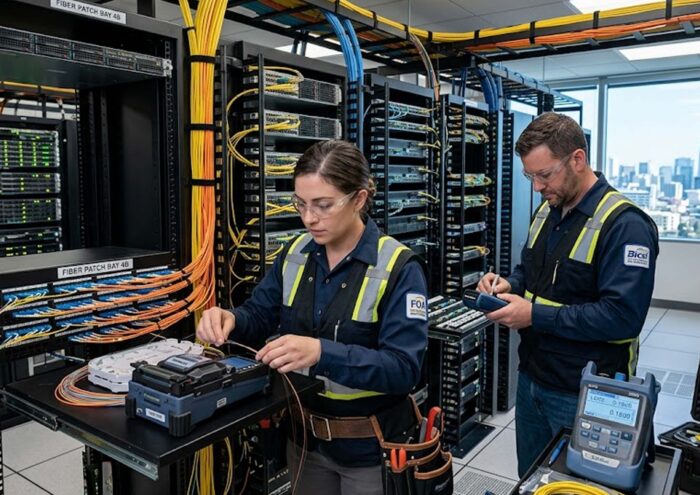
In California’s fast-moving business environment, reliable connectivity isn’t optional — it’s mission-critical. From Los Angeles data centers to San Diego healthcare networks and Silicon Valley enterprise campuses, fiber optic infrastructure forms the backbone of modern IT Infrastructure, IP Security systems, cloud platforms, and advanced business technologies.
Yet many organizations unknowingly make costly fiber optic installation mistakes that lead to downtime, performance issues, compliance risks, and expensive rework.
Below, we break down the most common fiber optic installation mistakes California businesses make — and how professional planning and certified installation can protect your operations.
Why Fiber Optics Are Critical to Modern Business Operations
Fiber optic cabling supports:
- High-speed data transmission
- Cloud connectivity and SaaS platforms
- VoIP and unified communications
- IP Security camera systems
- Data Center interconnects
- Radio Frequency (RF) signal distribution
- Audio Visual Services and Solutions
- Enterprise-grade IT Infrastructure
In industries like healthcare, logistics, finance, education, utilities, and technology, even minor disruptions can cost thousands — or even millions — in lost productivity. That’s why avoiding installation mistakes is essential.
1. Skipping Proper Network Planning and Design
One of the biggest mistakes businesses make is treating fiber installation as a simple “cable pull” project rather than a strategic infrastructure investment.
The Problem
- No long-term scalability plan
- Poor pathway design
- Inadequate bandwidth forecasting
- Ignoring redundancy requirements
In fast-growing California markets like San Jose, Sacramento, and Irvine, businesses often outgrow improperly designed fiber systems within just a few years.
The Solution
A professionally engineered Structured Cabling plan should include:
- Future bandwidth projections
- Redundant pathways for business continuity
- Proper conduit sizing
- Integration with existing IT Infrastructure
- Compliance with California building codes
Fiber infrastructure should support your organization’s growth — not limit it.
2. Improper Cable Handling and Installation Techniques
Fiber optic cables are highly sensitive. Improper handling during installation can cause microbends, macrobends, and signal loss that may not be immediately visible.
Common Handling Errors
- Exceeding bend radius limits
- Over-tensioning during cable pulls
- Improper cable support
- Poor termination practices
- Inadequate fiber testing
In California’s large commercial buildings and campus environments, long cable runs increase the risk of these issues.
Even minor signal degradation can impact Data Centers, IP Security camera clarity, Radio Frequency system reliability, cloud-based application performance, and Audio Visual Services and Solutions.
Certified technicians use specialized tools, fusion splicing equipment, and comprehensive testing procedures to ensure clean, compliant installations.
3. Ignoring Environmental and Seismic Considerations
California presents unique environmental challenges:
- Earthquakes
- Wildfire zones
- Extreme heat
- Coastal humidity
- Industrial dust exposure
Businesses that fail to account for environmental factors risk infrastructure failure during emergencies.
Common oversights include inadequate cable protection, improper conduit sealing, poorly secured overhead runs, and lack of seismic bracing in Data Centers.
For industries relying on Electricity/Utility Construction integration and mission-critical infrastructure, these oversights can be catastrophic.
Fiber installations should align with seismic compliance standards, fire-rated building codes, environmental protection requirements, and proper utility coordination planning. Resilient infrastructure protects uptime — especially during California’s natural events.
4. Failing to Integrate Fiber with Broader IT Infrastructure
Fiber should not exist in isolation. Yet many businesses treat it as a standalone project rather than part of an integrated ecosystem of technologies.
Poor integration can negatively affect:
- IP Security systems
- Wireless access points
- Radio Frequency distribution systems
- Cloud connectivity
- Managed Services monitoring
- Audio Visual conferencing systems
A cohesive IT Infrastructure strategy ensures all systems communicate efficiently and scale together.
Forward-thinking organizations align fiber installation with network switching architecture, Data Center design, security infrastructure, power redundancy planning, and long-term technology roadmaps. This integrated approach improves scalability, performance, and operational efficiency.
5. Cutting Corners to Save Money
DIY installations or hiring low-cost, uncertified contractors may seem appealing, especially for small or mid-sized businesses.
However, cost-cutting often results in:
- Poor terminations
- Failed inspections
- Warranty voids
- Reinstallation expenses
- Significant downtime losses
In California’s competitive business environment, downtime costs far exceed initial savings.
Professional Structured Cabling and fiber installations provide manufacturer warranties, certified testing documentation, code compliance, long-term reliability, and reduced maintenance costs. Fiber is an investment in operational continuity — not an expense to minimize.
6. Overlooking Testing and Documentation
Another common mistake is failing to properly test and document fiber installations.
Missing documentation creates challenges during future expansions, troubleshooting, compliance audits, Data Center upgrades, and Managed Services transitions.
Every installation should include:
- OTDR testing results
- Power meter readings
- Proper labeling and pathway documentation
- As-built drawings
Comprehensive documentation ensures your internal IT team or external Managed Services provider can efficiently support your infrastructure long-term.
7. Neglecting Ongoing Maintenance and Monitoring
Fiber installations are not “install and forget” systems.
Over time, businesses must monitor signal degradation, patch panel integrity, environmental exposure, equipment compatibility, and infrastructure expansion needs.
Proactive Managed Services can:
- Continuously monitor performance
- Identify issues before failure
- Maintain compliance
- Support scalability
- Protect uptime
For California businesses operating 24/7 — including healthcare facilities, logistics centers, and enterprise campuses — proactive support prevents costly disruptions and protects business continuity.
The Bigger Picture: Fiber Supports More Than Connectivity
When properly designed and installed, fiber optic infrastructure supports secure IP Security networks, scalable Data Centers, advanced Radio Frequency systems, unified communications, cloud-based technologies, Audio Visual Services and Solutions, smart building systems, and utility-integrated Electricity/Utility Construction projects.
It forms the digital backbone of your organization.
Why Professional Installation Matters
Professional fiber optic installation ensures compliance with California building codes, seamless integration with broader IT Infrastructure, long-term scalability, reduced downtime, secure high-performance connectivity, and strong business continuity planning.
Businesses across California — from enterprise headquarters in Silicon Valley to healthcare systems in Los Angeles and industrial facilities in Riverside — rely on expertly engineered infrastructure to stay competitive and resilient.
Avoid Costly Mistakes — Build It Right the First Time
Fiber optic infrastructure is too critical to risk shortcuts.
Whether you’re upgrading a corporate campus, expanding a Data Center, deploying IP Security systems, integrating Radio Frequency solutions, modernizing Audio Visual Services and Solutions, or coordinating Electricity/Utility Construction projects, professional planning and execution are essential.
Avoiding these common mistakes protects productivity, security, compliance, reputation, and revenue.
Ready to Upgrade Your Fiber Infrastructure?
If your California business is planning a new installation, upgrade, or expansion, now is the time to ensure it’s done right.
Schedule a consultation today to discuss your Structured Cabling, IT Infrastructure, Data Center, IP Security, Radio Frequency, Electricity/Utility Construction, and Managed Services needs.
Contact us today to learn how structured cabling can transform your business operations