

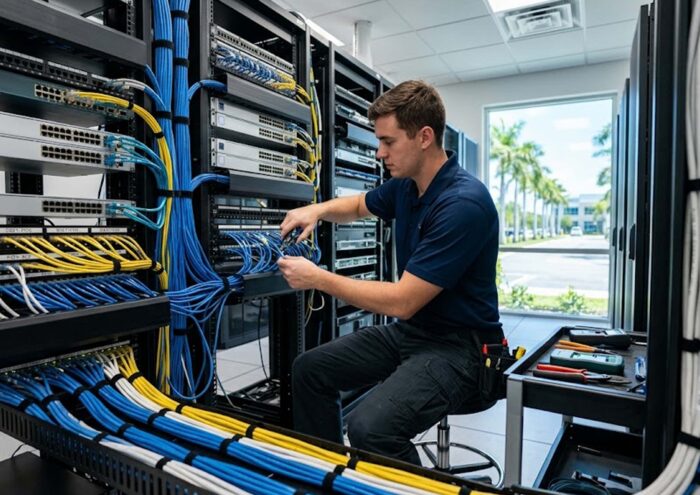
In Florida’s fast-growing and climate-sensitive business environment, reliable network infrastructure is essential. From corporate offices in Miami and Tampa to healthcare facilities in Orlando and industrial operations across Jacksonville, organizations depend on high-performance connectivity to stay competitive.
However, network performance starts at the physical layer—and that means proper Structured Cabling.
When done right, cabling supports scalability, reduces downtime, and improves overall efficiency. When done poorly, it leads to costly disruptions and constant troubleshooting. Here are the best practices Florida businesses should follow to ensure their network cabling is built for performance, durability, and long-term success.
Plan for Scalability from Day One
One of the most common mistakes businesses make is designing cabling systems only for current needs. In a rapidly growing state like Florida, this approach quickly becomes a limitation.
Best Practice:
Design your Structured Cabling system to support future growth.
- Install extra capacity for additional users and devices
- Choose higher-grade cabling (e.g., Cat6a or fiber)
- Plan for expansion across multiple floors or locations
This ensures your network can scale without requiring major rework.
Use High-Quality Materials and Standards
Not all cabling materials are created equal. Lower-quality components may reduce upfront costs but often lead to performance issues and higher maintenance expenses.
Best Practice:
Use industry-standard, high-quality materials.
- Certified cables and connectors
- Proper patch panels and racks
- Compliance with TIA/EIA standards
High-quality materials improve reliability and extend the lifespan of your network infrastructure.
Prioritize Proper Cable Management
Disorganized cabling is one of the biggest causes of network issues. It makes troubleshooting difficult and increases the risk of accidental disconnections.
Best Practice:
Maintain clean and organized cable management.
- Use labeled cables and patch panels
- Implement structured pathways and trays
- Separate data, power, and Radio Frequency cables
A well-organized system improves efficiency and reduces downtime.
Account for Florida’s Climate Conditions
Florida’s climate presents unique challenges, including high humidity, heat, and the risk of storms. These factors can impact cabling performance if not properly addressed.
Best Practice:
Design infrastructure to withstand environmental conditions.
- Use moisture-resistant and outdoor-rated cables where needed
- Ensure proper ventilation in network rooms
- Protect cabling from water exposure and flooding risks
This is especially important for businesses in coastal or high-humidity areas.
Separate Power and Data Lines
Electrical interference can significantly impact network performance if power and data cables are installed too closely together.
Best Practice:
Maintain proper separation between power and data lines.
- Follow recommended spacing guidelines
- Use shielding where necessary
- Coordinate with Electricity/Utility Construction teams
This reduces interference and ensures consistent network performance.
Invest in Professional Installation
DIY or low-cost installations often lead to long-term issues. Poorly installed cabling can cause signal loss, connectivity problems, and frequent downtime.
Best Practice:
Work with experienced professionals for installation.
- Ensure proper testing and certification
- Follow industry standards and best practices
- Use experts familiar with IT Infrastructure integration
Professional installation ensures your network performs as expected from day one.
Test and Certify Every Connection
Skipping testing is a costly mistake. Even a single faulty connection can impact performance across the network.
Best Practice:
Test and certify all cabling before deployment.
- Verify signal strength and performance
- Identify and fix issues early
- Document results for future reference
This ensures reliability and reduces the risk of future disruptions.
Integrate with Broader IT Infrastructure
Cabling should not be treated as a standalone system. It must work seamlessly with your broader IT Infrastructure, IP Security, and other technologies.
Best Practice:
Design cabling with integration in mind.
- Align with network architecture
- Support security systems and Data Centers
- Enable future technology upgrades
This creates a cohesive, high-performance technology environment.
Plan for Data Center and Server Room Efficiency
For businesses with dedicated server rooms or Data Centers, proper cabling is critical for performance and organization.
Best Practice:
Optimize cabling within data environments.
- Use structured layouts for racks and cabinets
- Implement proper airflow management
- Label and document all connections
This improves efficiency and simplifies maintenance.
Support Modern Workspaces with AV Integration
Today’s workplaces rely on communication tools like video conferencing and digital displays. Your cabling system should support these needs.
Best Practice:
Incorporate Audio Visual Services and Solutions into your cabling design.
- Plan for conference room connectivity
- Support high-bandwidth AV systems
- Ensure seamless integration with network infrastructure
This enhances collaboration and productivity.
Implement Ongoing Maintenance and Managed Services
Even the best cabling systems require maintenance to ensure long-term performance.
Best Practice:
Use Managed Services for ongoing monitoring and support.
- Regular inspections and updates
- Proactive issue detection
- Documentation and system tracking
This helps prevent problems before they impact operations.
Avoid Common Cabling Mistakes
To maximize performance, businesses should avoid these common pitfalls:
- Overloading cables beyond capacity
- Using outdated or incompatible materials
- Skipping proper labeling and documentation
- Ignoring environmental factors
- Choosing price over quality
Avoiding these mistakes ensures a more reliable and scalable network.
Why Florida Businesses Trust Instrata
Businesses across Florida choose Instrata for professional cabling and infrastructure solutions because of its:
- Expertise in Structured Cabling and IT Infrastructure
- High-quality, standards-based installations
- Scalable solutions designed for growth
- Seamless integration with IP Security, Data Centers, and AV systems
- Reliable support through Managed Services
From Miami to Tampa, Orlando to Jacksonville, Instrata delivers fast, professional, and dependable solutions tailored to Florida’s unique environment.
Build a Network That Supports Your Business
Your network is only as strong as the infrastructure behind it. By following these best practices, Florida businesses can build cabling systems that are reliable, scalable, and ready for the future.
Instrata provides expert solutions across Structured Cabling, IP Security, Radio Frequency, IT Infrastructure, Electricity/Utility Construction, Managed Services, Data Centers, and Audio Visual Services and Solutions—helping businesses operate efficiently and grow with confidence.
Contact us today to learn how structured cabling can transform your business operations