

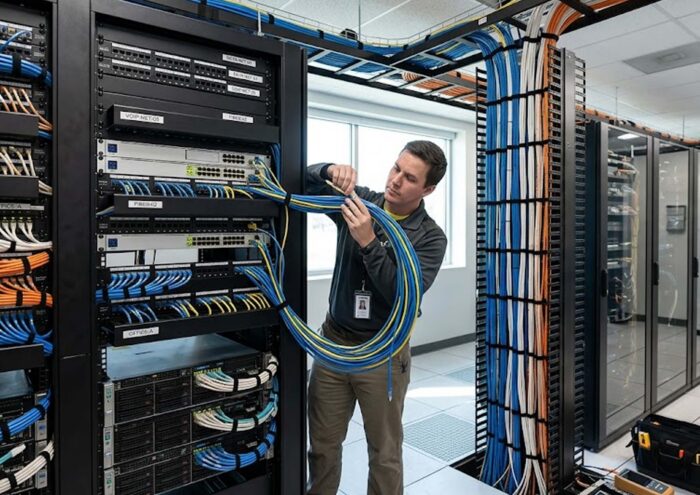
As businesses across Georgia continue to grow—from corporate offices in Atlanta to healthcare systems in Augusta and logistics operations in Savannah—the need for reliable, high-performance connectivity is more important than ever. Whether you’re managing daily operations, supporting remote teams, or running data-intensive applications, your network infrastructure plays a critical role in your success.
At the heart of that infrastructure is voice and data cabling.
A well-designed Structured Cabling system ensures seamless communication, faster data transfer, and long-term scalability. This complete guide will walk Georgia businesses through everything they need to know about voice and data cabling—from basics to best practices.
What Is Voice and Data Cabling?
Voice and data cabling refers to the physical wiring that connects your communication systems, including:
- Telephony (VoIP and traditional phone systems)
- Internet and network connectivity
- Internal communication systems
- IP Security and surveillance systems
- Audio Visual Services and Solutions
These systems rely on structured, organized cabling to function efficiently. Without it, businesses face slow performance, downtime, and limited scalability.
Why Voice and Data Cabling Matters
For Georgia businesses, voice and data cabling is more than just infrastructure—it’s a strategic investment.
Key Benefits:
- Reliable and consistent network performance
- Faster data transmission speeds
- Improved communication across teams
- Support for modern Technologies
- Scalability for future growth
From Atlanta’s fast-paced corporate environment to Savannah’s logistics sector, strong cabling systems are essential for staying competitive.
Types of Cabling Used in Businesses
Choosing the right type of cabling is critical for performance and scalability.
Copper Cabling (Cat5e, Cat6, Cat6a)
- Common for office environments
- Cost-effective and widely used
- Suitable for most voice and data applications
Fiber Optic Cabling
- High-speed, high-bandwidth connectivity
- Ideal for long distances and Data Centers
- Resistant to interference
Choosing the Right Option:
- Use copper for standard office connectivity
- Use fiber for high-performance and future scalability
A professional provider will help determine the best combination for your business.
Key Components of Structured Cabling Systems
A complete Structured Cabling system includes several components:
- Horizontal cabling (workstation connections)
- Backbone cabling (connecting floors or buildings)
- Patch panels and racks
- Cable pathways and management systems
- Network outlets and connectors
Each component must be properly designed and installed to ensure optimal performance.
The Installation Process
Professional voice and data cabling installation follows a structured approach.
1. Site Assessment
- Evaluate building layout and infrastructure
- Identify current and future needs
- Assess environmental factors
2. System Design
- Plan cable routes and pathways
- Align with overall IT Infrastructure
- Ensure scalability and integration
3. Installation
- Run cables through designated pathways
- Install racks, patch panels, and outlets
- Organize and label all connections
4. Testing and Certification
- Verify performance and connectivity
- Ensure compliance with industry standards
- Document the system for future use
5. Integration
- Connect with IP Security, Data Centers, and other systems
- Optimize performance across the network
Best Practices for Voice and Data Cabling
To ensure long-term success, Georgia businesses should follow these best practices.
Plan for Scalability
Design your system to support future growth, including additional users, devices, and locations.
Use High-Quality Materials
Invest in certified cables and components that meet industry standards.
Maintain Proper Cable Management
- Label all cables clearly
- Use structured pathways and trays
- Keep racks organized
Separate Power and Data Lines
Avoid interference by maintaining proper spacing between power and data cables and coordinating with Electricity/Utility Construction teams.
Design for Environmental Conditions
Georgia’s heat and humidity can impact cabling systems. Use durable materials and protective solutions where necessary.
Ensure Integration
Your cabling system should work seamlessly with:
- IT Infrastructure
- IP Security
- Audio Visual Services and Solutions
- Radio Frequency systems
Common Mistakes to Avoid
Avoiding these mistakes can save time, money, and operational disruptions:
- Using outdated or low-quality cabling
- Failing to plan for future growth
- Poor cable management and labeling
- Skipping testing and certification
- Treating cabling as a standalone system
Proper planning and professional installation help prevent these issues.
Supporting Data Centers and Advanced Systems
For businesses with Data Centers, voice and data cabling becomes even more critical.
Benefits Include:
- High-speed data transfer between systems
- Improved organization and airflow
- Easier maintenance and scalability
- Reliable performance for critical operations
Cabling must be designed to handle high-density environments and growing data demands.
Enhancing Communication and Collaboration
Modern workplaces rely on seamless communication tools.
Cabling Supports:
- VoIP and unified communication systems
- Video conferencing and collaboration tools
- Audio Visual Services and Solutions for meeting spaces
For Georgia businesses adopting hybrid work models, these capabilities are essential.
The Role of Managed Services
After installation, ongoing support ensures your system continues to perform at its best.
Benefits of Managed Services:
- Continuous monitoring of network performance
- Early detection of potential issues
- Regular maintenance and updates
- Reduced downtime
Instrata’s Managed Services provide proactive support for long-term reliability.
Real-World Applications in Georgia
Voice and data cabling supports a wide range of industries:
- Atlanta corporate offices: High-speed connectivity and collaboration tools
- Savannah logistics hubs: Real-time tracking and communication
- Augusta healthcare facilities: Secure and reliable data access
- Manufacturing operations statewide: Integration with Radio Frequency systems
In each case, strong cabling infrastructure is essential for performance and efficiency.
Why Georgia Businesses Choose Instrata
Instrata is a trusted partner for voice and data cabling solutions across Georgia.
What Sets Instrata Apart:
- Expertise in Structured Cabling and IT Infrastructure
- Seamless integration with IP Security, Data Centers, and AV systems
- Scalable solutions designed for growth
- High-quality, standards-based installations
- Ongoing support through Managed Services
From Atlanta to Savannah, Augusta to Macon, Instrata delivers fast, professional, and reliable solutions tailored to Georgia’s business environment.
Build a Stronger Network Foundation
Voice and data cabling is the backbone of your business operations. Investing in a well-designed system ensures better performance, improved communication, and long-term scalability.
By following best practices and working with experienced professionals, Georgia businesses can build infrastructure that supports growth and innovation.
Instrata provides comprehensive solutions across Structured Cabling, IP Security, Radio Frequency, IT Infrastructure, Electricity/Utility Construction, Managed Services, Data Centers, and Audio Visual Services and Solutions.
Contact us today to learn how structured cabling can transform your business operations